Cornbread’s identity depends on where you’re from. True Southern cornbread skips sugar entirely—it’s savory, crumbly, and pairs perfectly with chili and collard greens. Northern versions lean sweet and cake-like, landing closer to dessert. The real difference? Sugar in the batter shifts everything. You can honor tradition with unsweetened cornbread baked in cast iron, or drizzle honey on warm slices afterward if you want sweetness without crossing into dessert territory. The choice is yours, and there’s more nuance to explore.
The Historical Divide: Southern Savory vs. Northern Sweet
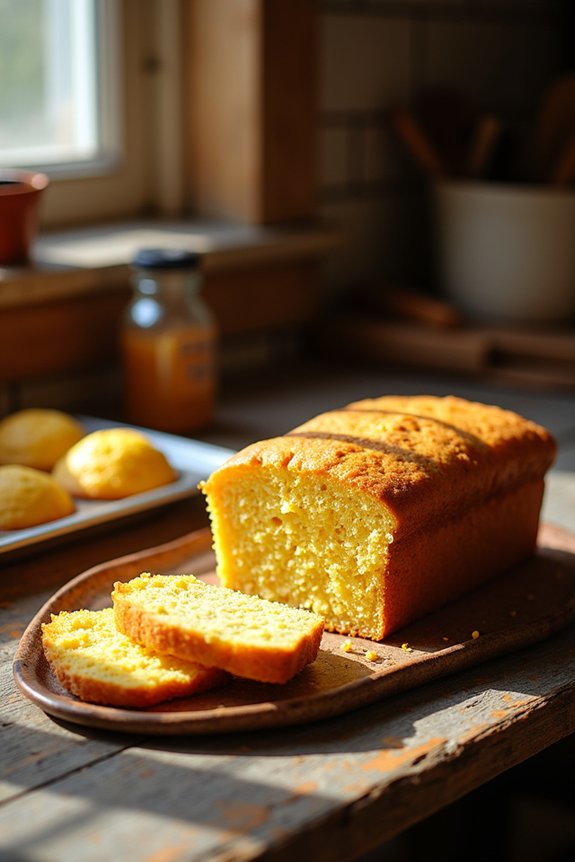
Why does cornbread taste so different depending on where you’re from? I’ve discovered the answer lies in regional traditions that go way back. Down South, we make cornbread savory—no sugar added. We use way more cornmeal than flour, creating that flat, dense texture you either love or don’t quite understand. It’s the perfect side for chili and barbecue, not dessert.
Up North, though, they’ve taken a different route. Their cornbread’s sweet and cake-like, almost like a treat. The bottom line: historically, sugar was expensive and hard to find in Southern kitchens, so savory cornbread became our tradition. That divide shaped how we think about cornbread today. Whether you’re Team Savory or Team Sweet, you’re connected to your region’s story.
What Traditional Southern Cornbread Actually Tastes Like

If you’ve never had *real* Southern cornbread, you’re missing something special—and I’m not talking about that sweet, fluffy cake some folks call cornbread up North. True Southern cornbread is savory through and through, with a golden crust and a slightly crumbly texture that practically melts on your tongue. The magic comes from using way more cornmeal than flour, which gives it that authentic, satisfying bite. You won’t find sugar hiding in the batter here—that’s Northern territory. Instead, you get pure corn flavor, seasoned just right, baked crispy in a hot cast-iron skillet. It’s the kind of savory side dish that belongs on your table, not the dessert plate. That’s real Southern cornbread.
The Sugar Debate: Why Regions Disagree
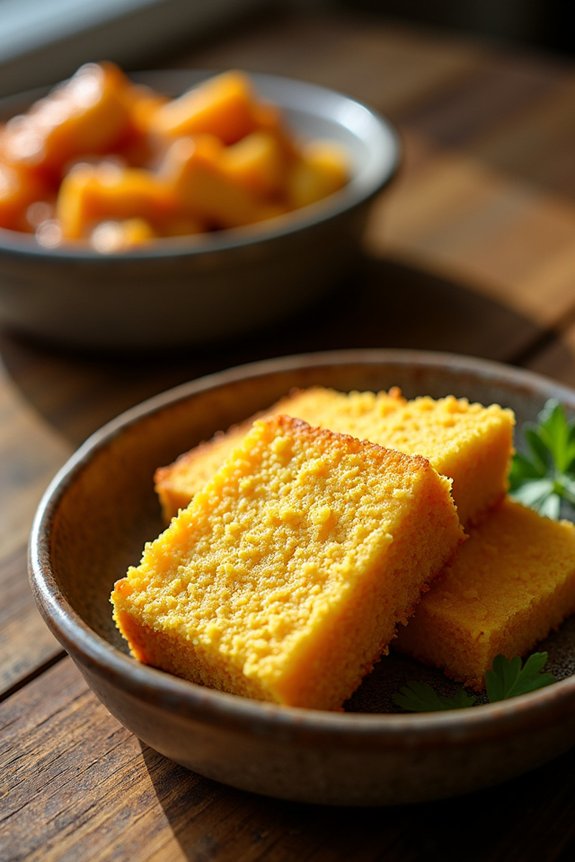
The moment you cross the Mason-Dixon line with a cornbread recipe, you’re stepping into a serious regional divide—and folks on both sides feel pretty strongly about their version. Down South, I make cornbread without sugar because that’s what my family always did. This sugar debate reflects deeper roots: enslaved communities couldn’t access sugar, so unsweetened cornbread became tradition and identity. Up North, they’re adding sugar like it’s cake, and honestly, they’re not wrong for their region. The regionalism around cornbread runs deep—it’s not just about taste preferences, it’s about belonging to a culinary community. Some folks now add honey or maple for dessert versions, but purists stick to savory. Your cornbread choice tells your story.
The Simple Test: How Much Sugar Changes Everything
How much sugar you add—or don’t add—is honestly the game-changer that decides whether you’ve got cornbread or cornbread cake. I’ve learned that traditional Southern tradition relies on zero sugar in the batter, keeping things savory vs sweet in the truest sense. When you skip the sugar entirely, you’re honoring generations of cooks who made cornbread without it. But here’s the thing: add even a quarter cup of sugar, and suddenly you’re shifting toward cake territory. Want to test it yourself? Make one batch unsweetened, another with sugar. The difference becomes obvious—texture changes, flavor shifts, everything transforms. If you crave that cornbread sugar sweetness, try drizzling honey or sorghum molasses after baking instead. That’s how you respect the tradition while satisfying your taste buds.
How Cast-Iron Baking Defined the Savory Standard
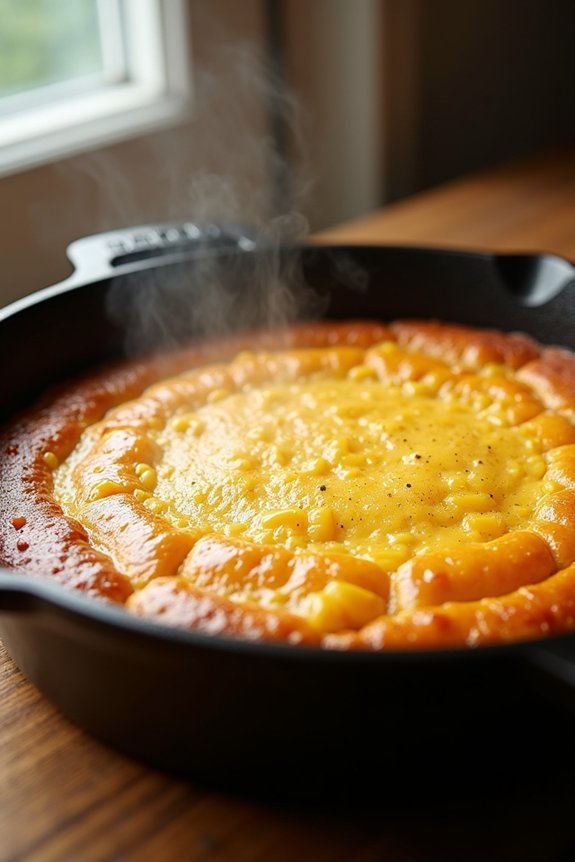
Why does cast iron matter so much when you’re making real Southern cornbread? It’s the secret weapon that transforms your batter into something genuinely special. When I heat my seasoned cast-iron skillet with a touch of bacon grease, I’m creating the foundation for that crispy, golden exterior that defines savory cornbread.
| Element | Temperature | Result |
|---|---|---|
| Preheated skillet | 425°F | Even cooking |
| Bacon grease coating | Sizzling | Crispy edges |
| Batter contact | Immediate | Golden crust |
| Baking time | 20-25 minutes | Fully cooked interior |
| Cast-iron retention | Consistent heat | Perfect texture |
The hot skillet seals the bottom and sides beautifully, preventing that cake-like crumb you’ll find in Northern versions. Your Southern cornbread stays flat and substantial, perfect alongside chili or barbecue. That’s how cast-iron baking created our savory standard.
Savory Cornbread’s Real Role: The Perfect Side Dish

True Southern cornbread isn’t dessert—it’s the savory anchor that makes your meal complete, and I’m talking about that golden, slightly crispy square you pull from a cast-iron skillet, not the sweet cake some folks mistake it for. When you pair it with chili, barbecue, or a plate of collard greens, you’ll discover how its cornmeal-forward texture and savory foundation balance rich, bold flavors without any sugar getting in the way. You can boost that savory character even more by stirring jalapeños into your batter, mixing in sharp cheddar, or cooking it in bacon grease—simple additions that make cornbread shine as the side dish it was always meant to be.
Cornbread’s Savory Foundation
The magic happens with high cornmeal content and a cast-iron skillet heated with bacon grease. That’s where you get those crispy, golden edges that make people reach for seconds. The interior stays flat and sturdy, not cakey, because we’re keeping sugar minimal.
This savory foundation comes from real tradition. Historically, cornbread was unsweetened—that’s simply how folks made it, and honestly, it works. Modern variations respect that legacy, adding herbs, garlic, cheese, or meats instead of sweetness. That’s cornbread doing what it does best: bringing people together at the table.
Classic Pairing Combinations
When you’ve got a steaming bowl of chili on the stove or ribs smoking low and slow, that’s when savory cornbread shows up to do its real job—and it does it better than anything else on your plate.
| Dish | Why It Works | Texture Match | Flavor Balance |
|---|---|---|---|
| Chili | Soaks up heat | Crispy edges | Neutral canvas |
| Barbecue | Cuts richness | Crumbly interior | Complements smoke |
| Collard Greens | Balances greens | Hearty bite | Earthy pairing |
| Fried Okra | Textural contrast | Dense crumb | Savory harmony |
This traditional southern cornbread isn’t trying to be dessert. It’s your trusty sidekick, built specifically for these moments. That cast-iron skillet creates those golden, crispy edges that catch every delicious drop. You’ll find it’s the perfect savory side because it listens to what’s already on your plate, never stealing the show.
Flavor Enhancement Techniques
Savory cornbread’s real magic happens when you stop thinking of it as plain bread and start treating it like a flavor sponge. I’ve discovered that simple flavor-enhancers transform basic cornmeal into something genuinely craveable. Here’s what I do: I fold in sharp cheddar cheese and crispy bacon bits, then stir in fresh rosemary and minced garlic. These additions don’t overwhelm—they dance together beautifully.
You can also top your cornbread with caramelized onions or a savory herb butter right after baking. Sour cream mixed with chives creates an irresistible finishing touch. The key? Let your cornmeal shine while these flavor-enhancers support it. When you serve this alongside collard greens or chicken chili, you’re not just offering bread—you’re offering comfort that belongs at every table.
Sweet Cornbread Variations: Breaking Tradition
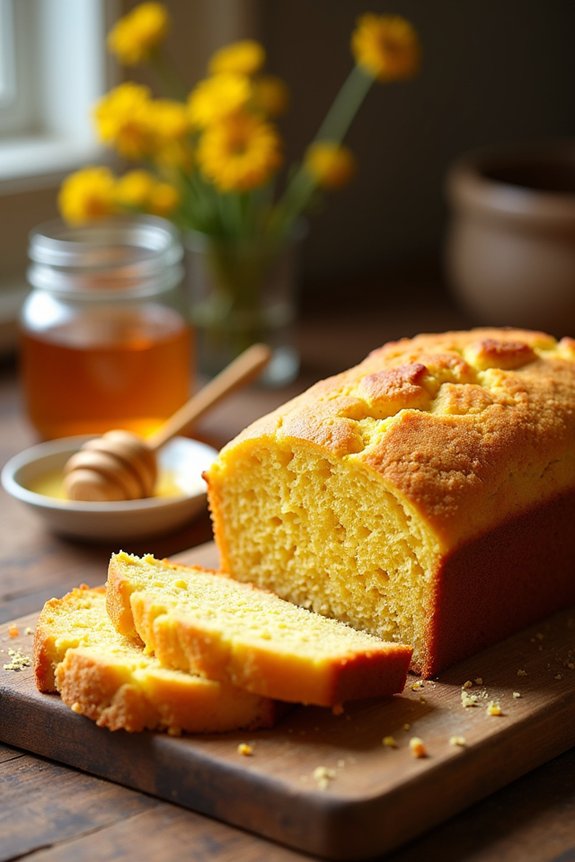
While traditional Southern cornbread stays savory because sugar was once too expensive for many families, modern cooks have started breaking that rule by adding honey, brown sugar, or maple syrup to their batches. I’ve noticed that these sweeter versions—and even fun variations like lemon or fruit-filled muffins—show up more for special occasions than everyday dinners, which tells you something about where cornbread really belongs. The truth is, you can make cornbread however you want, but understanding why the savory version became a Southern staple helps you appreciate both styles for what they are.
Sugar’s Role in Tradition
How’d sugar become such a big deal in cornbread when it wasn’t always there? Well, here’s the thing—it wasn’t. Southern cornbread traditions actually rooted in enslaved communities kept things savory and simple, letting cornmeal shine without sweetness. That no-sugar approach became cultural memory, passed down as the authentic standard.
Here’s why sugar’s role shifted:
- Northern baking traditions brought cake-like sweetness to their versions
- Commercial recipes started adding sugar for mass appeal
- Regional pride reinforced Southern no-sugar cornbread as “real” cornbread
- Modern cooks now choose between honoring tradition or breaking it
If you want that authentic taste, you’re skipping the sugar bowl. You’re joining generations who understood cornbread’s true identity—crispy, cornmeal-forward, and perfectly savory alongside your meal.
Modern Sweet Mix-Ins
Once you decide you’re okay with breaking tradition, the fun really starts—because today’s cornbread cooks are getting creative with mix-ins that turn this savory staple into something sweeter. I’ve discovered that adding apples, peaches, or berries transforms cornbread’s texture and taste entirely. Pecans and walnuts bring crunch, while frozen corn adds subtle sweetness without overpowering that classic cornmeal flavor.
Here’s what I love about this approach: you’re not abandoning Southern savory roots completely. Instead, you’re creating your own cornbread sweetness by folding these ingredients directly into your batter. The beauty? You control how sweet things get. Want it barely sweet? Stick with just berries. Craving something richer? Go for peaches and pecans together. It’s cornbread evolution, and honestly, it’s delicious.
Balancing Act: Can Cornbread Be Slightly Sweet?
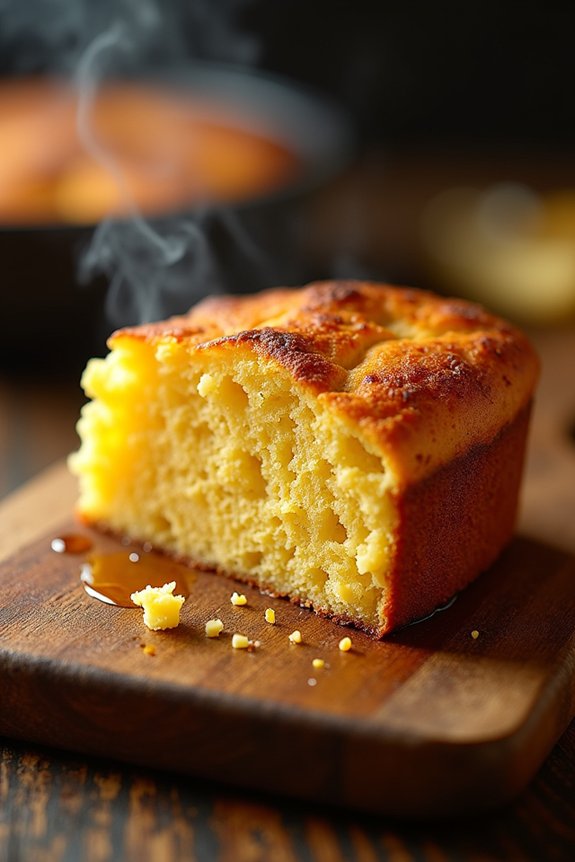
So, can you sweeten cornbread without committing cornbread blasphemy? Absolutely. The key lies in respecting both cornbread sweetness and savory balance while honoring regional traditions.
You’ve got options:
- Drizzle honey on warm cornbread after baking instead of mixing sugar into the batter
- Add a touch of molasses for subtle depth without overwhelming savory notes
- Serve alongside naturally sweet sides like butter and jam for those who want it
- Reserve dessert-level sweetness for actual desserts like pecan pie
Here’s the thing: true Southern cornbread stays unsweetened in the batter. This respects cultural heritage and lets cornmeal’s natural flavor shine. If you want mild sweetness, apply it after baking. You’re not betraying tradition—you’re simply customizing your plate. Both approaches honor what makes cornbread special.
Common Myths About Southern Cornbread Debunked
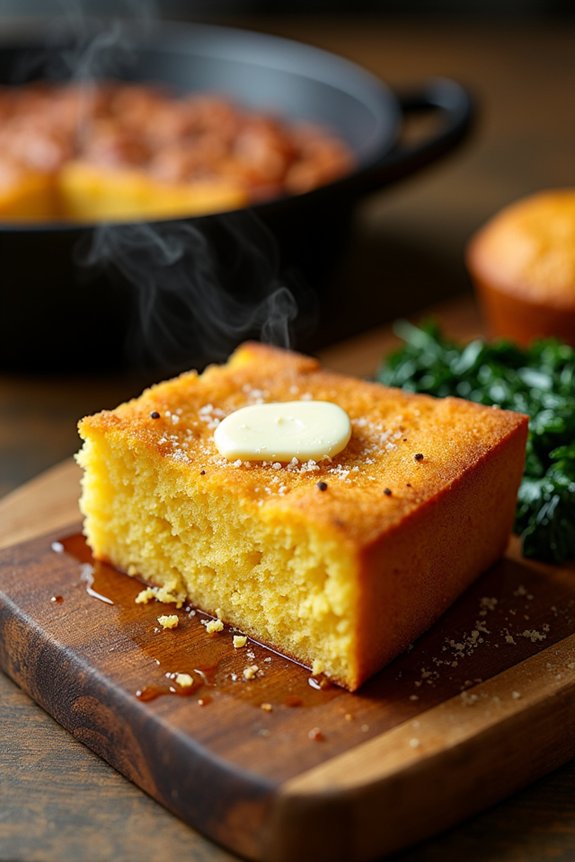
Now that we’ve cleared up how to handle sweetness without stepping on Southern traditions, let’s tackle the tall tales folks tell about cornbread itself.
| Myth | Reality |
|---|---|
| Southern cornbread is sweet | It’s savory and unsweetened |
| More flour makes better cornbread | Cornmeal should dominate the recipe |
| Any skillet works fine | Cast iron creates essential crispy crusts |
| Sugar was always traditional | Economic hardship shaped no-sugar customs |
Here’s what I’ve learned: true savory cornbread comes from our ancestors’ resourcefulness. When sugar cost too much, folks created delicious cornbread without it. Native Americans showed us cornmeal’s magic long before anyone added sweetness. Your cast-iron skillet matters because it delivers that golden, crunchy exterior we crave. Real Southern cornbread isn’t cake—it’s honest, straightforward, and deeply satisfying. Understanding these myths helps us respect where our food comes from and why it tastes so good.
What Pairs Best With Savory Cornbread

Why does savory cornbread taste so much better alongside certain dishes? I’ve discovered that pairing matters tremendously, especially when you’re baking in a well-seasoned cast iron skillet.
The magic happens when you match your cornbread to hearty, flavorful mains. Here’s what works best:
- Chili and soups benefit from cornbread’s crumbly texture
- Barbecue and smoked meats need cornbread’s crispy crust
- Collard greens with ham hocks pair perfectly for Southern comfort
- Black-eyed peas and stews complement savory side portions
I’ve found that toppings enhance these pairings beautifully. Slather butter and cheese on warm cornbread, or top with sour cream and chives. The key is balancing your cornbread’s richness with what’s on your plate. When everything clicks together, you’re not just eating—you’re experiencing tradition.
Why Fruit or Honey Transforms the Recipe
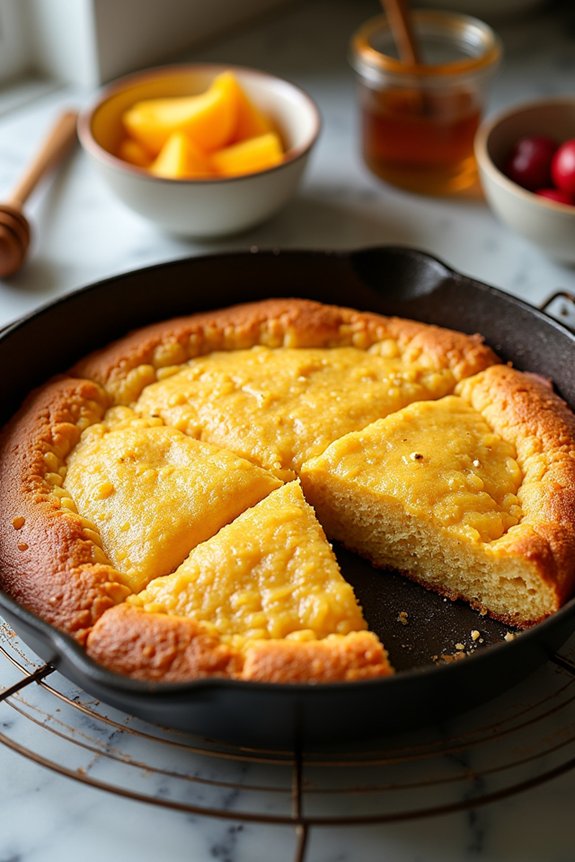
When you add honey or fruit to cornbread batter, you’re fundamentally shifting it from a savory side dish into something closer to a dessert, and that single choice changes how your whole meal comes together. Fruit mix-ins like blueberries add complexity and moisture, while honey works as a glaze that sweetens the crust without soaking into the crumb—both transformations that move cornbread away from its Southern savory roots. That’s why many cooks keep these sweeteners as toppings rather than batter ingredients, letting you control whether cornbread stays a savory companion to collards or becomes its own dessert-like treat.
Sweeteners Shift The Balance
Ever notice how a spoonful of honey drizzled over warm cornbread completely changes what you’re eating?
When you add sweeteners to cornbread, you’re fundamentally shifting its identity. Here’s how sugar transforms this humble side dish:
- Honey or maple syrup pushes cornbread toward dessert territory instantly
- Brown sugar in the batter creates a cake-like texture instead of cornmeal-forward flavor
- Sorghum molasses adds deep sweetness that pairs with sweet accompaniments, not savory sides
- Fruit mix-ins signal dessert status to your taste buds
The magic happens because sweeteners change what pairs well with your cornbread. Savory cornbread sits happily next to chili or collard greens. Add sugar, though, and suddenly it belongs alongside ice cream or butter.
I’ve learned that the sweetener question isn’t really about baking—it’s about deciding which meal your cornbread’s joining. That spoonful of honey? It’s basically announcing: “I’m dessert now.”
Fruit Mix-Ins Add Complexity
Adding fruit to your cornbread batter does something pretty remarkable—it transforms a simple side dish into something that tastes like dessert without you even trying. When you fold in apples, peaches, or berries, you’re not just adding flavor; you’re creating texture complexity that keeps each bite interesting. I’ve found that fruit mix-ins boost sweetness by nature, so you’ll actually need less added sugar overall. Blueberry cornmeal muffins and cranberry orange variations prove how fruit pairs beautifully with cornbread’s earthy base. The moisture from fresh fruit also keeps your cornbread tender and delicious. Honey or maple syrup drizzled on top elevates things further, giving you that dessert-like quality. You’re basically bridging two worlds—creating something that satisfies both savory and sweet cravings at once.
Honey’s Role In Transformation
How does a golden drizzle of honey completely change the game for cornbread? I’ll tell you—it’s pretty transformative. Honey shifts cornbread from a traditional savory side into something that tastes almost dessert-like. Here’s what happens when you add honey:
- Sweetness replaces the savory profile you’d expect
- Moisture increases, creating a cake-like crumb
- Golden browning enhances during baking
- The corn flavor gets complemented rather than masked
Historically, Southern cooks made cornbread without any sweetness, but honey’s become that modern twist we’re all craving. When I drizzle it on warm cornbread or mix it into the batter, I’m essentially redefining what the dish means. You’re no longer serving a side dish—you’re offering something that belongs on the dessert table. That’s the magic honey brings to your kitchen.
Savory or Sweet: Choose Your Style
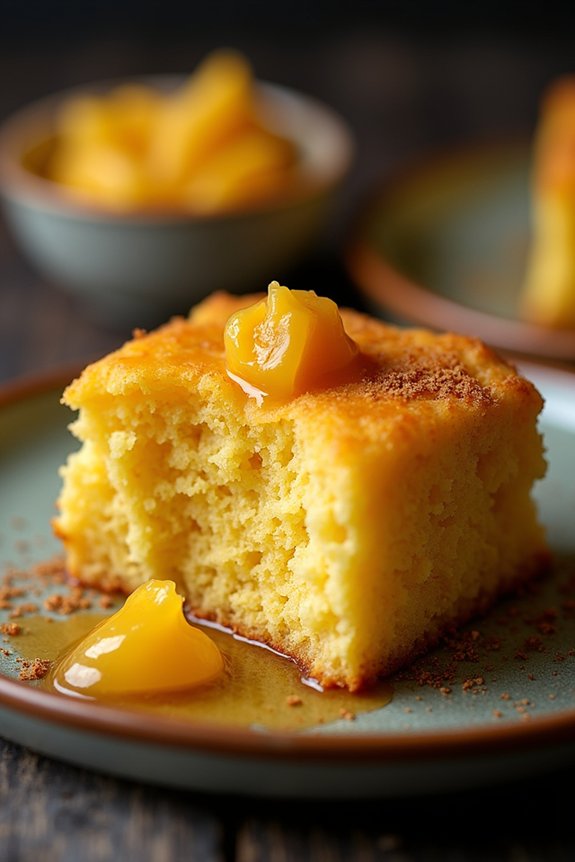
When it comes to cornbread, you’ve got to make a choice—and honestly, it’s one of the best kitchen decisions you’ll ever face. Are you team savory or team sweet? Here’s the thing: true cornbread doesn’t need sugar to be delicious. That flat, crumbly cornbread with more cornmeal than flour? That’s the real deal, especially in Southern kitchens where tradition runs deep.
But if you’re craving sweetness, don’t force it into your cornbread batter. Instead, drizzle warm honey right after baking—it melts perfectly into those warm crumbles. Want extra flavor? Stir jalapeños, chives, or bacon into your savory version. The beauty is that cornbread works wonderfully both ways. You’re not choosing wrong either way; you’re just choosing what fits your meal and your mood.
Where to Find the Right Cornbread Recipe
Where do you even start looking for a cornbread recipe that matches your vision? I’d suggest exploring these reliable sources:
- Southern cookbooks and heritage recipe collections that celebrate traditional, savory cornbread
- The National Cornbread Festival in Tennessee, which showcases authentic no-sugar recipes
- Family recipes passed down through generations, especially from the South
- Trusted cooking websites that specifically highlight savory cornbread techniques
When you’re hunting for the right recipe, focus on ones emphasizing cornmeal-to-flour ratios and cast-iron skillet preparation. These details signal authenticity. Skip recipes loaded with sugar unless you’re after Northern-style cake cornbread. Look for instructions about heating fat in your skillet first—that’s how you’ll achieve those crispy, golden edges we’re after. Finding your perfect match takes a little searching, but you’ll know it when you discover a recipe that speaks to your cornbread dreams.