
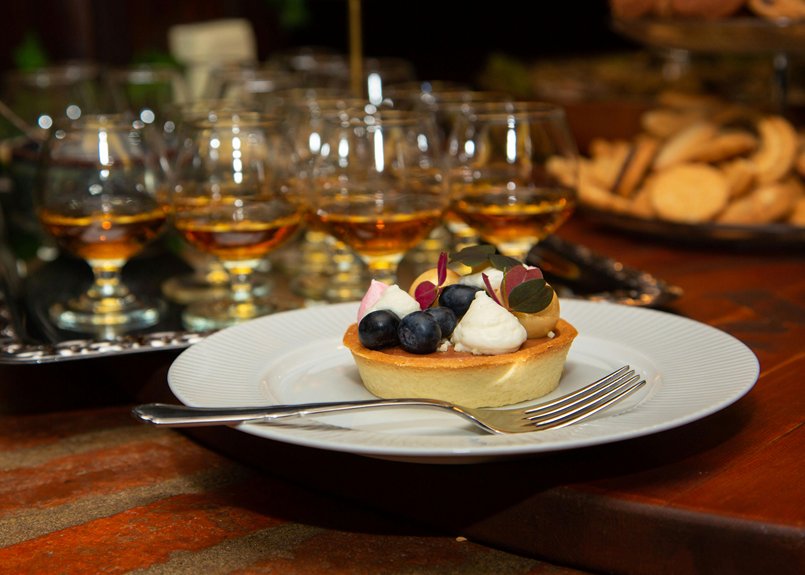
I’ll identify Port wine as a dessert wine by checking three key things. First, I look for “Port” on the label—that tells me it’s from Portugal’s Douro Valley, not a knockoff. Next, I spot the color: Ruby’s deep red and fruity, while Tawny’s amber and complex. Then I check the ABV around 20%—that’s fortified spirit doing its job, keeping it sweet and warming. The small glass it’s served in? That’s your biggest hint that this isn’t dinner wine. Once you understand what each bottle signals, you’ll spot dessert Port instantly.
Start With the Label: “Port” From Portugal
Ever wonder what makes Port wine different from all those other sweet wines gathering dust on your kitchen shelf?
Ever wonder what makes Port wine different from all those other sweet wines gathering dust on your kitchen shelf?
Here’s the secret: if that bottle doesn’t say “Port” from Portugal, it’s not the real deal. True Port comes exclusively from Portugal’s Douro Valley, where winemakers have perfected this fortified wine for centuries. When you’re shopping, look for that magic word—Port—right on the label. It’s your guarantee of authenticity.
You’ll see Port labeled by style: Ruby, Tawny, White, or Rosé. Some bottles mention aging details like LBV or Vintage. These terms tell you how long the wine aged and what to expect flavor-wise.
Non-Portuguese producers can only call their versions “Port style” or “dessert wine.” That’s your clue they’re imitators. The real thing deserves respect, so grab a genuine Portuguese Port and taste the difference yourself.
Spot the Style by Color: Ruby, Tawny, White, or Rosé

When you’re hunting for port at the store, I want you to pay close attention to the bottle’s color—it’s honestly your best clue for what you’re getting. Ruby ports show up as deep red (almost like a dark cherry juice), while tawny ports have shifted to a golden or amber tone from years sitting in barrels, kind of like how honey changes color over time. Once you spot that color difference, you’ve already figured out whether you’re holding a younger, fruity dessert wine or a more complex, caramel-flavored one.
Ruby Port’s Deep Hues
How can you spot a Ruby Port just by looking at it? I’ll tell you—it’s all about that gorgeous deep red color that practically glows in your glass. You’re seeing the result of aging in large vats for just 2–3 years, which keeps that vibrant ruby hue intact.
| Port Style | Color | Key Feature |
|---|---|---|
| Ruby | Deep red | Young, fruity |
| Tawny | Amber-brown | Oxidized |
| White | Pale straw | Lightest |
| Rosé | Pink-salmon | Delicate |
This fruity profile means you’ll catch berry flavors, cherries, and plums—that’s your dessert-style Port talking. Because Ruby gets bottled young without extended wooden aging, those color cues tell you exactly what you’re getting: a fresh, sweet wine that belongs on your dessert table tonight.
Tawny Port’s Golden Shift
If you’re holding a glass of Tawny Port up to the light, you’re looking at something totally different from that deep ruby wine we just talked about. Instead of crimson red, you’ll spot an amber hue that practically glows—almost like honey or caramel candy.
Here’s the magic: Tawny Port spends years aging-in-wood, and that’s exactly what creates those gorgeous golden-brown color cues. The wood doesn’t just change how it looks; oxidation develops those nutty flavors and caramel notes we love.
When you taste it, expect dried fruit dancing with nuttiness on your tongue. That’s the calling card of extended barrel-aging working its charm. So next time you see that amber shift in your glass, you’ll know you’ve found a Tawny Port worth savoring.
Read the ABV: Why Port Is Around 20% Alcohol
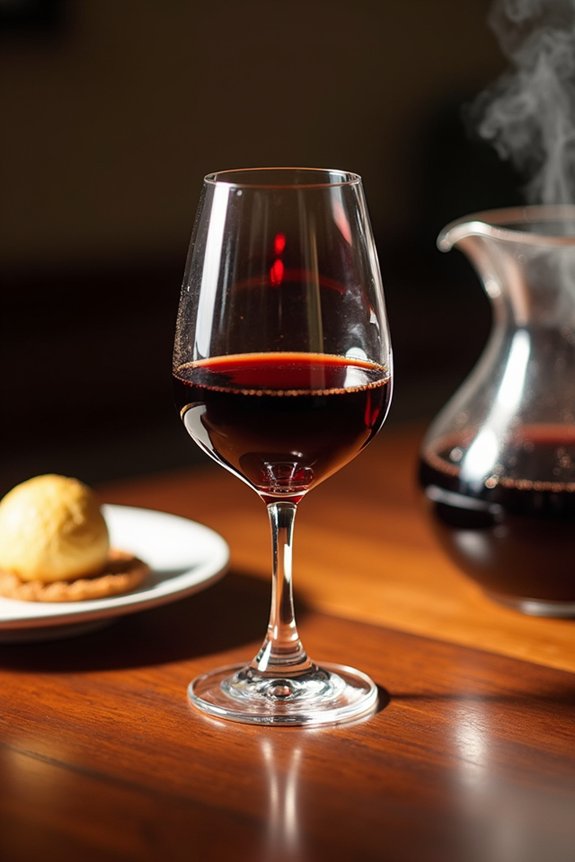
Why does Port feel so different when you take a sip? It’s all about the alcohol content. I’ll let you in on the secret: Port clocks in around 20% ABV, which is substantially higher than regular table wines at 12–14% ABV. Here’s what makes that happen:
- Fortification stops fermentation early – Winemakers add aguardente (grape spirit) during production, halting the process and trapping residual sugar
- Higher ABV creates that dessert-wine sweetness – The elevated alcohol content preserves the wine’s natural sugars, giving Port its characteristic richness
- The 20% mark signals a dessert wine – When you spot that ABV on the label, you’re holding something special
This fortification technique isn’t just for flavor—it’s the backbone of Port’s identity, helping it age beautifully for years while maintaining that luxurious taste you crave.
Why Fortification Makes Port Taste Richer and Last Longer
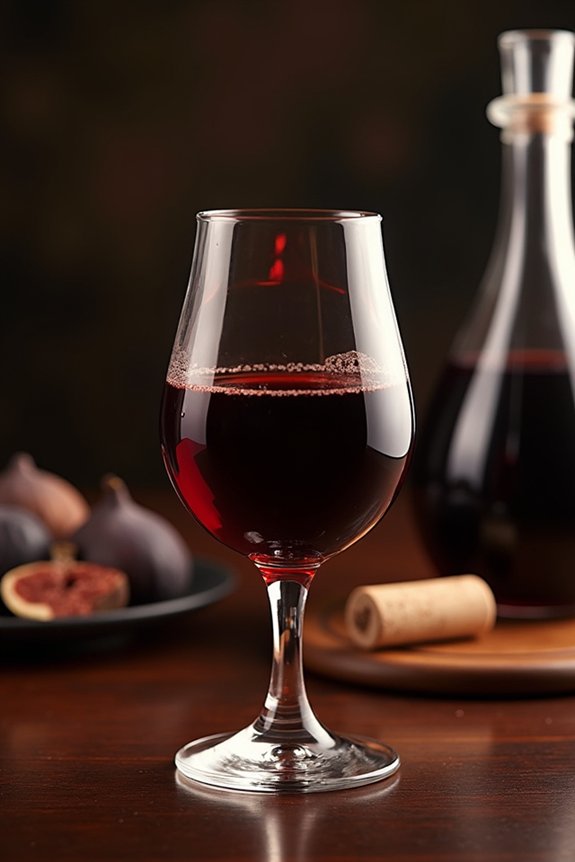
When the winemaker adds that neutral spirit to Port during fermentation, they’re doing two things at once: stopping the yeast from finishing its job (which keeps the wine sweet) and giving the wine built-in protection that lets it last way longer than regular wine. I like to think of it as nature’s preservative—that extra alcohol acts like a bodyguard, keeping the wine fresh even after you’ve opened the bottle, sometimes for weeks or even months. The spirit also deepens the flavors from those fancy grape varieties, layering in rich notes of berry, vanilla, and spice that make Port taste like a dessert all on its own.
Alcohol’s Preservation Role
Have you ever wondered why Port tastes so much sweeter and richer than regular wine? The answer lies in how fortification works its magic. When winemakers add a neutral spirit during fermentation, they’re doing something clever—they’re stopping the yeast from eating all the grape sugars. This preserved sweetness is what makes Port taste like dessert in a glass.
Here’s what makes fortification so brilliant:
- Higher alcohol content (19–22% ABV) acts like a preservative, keeping your Port stable for decades
- Residual sugar stays locked in because fermentation halts early, creating that rich, dessert-wine character
- Stabilization happens naturally, meaning your Port resists spoilage and ages beautifully over time
The alcohol doesn’t just preserve—it concentrates flavors and supports that luxurious body you’re seeking. That’s why Port ages gracefully.
Richness Through Spirit Addition
The real magic happens when that neutral grape spirit gets added to the fermenting wine—and I mean it transforms everything. This fortification process stops fermentation mid-stream, leaving residual sugar behind. That’s your sweetness locked in. The added spirit bumps up the alcohol to around 19–22% ABV, creating a dessert wine that feels luxurious on your tongue. Here’s what I love: that combination gives Port its plush mouthfeel and those rich chocolate and berry notes you’re tasting. The higher alcohol doesn’t just make it stronger; it adds warmth and body that makes Port feel genuinely indulgent. Plus, that fortification extends shelf life dramatically. You’ve got a wine that ages beautifully, maintaining its depth and viscosity for years. That’s richness you can count on.
Taste the Signature Sweetness and Warming Finish
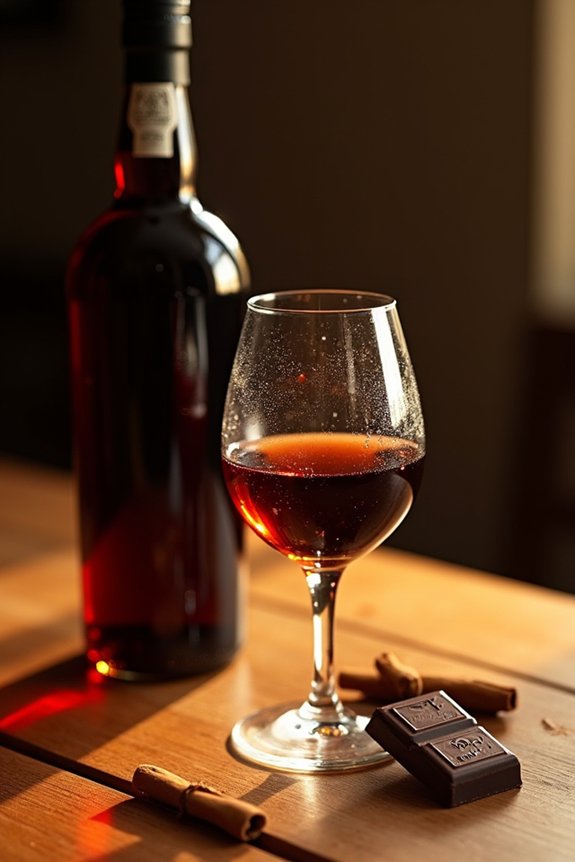
How’s your palate feeling? Now comes the fun part—tasting what makes Port a true dessert wine. When you take a sip, you’ll notice the sweetness hits differently than table wine; it’s rich and jammy, thanks to fortification that stops fermentation early. Here’s what to experience:
Port’s sweetness hits differently than table wine—rich and jammy thanks to fortification that stops fermentation early.
- Ruby Port’s fruit-forward sweetness bursts with berry notes and warmth
- Tawny Port’s caramel and nutty complexity develops through oxidation
- The lingering finish wraps up with cinnamon, chocolate, and spice
Serve your Port at about 60°F in a 3-ounce pour—this temperature and serving size emphasize the warming impression that signals dessert wine. That comfortable heat spreading through your chest? That’s Port doing its job. You’re tasting why people save this wine for the sweet finale.
The Small Glass Tells You It’s a Dessert Wine
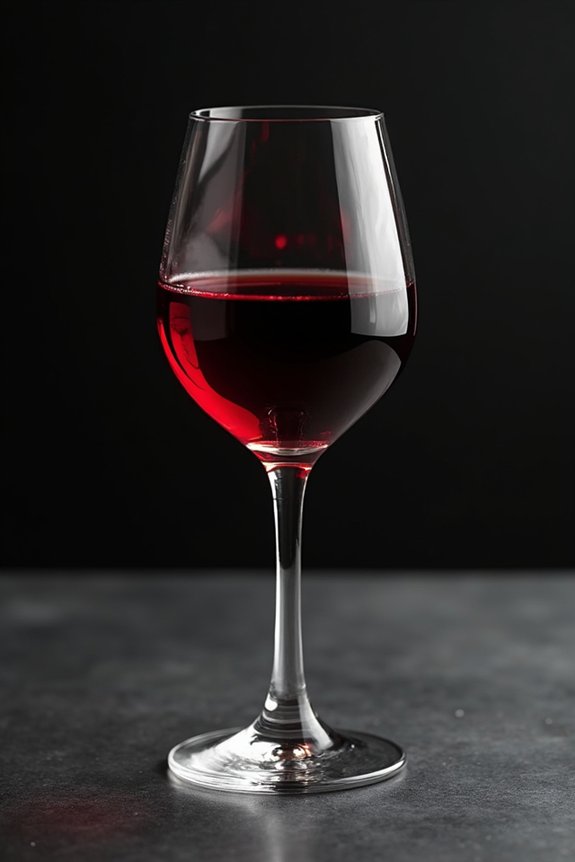
Ever notice that Port arrives in a noticeably smaller glass than your regular wine glass? There’s a reason for that, and it’s actually pretty clever. I’ve found that serving Port wine in a small glass—about 3 oz—isn’t just fancy presentation. It’s purposeful design. That tulip-shaped glass concentrates the aroma, letting you experience the dessert wine’s rich bouquet more intensely. The smaller serving size matches Port’s high ABV and sweetness, so you’re getting the perfect amount without overwhelming your palate. Think of it like using a small spoon for honey instead of a ladle. When you spot that petite glass, you’ll immediately know you’re entering dessert wine territory. It’s the glassware equivalent of a welcoming handshake from the sommelier, signaling something special’s coming your way.
Age Markers: Cork, Label, and Vintage Clues on the Bottle

Once you’ve spotted that telltale small glass, I’d encourage you to take a closer look at the bottle itself—the cork, label, and vintage details all work together like clues in a treasure hunt.
Here’s what I look for:
- Cork type: Natural corks and longer stoppers signal serious aging potential, while plastic tops hint at drink-now styles
- Label designations: Ruby, Tawny, LBV, Colheita, or Vintage tell you the aging stage and style
- Vintage year: A declared vintage year means this Port’s built for long cellaring, unlike younger blends
When you’re standing in the store comparing bottles, these markers help you decode what you’re holding. A vintage Port with that traditional cork speaks differently than a Ruby with modern closure. You’re learning the language of dessert wines, and that knowledge belongs with you.
Price as a Guide: Supermarket Port vs. Collector Bottles
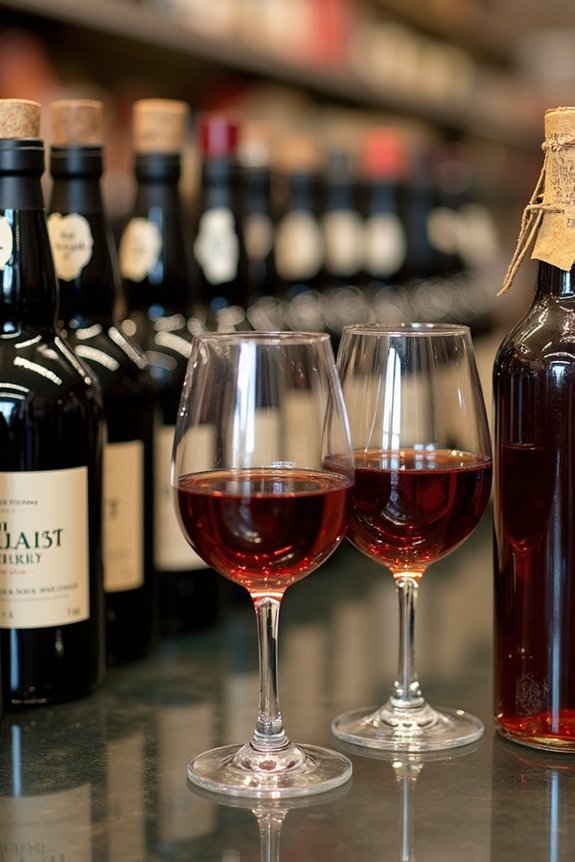
Why does that fancy Port cost ten times more than the bottle next to it? Here’s the secret: what you’re really paying for is time and rarity.
Supermarket Ruby and basic Tawny ports are affordable everyday choices, designed for immediate enjoyment. But collector bottles? They’re a different beast entirely. Vintage and Colheita ports spend decades aging in oak or glass, developing complexity that cheaper options simply can’t match. Houses like Taylor Fladgate command premium prices because their limited-release bottles promise serious aging potential.
Think of it this way: a supermarket Port gives you straightforward sweetness, while a collector bottle delivers layers of flavor and a silky finish. You’re investing in experience, not just dessert wine. Higher price reflects deeper character and longevity—qualities that matter when you’re truly tasting, not just sipping.