Traditional French onion soup uses beef broth, making it non-vegetarian, but you can easily make a vegetarian version that’s just as delicious. I swap the beef for mushroom or vegetable broth, which gives you that rich, savory depth you’re after. The real magic happens when you slowly caramelize onions for 45 minutes to an hour—they become sweet and golden. Then I add vegetarian Worcestershire sauce or soy sauce for extra umami punch. Top it with melted Gruyère and toasted bread, broil until bubbly, and you’ve got restaurant-quality soup at home. Stick around for the full technique.
Is French Onion Soup Vegetarian?
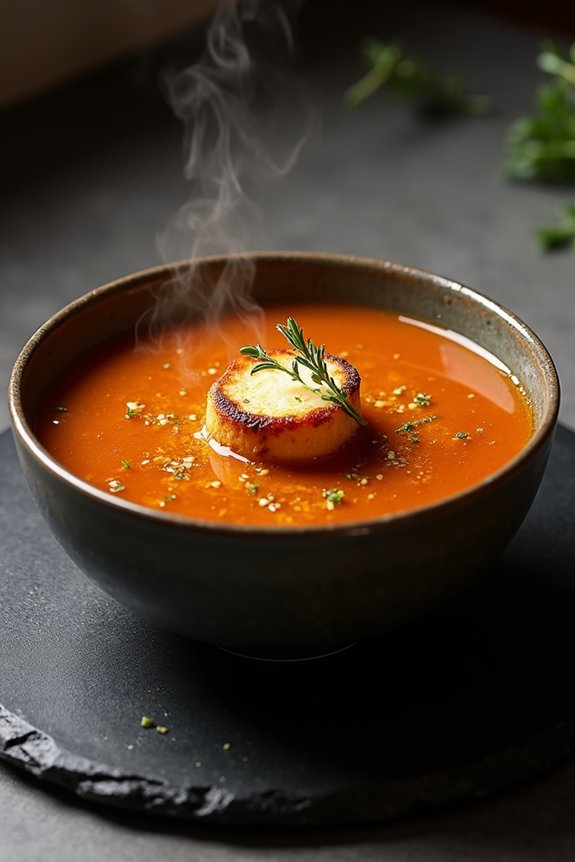
So, here is the matter about traditional French onion soup: it’s made with beef stock, which means it’s not vegetarian unless you swap that out. But don’t worry—I’ve got you covered.
When I make a vegetarian version, I replace the beef broth with vegetable broth or mushroom broth instead. This keeps that deep, rich flavor you’re craving. The mushroom broth especially works magic because it adds umami, that savory taste that makes everything taste incredible.
Mushroom broth adds incredible umami depth to vegetarian French onion soup, delivering that rich, savory flavor without the beef.
There’s one sneaky ingredient to watch: Worcestershire sauce often contains anchovies. I always use a vegetarian version to keep things truly meat-free.
The caramelized onions remain the star, and that’s where the real flavor comes from anyway. Once you master the technique with the right vegetarian broth, you’ll create something incredible that everyone can enjoy together.
What Makes Traditional French Onion Soup Non-Vegetarian?

Traditional French onion soup gets its savory depth from beef broth, which is the main reason it isn’t vegetarian. You’ll also find that many recipes include Worcestershire sauce—and here’s the catch—it typically contains anchovies, which means it’s not meat-free either. So if you’re cooking for vegetarian friends or yourself, you’ve got to swap out both of these ingredients to make it work.
Beef Broth Base Ingredient
The deep, savory magic in classic French onion soup comes from one main ingredient: beef broth. I’ll walk you through why this matters for your vegetarian version.
Traditional recipes rely on beef stock because it creates that rich, meaty depth you’re craving. Here’s what you’re working with:
- Beef bouillon – simmered slowly to develop complex flavors
- Browning fond – caramelized bits that make the broth taste incredible
- Worcestershire sauce – adds umami punch (but often contains anchovies)
The good news? You can absolutely recreate that magic without meat. Swap beef broth for vegetable broth or mushroom broth, which deliver similar depth. Choose Worcestershire-free versions or use soy sauce instead. Your vegetarian soup will satisfy everyone at your table, I promise.
Worcestershire Sauce Anchovy Content
Why does Worcestershire sauce make traditional French onion soup non-vegetarian? Well, here’s the thing—this classic condiment contains anchovies, those tiny fish that pack serious umami flavor. I didn’t realize this at first either, but once I learned it, I started checking labels religiously.
The good news? You’ve got options. I now use vegetarian Worcestershire sauce, which is anchovy-free and works beautifully in my soup. Some friends prefer vegan alternatives like soy sauce or mushroom powder instead.
| Ingredient | Contains Fish | Works for Vegetarians |
|---|---|---|
| Traditional Worcestershire | Yes | No |
| Vegetarian Worcestershire | No | Yes |
| Soy Sauce | No | Yes |
| Mushroom Powder | No | Yes |
| Anchovy Paste | Yes | No |
Making this swap means you’re creating a genuinely meat-free dish that tastes incredible.
How To Replace Beef Broth With Vegetable Alternatives
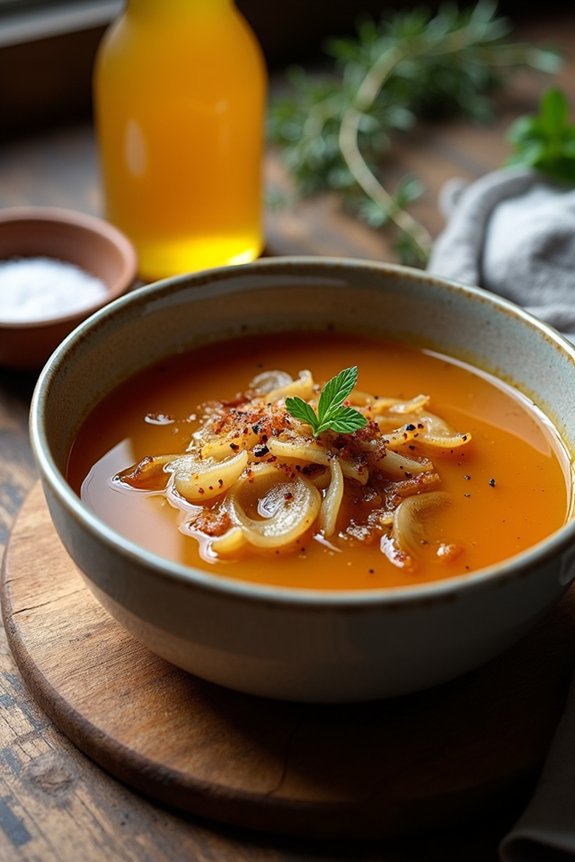
Here’s where mushroom broth becomes your secret weapon—it’ll give your vegetarian soup that rich, savory depth you’d normally get from beef. I like to use about half mushroom broth and half vegetable broth, which creates that umami flavor (the savory taste that makes you go “mmm”) that makes people forget there’s no meat involved. The earthy mushroom notes work with caramelized onions to build layers of flavor that’ll have everyone asking for your recipe.
Mushroom Broth Depth
How do you get that deep, savory richness in vegetarian French onion soup without beef broth? I’ll tell you—mushroom broth is your secret weapon. Here’s what I do:
- Simmer fresh mushrooms with vegetables to extract that incredible umami flavor
- Boost the depth by adding dried mushrooms or mushroom powder to your broth
- Layer in thyme, bay leaves, and dry wine for complexity that rivals traditional versions
When I’m building my vegetarian French onion soup, I let those mushrooms do the heavy lifting. The umami they provide creates that savory, earthy richness you’re craving. Just remember to taste as you go—you might need to adjust salt levels, especially once you add cheese and any Worcestershire sauce. Trust me, your guests won’t miss the beef one bit.
Umami Flavor Enhancement
The secret to making vegetarian French onion soup taste just as rich and satisfying as the traditional version? It’s all about building umami depth. I’ve found that mushroom broth paired with a quality vegetarian stock creates that savory foundation you’re craving. Here’s what I do: I add mushroom powder or dried mushrooms directly to the broth—they’re umami powerhouses that deepen everything beautifully.
Then I boost the flavor further with vegan Worcestershire sauce, soy sauce, or tamari. A splash of dry sherry after caramelizing your onions lifts those browned bits from the pan, adding complexity that rivals traditional beef versions.
Fresh thyme and bay leaves round out the profile, mimicking the nuance you’d find in meat-based broths. This layered approach creates something genuinely satisfying that’ll make everyone at your table happy—no beef required.
The Role Of Caramelized Onions In Building Deep Flavor
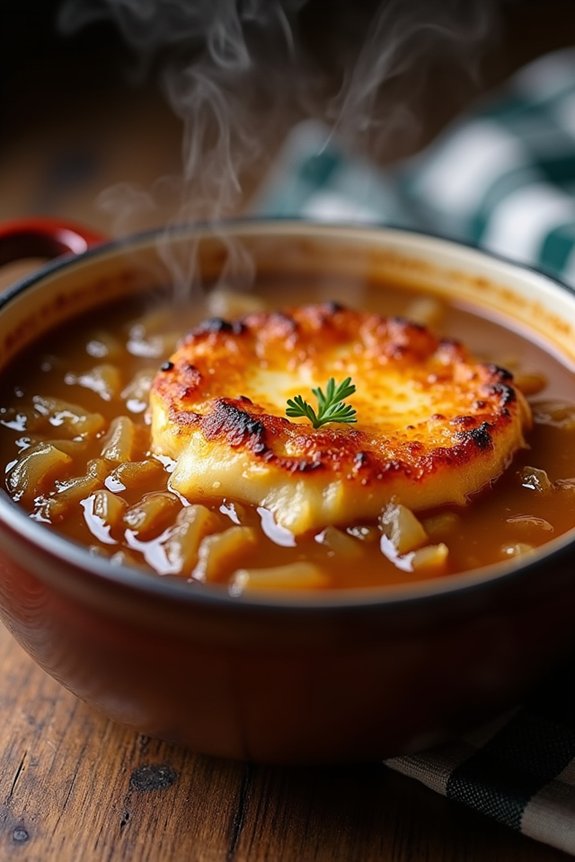
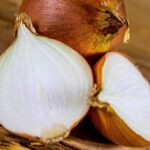
Why spend nearly an hour slowly browning onions when you could just toss them in a pot and call it a day? Because caramelization transforms ordinary onions into liquid gold—that’s why.
Here’s what makes this magic happen:
- Low heat + time = sweetness: Cooking onions slowly over 45 minutes to an hour coaxes out natural sugars, creating deep, complex flavors you can’t rush.
- Butter finishes the job: Adding butter after softening helps onions brown beautifully while boosting that rich sweetness.
- Deglazing unlocks umami: Red wine or vegetarian broth lifts browned fond from the pan, intensifying depth dramatically.
Those deeply reduced, richly brown onions aren’t just pretty—they’re your soup’s flavor foundation. That’s how you build vegetarian broth that rivals traditional versions.
Wine, Worcestershire Sauce, And Other Umami Boosters
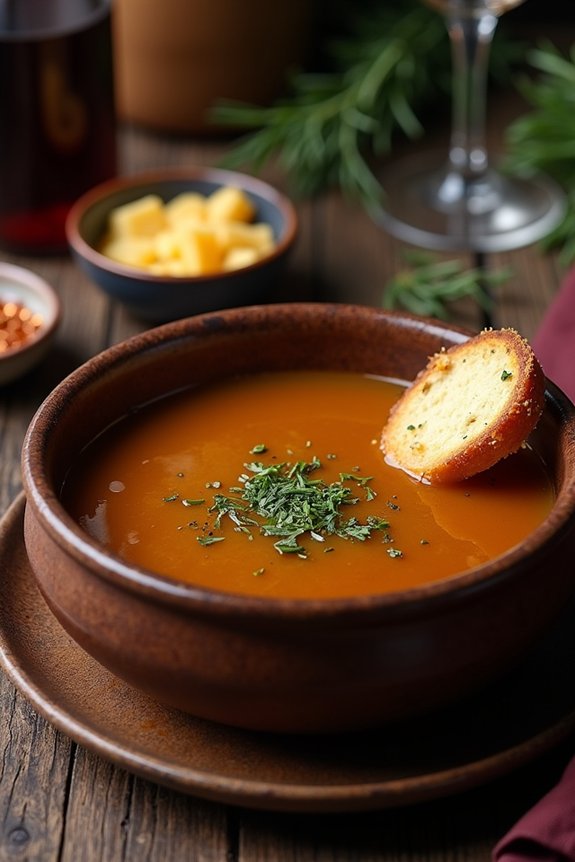
Once you’ve got those caramelized onions looking like burnished treasure, you’ll need some serious flavor reinforcements to build that savory depth you’d normally get from beef broth. I reach for vegetarian-friendly umami boosters that transform your soup into something truly special. Vegan Worcestershire sauce is my secret weapon—it adds that complex, tangy punch without any fish ingredients. Red wine deglazes the pan beautifully, deepening color and flavor, while white wine keeps things lighter if you prefer. Can’t use wine? No problem. I combine extra mushroom broth with apple cider vinegar for that needed acidity. Don’t forget soy sauce or porcini powder either. These umami boosters work together, creating layers of savory richness that’ll make everyone forget there’s no meat involved.
Step-By-Step Instructions For Vegetarian French Onion Soup
I’ll walk you through the two most important moves that’ll make your soup shine: getting those onions golden and caramelized (about 35–40 minutes total, which I promise is worth the wait), and then nailing the broiler finish so your cheese gets bubbly and gorgeous on top. The onion magic happens in two stages—first 20 minutes in olive oil and butter, then another 15–20 minutes with extra butter to really deepen that sweet flavor—and trust me, this patience pays off big time. Once you’ve got your toasted bread in those oven-safe bowls with the hot broth and cheese piled on, you’ll slide them under the broiler for just a few minutes until everything’s melted and golden, and you’ll understand why this soup’s been a classic for centuries.
Caramelizing Onions Properly
How do you turn plain onions into something so deeply flavorful that they become the star of your soup? I’ll share my trusted method for caramelizing onions—the secret foundation of vegetarian French onion soup.
Here’s what makes the magic happen:
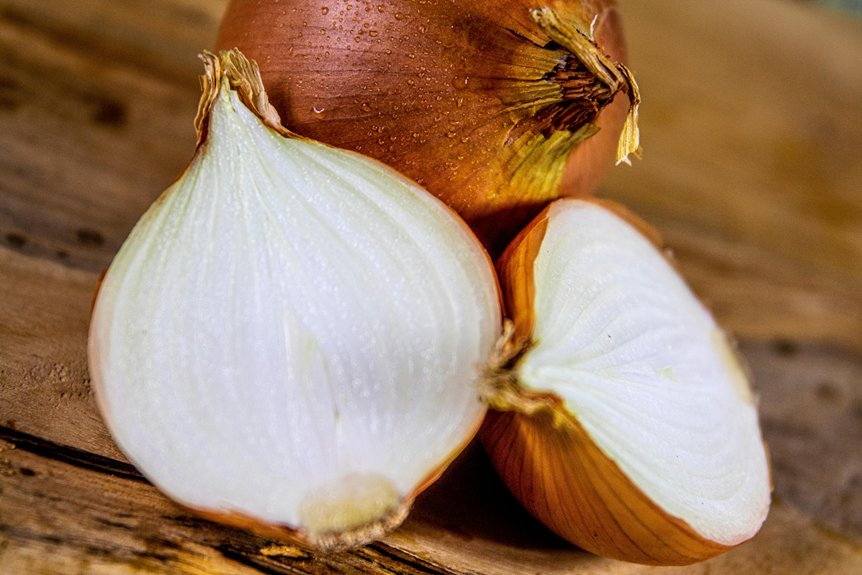
- Slice yellow onions thinly and cook them in olive oil for about 45 minutes to an hour on medium-low heat
- Add salt, sugar, and butter to deepen the browning and develop that gorgeous golden-brown color
- Stir in garlic near the end, then deglaze with red wine or water to lift all those caramelized bits stuck to the pan
The key? Patience. I don’t rush this process because those caramelized onions create the rich, complex flavor foundation that makes your entire soup sing. Trust me—it’s worth every minute.
Assembling And Broiling Bowls
The moment you’ve been waiting for is finally here—it’s time to transform your beautiful caramelized onion soup into the iconic, cheese-topped masterpiece that’ll make everyone at your table go “wow.” Start by preheating your oven to 350°F and lining a sheet with foil, then arrange your oven-safe bowls (you’ll want 4–6 of them) right on top so they’re ready to go.
Now ladle your hot soup into each bowl, then crown each one with 3 tablespoons of shredded cheese and a piece or two of toasted bread. Slide everything into the oven for about 10 minutes—this lets the bread soak up all that delicious onion flavor while the cheese begins melting. Finally, broil for 1–2 minutes, watching closely until that cheese browns and bubbles beautifully. Serve immediately while everything’s piping hot!
Cheese And Bread Topping Techniques For The Perfect Gratin
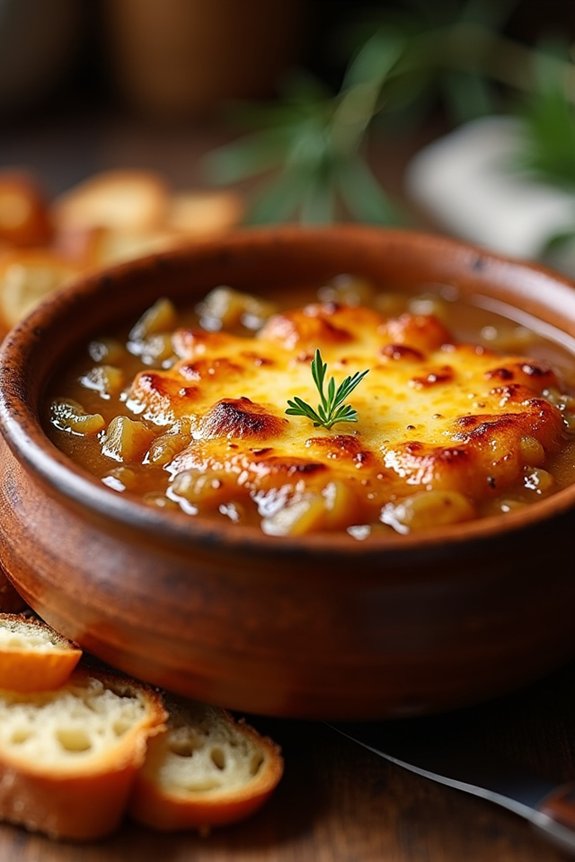
Getting that crispy, golden, bubbling cheese topping just right is what separates a good French onion soup from a truly memorable one.
Here’s how I nail the vegetarian gratin every time:
- Layer your bread first – I place 1–2 toasted baguette slices directly in each bowl, letting them soak up that rich broth.
- Add cheese generously – I sprinkle 1/4 cup shredded Gruyère, Swiss, or Gouda over the bread (vegan cheese works too!), making sure it covers everything.
- Broil until perfection – I slip the bowls under the broiler until edges brown and bubble, usually 2–3 minutes.
The cheese topping transforms your onion soup into something special. That contrast between melted cheese and crispy bread? That’s what your family will ask you to make again.
Making A Vegan Version With Plant-Based Substitutes
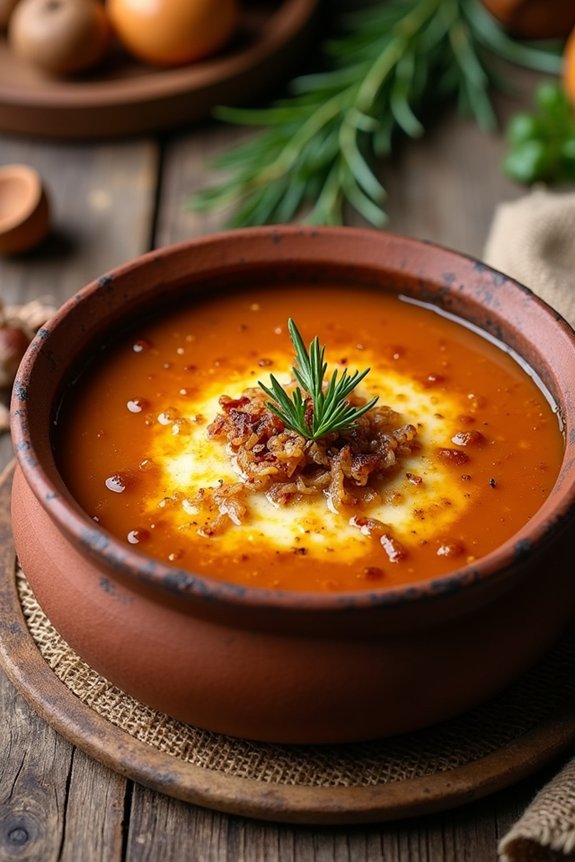
Want to know the secret to making French onion soup that works for vegans? I’ll swap the beef stock for mushroom broth, which gives you that deep, savory flavor you’re craving. Here’s what I do: caramelize your onions in olive oil instead of butter, then add the mushroom broth with a splash of soy sauce and dry sherry for extra richness.
For the topping, I use plant-based cheese or skip it entirely. I toast baguette slices as crispy croutons instead. If you want that umami punch, mix soy sauce with miso paste—trust me, it’s amazing.
Your vegan French onion soup will taste so good, your non-vegan friends won’t even notice what’s missing. That’s the magic of doing it right.
Make-Ahead Tips And Storage Guidelines
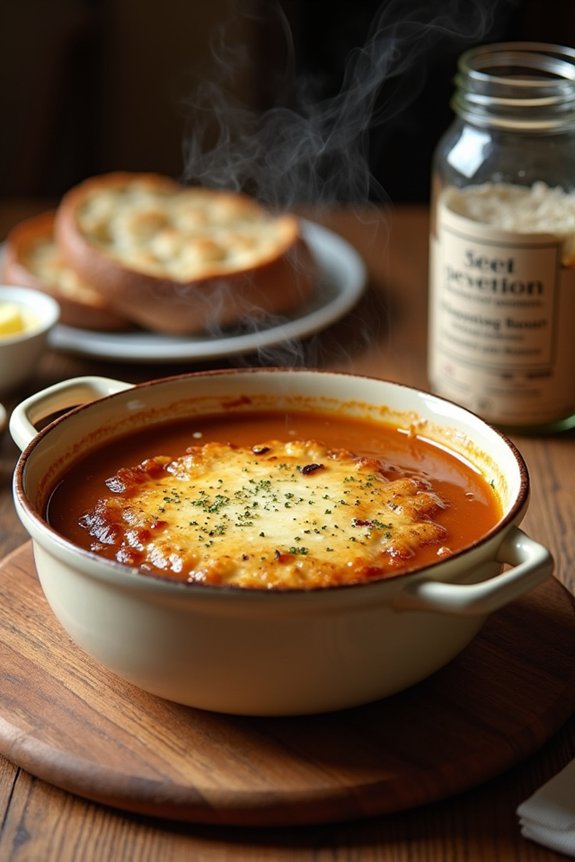
Since French onion soup is basically built in layers, you can totally prep most of it ahead of time—which honestly makes your life easier when dinner rolls around.
Here’s what I do to stay organized:
- Refrigerate your vegetarian broth and caramelized onions separately for up to 5 days, then combine them when you’re ready to serve
- Freeze the soup base for up to 3 months (just thaw it overnight), saving you serious prep time on busy weeknights
- Toast your croutons ahead and store them in an airtight container for several days, keeping them crispy and ready to go
I love this make-ahead approach because it breaks the cooking into manageable chunks. You’re not stuck in the kitchen for hours on serving day—you’re just assembling, topping with bread and cheese, then broiling. That’s the dream, right?
Common Mistakes To Avoid When Caramelizing Onions
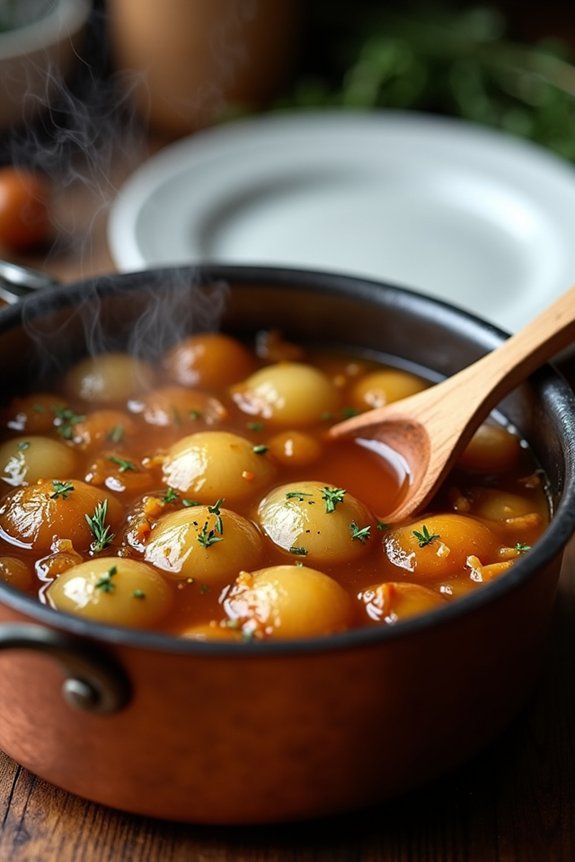
Why do so many home cooks end up with burnt onions instead of that gorgeous golden caramel? I’ll tell you—it’s usually about rushing the process. I’ve learned that proper heat control is essential when caramelizing onions. You’ll want to cook them low and slow for 45 minutes to an hour, stirring occasionally to prevent sticking and scorching. Don’t crank up that flame! As the sugars melt and brown, keep things steady. When you notice browned bits sticking to the pan, deglaze with a splash of water or wine—this lifts those flavorful bits without letting bitterness sneak in. Using olive oil with a touch of butter creates that rich, glossy result we’re after. Take your time, and you’ll nail it.
Serving Suggestions And Complementary Side Dishes
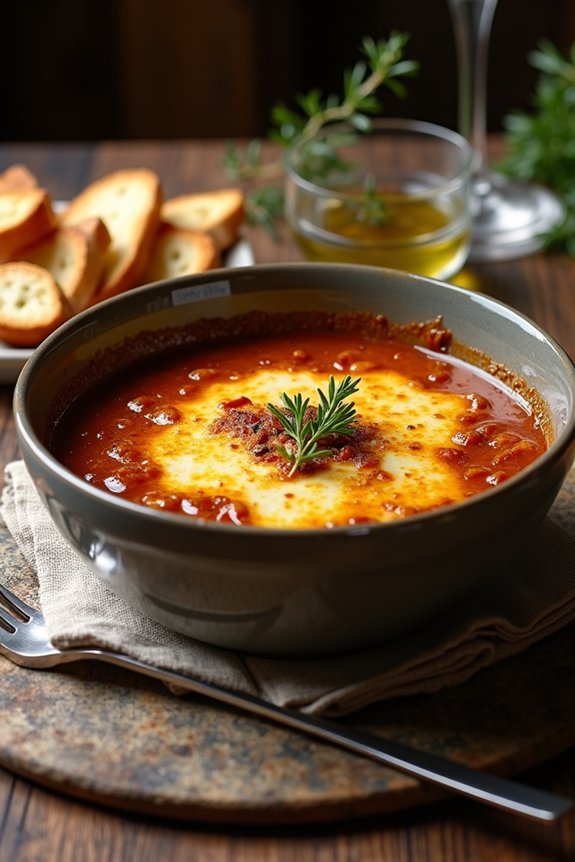
Now that you’ve got your silky vegetarian French onion soup ready, let’s talk about how to serve it so it really shines.
- Top your bowls with crusty French bread and melted Gruyère or vegan cheese, then broil until bubbly and golden
- Pair your onion soup with a light fennel salad or bitter greens to contrast those sweet caramelized onions
- Add crunchy accompaniments like garlic butter toasts, crostini, or herb-spiked croutons for texture
For serving suggestions that work for everyone, I like offering this vegetarian soup in smaller bowls as an appetizer since you’ll get 6–8 starter portions. Want something heartier? Serve it alongside roasted carrots, Brussels sprouts, or a quinoa salad. These sides complement the rich, savory flavors beautifully while keeping your meal satisfying and balanced.