I used to think dumplings were pure indulgence until I discovered steamed ones pack 2.5 grams of protein and only 1.7 grams of fat per dumpling—seriously impressive. Steaming beats frying by saving 250 calories per meal, and when you fill them with veggies, you’re getting fiber and fullness without guilt. Six dumplings clock in around 250 calories, and pairing them with greens creates a balanced plate that actually supports your goals. The best part? Ginger and chives boost digestion and heart health by design. There’s so much more to uncover about making dumplings work for you.
Steamed Dumplings Deliver 2.5g Protein and Just 1.7g Fat Per Serving
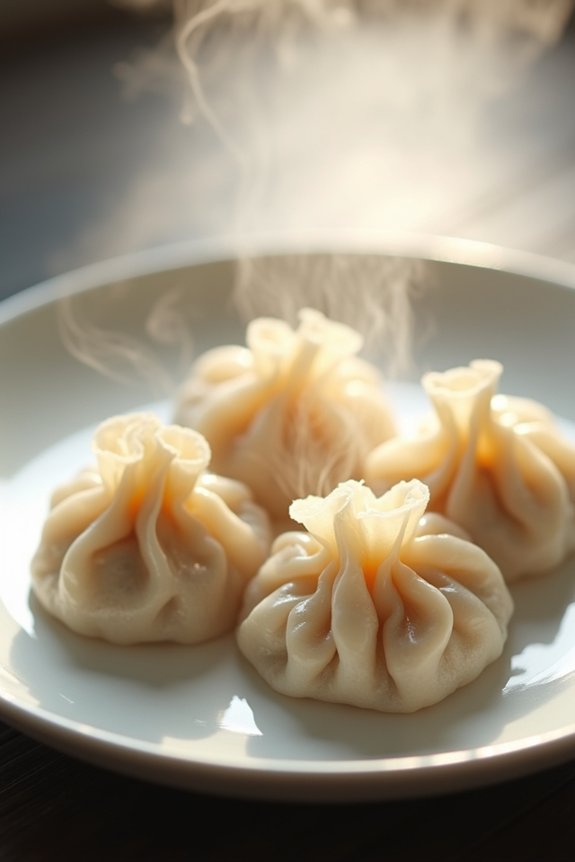
Ever wondered why steamed dumplings are such a smart choice for a satisfying meal? I’ll tell you—they’re nutritional powerhouses hiding in those delicate wrappers.
Each dumpling packs 2.5 grams of protein, which helps build and repair your muscles. That’s impressive for something so small! What I really love, though, is that you’re only getting 1.7 grams of fat per dumpling. That means you can enjoy them without guilt.
Each dumpling delivers 2.5g protein for muscle repair and just 1.7g fat—guilt-free nutrition in every bite.
The magic happens when you steam them instead of frying. You’re keeping the fat content low while maintaining all that good protein. It’s like getting the best of both worlds—taste and nutrition working together.
I’ve found that these dumplings fit perfectly into any eating plan where you want filling food that doesn’t weigh you down.
Steaming Beats Frying: Save 250+ Calories Per Meal
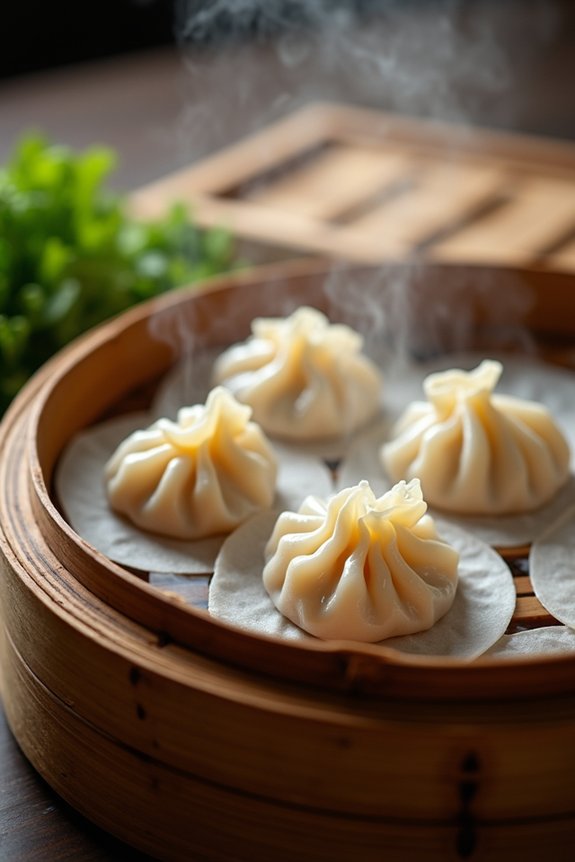
Now that you know steamed dumplings pack serious nutrition into a tiny package, let me show you how cooking method makes an even bigger difference. Here’s the thing: steaming versus frying creates a massive calorie gap. Six steamed dumplings clock in around 250 calories, while pan-fried versions hit 330 calories. That’s an 80-calorie difference per serving, and it adds up fast.
When you choose steaming over deep-frying, you’re saving roughly 250 calories per meal. Over a week, that’s substantial progress toward your health goals. The oil used in pan-frying adds 30–50 extra calories alone, while steaming preserves nutrients and keeps sodium levels lower.
Here’s my favorite trick: pair your steamed dumplings with leafy greens or broth. You’ll feel fuller without significantly increasing calories. It’s the simple shift that makes real difference.
Cooking Method Matters More Than Ingredients Alone
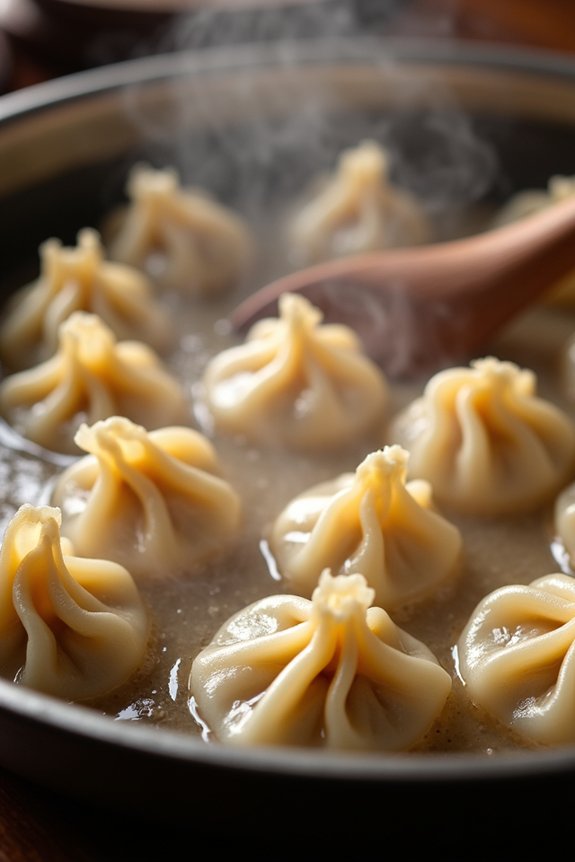
Why do two dumplings with identical fillings end up so different nutritionally? The answer lies in how you cook them. When I steam dumplings, I’m preserving nutrients while keeping sodium lower—that’s the smart move. Frying, on the other hand, adds tons of extra calories and fat through oil absorption. Here’s the thing: steaming keeps each dumpling around 40–60 calories, but frying bumps that up significantly. I’ve learned that the cooking method matters more than the filling itself. You could have the healthiest ingredients imaginable, but frying changes everything. That’s why I choose steaming whenever possible. It’s not just about calories—it’s about protecting the nutrition you’re actually eating.
Vegetable Fillings Deliver Fiber Without Excess Calories
If you’ve ever wondered what makes the difference between a dumpling that leaves you satisfied for hours and one that doesn’t, I’ll tell you: it’s what’s inside.
Vegetable fillings are your secret weapon for creating dumplings that actually fill you up without weighing you down. Here’s why I’m convinced:
- Fiber boost: Vegetables like cabbage and leafy greens pack serious fiber that keeps you full longer
- Lower calories: You’re getting volume and nutrition without excess fat
- Nutrient density: Mushrooms and greens deliver vitamins your body actually needs
- Better digestion: That fiber supports your digestive health naturally
- Balanced protein: Mixing vegetables with lean protein creates the perfect satisfaction combo
When you load your dumplings with vegetables, you’re not sacrificing taste—you’re upgrading your body’s experience.
Pre-Portioned Dumplings Make Calorie Control Effortless
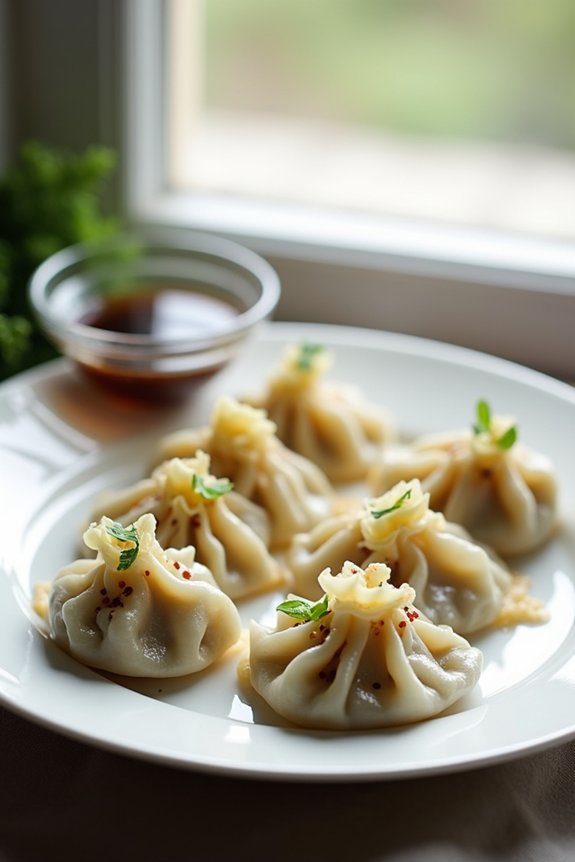
I’ve found that counting dumplings is way easier than eyeballing portions of other foods, so you’ll actually know what you’re eating instead of guessing. Since six steamed dumplings clock in at around 250 calories, I can plan my meals confidently—whether I’m aiming for a light lunch or bulking up with sides—and track my intake without any math headaches. When you know each dumpling’s got roughly 40 calories and 2.5 grams of protein, hitting your daily goals becomes straightforward instead of stressful.
Portion Accountability And Tracking
How’s this for a breakthrough: pre-portioned dumplings take the guesswork out of calorie control and make meal planning feel less like math homework.
When you’re tracking what you eat, knowing exactly what’s on your plate matters. Here’s why I love this approach:
- Six steamed dumplings equal about 250 calories—no estimating required
- Two dumplings pack 12 to 22 grams of carbs, making carbohydrate tracking straightforward
- Portion control becomes automatic when dumplings come pre-measured
- You skip the mental math by simply counting what’s in front of you
- Sauces stay accountable when you use small dipping portions intentionally
This system works because it removes decision fatigue. You’re not wondering if you’ve eaten too much; you know. That’s the belonging we all crave—confidence in our choices without obsessing over numbers.
Strategic Meal Planning Benefits
When you’re building meals around pre-portioned dumplings, the math stops being overwhelming and starts working for you. I’ve found that planning six to eight medium dumplings per meal transforms portion control from stressful guesswork into something genuinely doable. Here’s what makes it click: each steamed dumpling clocks in at forty to sixty calories with two to four grams of protein, so you’re not mentally calculating all night.
I pair my dumplings with greens or broth, which fills half my plate with vegetables and naturally keeps calories in check. Swapping pan-fried versions for steamed ones cuts added fats significantly. Adding a small dip of low-sodium sauce rounds out flavor without derailing your goals. Suddenly, healthy eating feels less like restriction and more like a plan that actually works.
Cabbage, Mushroom, and Leafy Greens Boost Micronutrients
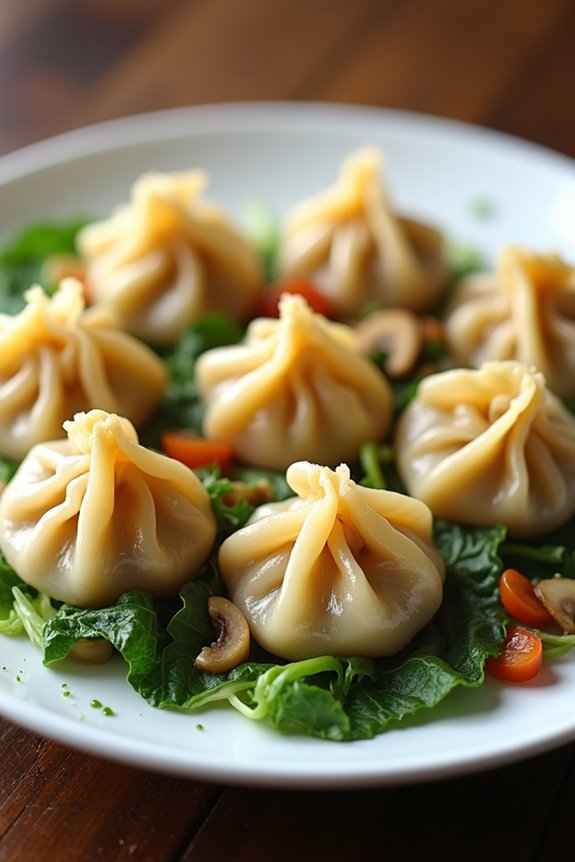
I’ve found that stuffing your dumplings with cabbage, mushrooms, and leafy greens transforms them from a simple carb into a micronutrient powerhouse—you’re getting vitamin C, fiber, and plant-based protein all in one bite. The cabbage keeps things filling and supports your digestion, while mushrooms add that meaty texture and minerals without needing any meat at all. When you load up your dumpling filling with these vegetables, you’re basically sneaking in a whole vegetable serving that’ll keep you satisfied longer.
Vegetable Filling Nutritional Benefits
Vegetable-packed dumplings are where the real nutritional magic happens, and honestly, they’re delicious too. When I fill my dumplings with vegetable fillings, I’m loading them with micronutrients that make my body feel amazing.
Here’s what I love about these veggie powerhouses:
- Cabbage gives me vitamin C and fiber that keeps my digestion happy
- Mushrooms add minerals and umami flavor without extra fat
- Leafy greens boost vitamins A, C, and K for better overall nutrition
- Fiber content helps me feel fuller longer between meals
- Plant-based variety keeps my taste buds excited while supporting my health
I’ve discovered that vegetable fillings let me balance protein and reduce saturated fat without sacrificing flavor or texture. Every bite combines nutrients that work together, making dumplings genuinely nourishing. You’ll find yourself reaching for these instead of wondering if you’re making a healthy choice.
Fiber and Micronutrient Content
The magic of fiber and micronutrients in dumpling fillings goes way beyond just tasting good—it’s what makes these little packages genuinely nourishing. When I stuff my dumplings with cabbage, mushrooms, and leafy greens, I’m loading them with fiber that keeps me feeling full longer. Cabbage gives me vitamin C and gut-friendly fiber—basically a digestive dream team. Mushrooms? They’re packed with plant-based micronutrients that boost immunity and metabolism. Leafy greens pump up vitamins and minerals without extra calories, which I absolutely love. These vegetables work together, creating that satisfying fullness you crave. Whether I steam or boil them, these nutrient-dense fillings transform simple dumplings into something that genuinely nourishes my body.
Ginger and Chives Support Digestion and Heart Health
Ever wondered why so many dumpling recipes call for ginger and chives? These humble ingredients aren’t just flavor heroes—they’re health powerhouses that transform your dumpling experience.
Here’s what makes them special:
- Ginger alleviates gastrointestinal distress and motion sickness naturally
- Chives contain allicin, which supports cholesterol management
- Ginger’s anti-inflammatory properties aid digestive comfort
- Chives contribute to cardiovascular health through allicin benefits
- Together, they create a gut and heart-healthy dumpling
I’ve discovered that adding fresh ginger and chopped chives to your dumpling filling gives you more than incredible taste. You’re actually supporting your body’s digestion and heart health with every bite. When you fold these ingredients into your dumplings, you’re joining countless families who’ve trusted these flavors for generations. That’s the kind of cooking that nourishes both body and soul.
Frozen Dumplings Can Match Fresh If You Read Labels
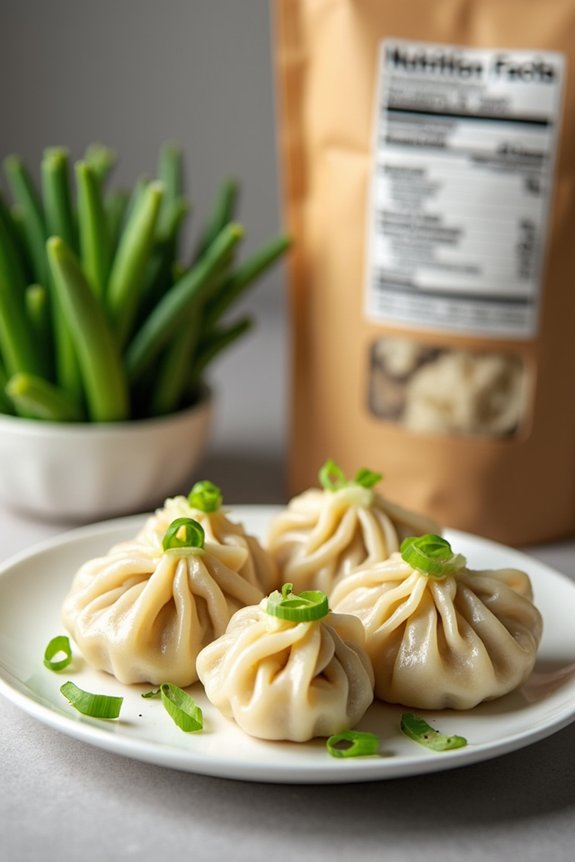
I’ll let you in on a secret: frozen dumplings don’t deserve their bad reputation.
When you’re comparing frozen versus fresh, labeling becomes your best friend. I check the sodium content first—aim for under 600 mg per serving, and you’re golden. Then I scan the ingredient list, making sure vegetables appear in the top five ingredients. Shorter ingredient lists? That’s what I’m after, honestly.
I’ve discovered that frozen dumplings with lean meat or tofu fillings actually rival fresh options nutritionally. The key is cooking them right—I steam or boil mine instead of frying, which keeps them healthy. Pair them with greens or broth, and you’ve got yourself a genuinely nutritious meal that beats delivery every time.
Pair Dumplings With Greens for a Balanced, Complete Meal
I’ve found that pairing 6–8 dumplings with a generous serving of greens transforms your meal into something that actually satisfies you while keeping things balanced. When you fill half your plate with greens (whether sautéed, steamed, or in a light soup), you’re adding fiber and nutrients that offset the dumplings’ heavier calories and sodium, plus you’ll stay fuller longer. The trick is choosing steamed or boiled dumplings over fried ones, then drizzling everything with a low-sodium sauce so your whole meal supports your health goals without feeling like you’re missing out.
Vegetable and Nutrient Balance
How can you make your dumpling meal feel even more satisfying and nourishing? I’ve found that building a plate with vegetables and nutrition in mind transforms dumplings from a simple snack into a complete meal.
Here’s what I do:
- Fill dumplings with cabbage, mushrooms, or leafy greens for fiber and fullness
- Pair them with steamed bok choy or other greens on the side
- Use ginger, chives, and garlic in fillings for anti-inflammatory benefits
- Aim for dumplings covering half your plate, vegetables the other half
- Add a light soup or broth to round out the meal
This balance keeps me satisfied longer and gives my body the nutrients it needs. When you combine veggie-forward fillings with fresh sides, you’re creating something genuinely good for you—not just tasty, but actually nourishing.
Plate Composition Strategy
Building on that veggie-forward approach, the real magic happens when you actually arrange your plate with intention. I’ve found that filling half my plate with dumplings and dedicating the other half to greens creates the perfect balance. This simple strategy transforms dumplings from a standalone snack into a genuinely nutritious meal.
| Plate Section | What Goes There | Why It Matters | Example |
|---|---|---|---|
| Half the plate | 6–8 dumplings | Provides protein and satisfaction | Steamed chicken dumplings |
| Other half | Fresh greens or soup greens | Boosts fiber and micronutrients | Sautéed bok choy or spinach |
| Small side | Low-sodium sauce | Adds flavor without excess salt | Ginger-vinegar dip |
| Optional | Broth or light soup | Increases hydration and fullness | Simple vegetable broth |
You’re not just eating dumplings—you’re building a meal that keeps you satisfied and nourished.
Regular Steamed Dumplings Align With Steady Weight Loss Goals
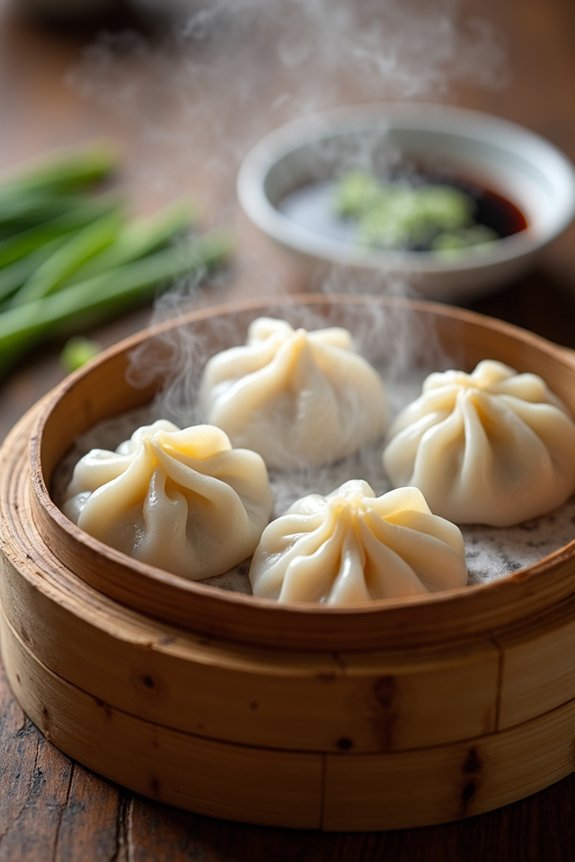
When you’re trying to lose weight steadily, steamed dumplings might just be your new best friend—and I’m not exaggerating. Here’s why I’m confident about this:
- Modest calories: Two steamed dumplings give you only 8.2g fat and 5g protein without breaking your daily goals
- Filling power: Six to eight medium dumplings per meal keep you satisfied longer
- Smart pairings: I pair mine with greens or soup to fill half my plate, which stretches portions naturally
- Lean fillings matter: Choosing chicken or shrimp boosts protein and fiber while keeping calories in check
- Healthier cooking method: Steaming uses little oil, preserving nutrients and keeping sodium lower than fried versions
Weight loss doesn’t mean eating boring food. Steamed dumplings prove you can enjoy delicious meals while reaching your goals. You’ve got this!