baba ganoush delivers genuine health benefits through antioxidants, fiber, and heart-healthy fats from olive oil and tahini. The catch? It’s calorie-dense at 80–120 calories per 2–3 tablespoons, so portions matter. You’ll get about 2–4 grams of fiber and minimal protein, which means pairing it with protein-rich foods keeps you satisfied longer. It’s not a free pass, but it’s genuinely nutritious when you’re intentional about servings. Stick around to discover exactly how to make it work for your specific goals.
Is Baba Ganoush Actually Healthy? A Quick Answer
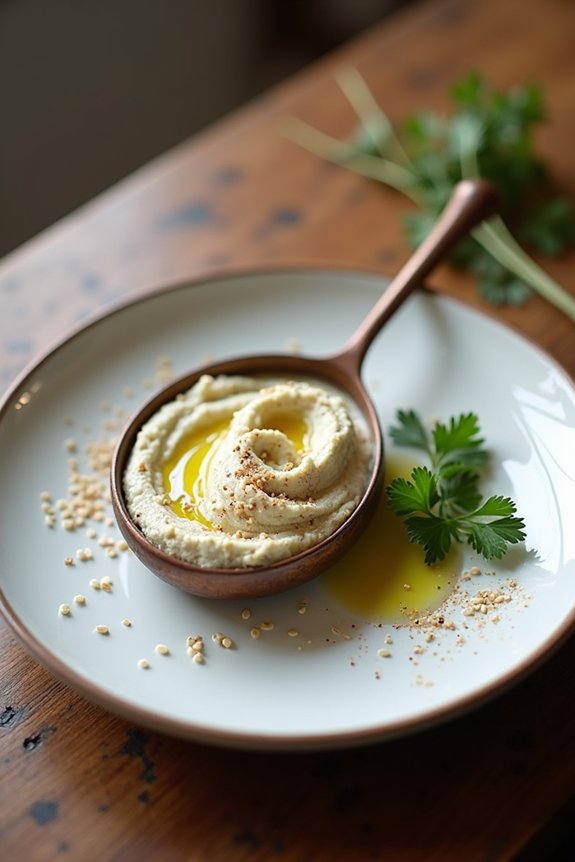
So, is baba ganoush actually good for you? I’d say yes, but with a realistic caveat: it’s all about portions. This creamy dip packs real nutrition from roasted eggplant, olive oil, and tahini. You’re getting healthy fats that support your heart, plus fiber that helps your digestion. One serving delivers roughly 80–120 calories, which fits nicely into most diets when you’re mindful.
What makes me love it? The nutrient density. You’re getting antioxidants from the eggplant and those beneficial monounsaturated fats from olive oil. It’s naturally dairy-free and gluten-free, which appeals to lots of us. The fiber keeps you satisfied longer, which actually helps with weight management.
The real trick? Pair it with protein-rich foods—hummus, beans, or grilled chicken—since baba ganoush itself is lighter on protein.
Calories and Why They Matter More Than the Label Says
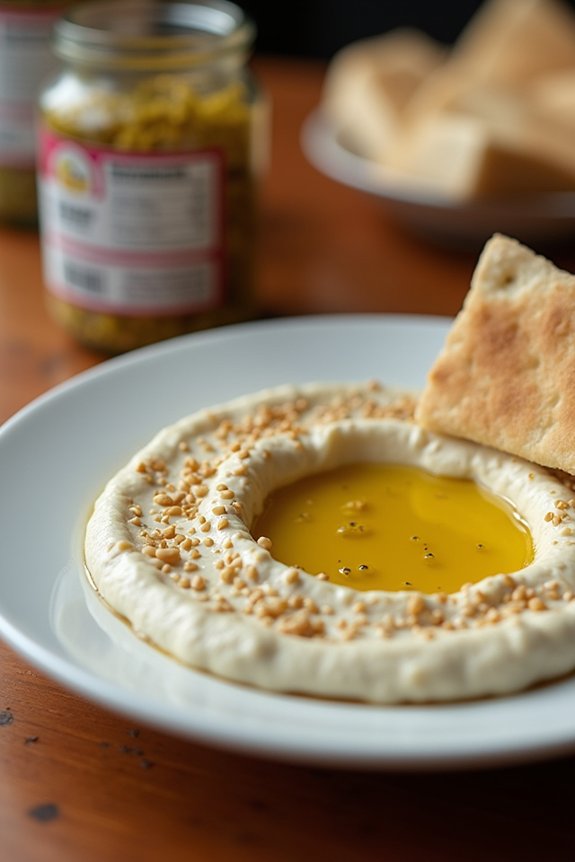
I’ll be honest with you: the calorie count on a nutrition label tells only part of the story, because how much you actually eat matters way more than the number itself. In terms of—baba ganoush packs about 100 calories into just 2 or 3 tablespoons, and since tahini and olive oil are doing most of the heavy lifting in terms of calories, you can end up consuming a lot more fat than you realized if you’re not paying attention to your portion. That’s why understanding energy density (basically, how many calories hide in a small amount of food) becomes your real tool for making smart choices rather than just trusting what the label says.
Energy Density And Portion Control
Why does baba ganoush seem like it should be guilt-free, yet a few extra spoonfuls can add up fast? The answer lies in energy density. At 170–180 calories per 100 grams, this dip packs more punch than you’d expect from a vegetable-based dish. Here’s the real talk: tahini and olive oil—the creamy stars—drive those numbers up quickly. A standard serving of 2–3 tablespoons lands around 80–120 calories, which is totally manageable. The trick? Measuring matters. When you eyeball portions, you’re likely doubling or tripling without realizing it. I’ve been there. By using measured servings and staying mindful of portion control, you’ll harness baba ganoush’s fiber and nutrients without derailing your goals. Small spoonfuls, big satisfaction.
Calorie Contributors Beyond The Label
You’ve nailed portion control—great! Now let’s talk about what’s really happening inside your bowl. Tahini and olive oil are the stars here, and they’re packing serious calories. A serving might show 170 calories on the label, but larger portions can hit 376 kcal—that’s the fat content doing the heavy lifting, not carbs. Here’s the thing: those heart-healthy fats are genuinely good for you, yet they’re calorie-dense. That means a little goes a long way. When you reduce tahini to cut calories, you sacrifice flavor and that creamy texture we all crave. It’s not just about numbers on a label; it’s understanding that your portion size and fat content work together. Quality matters, but so does moderation.
Fats, Fiber, and Protein: What the Macro Breakdown Really Means
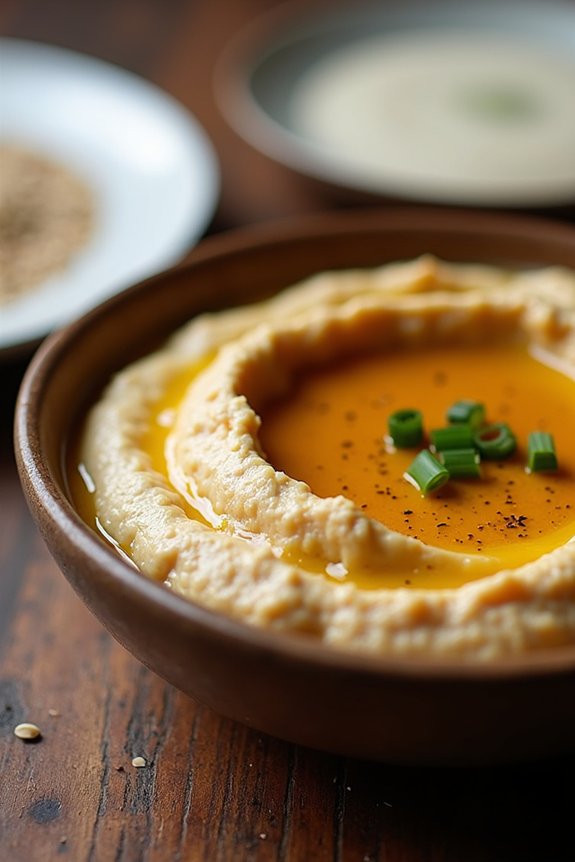
When you look at a serving of baba ganoush, the first thing that jumps out is the fat content—somewhere between 6 and 10 grams per serving—and I’ll be honest, that can feel like a lot at first glance. But here’s what changes everything: those fats come mainly from olive oil and tahini, the heart-healthy kind your body actually loves. The macro breakdown tells a different story than you’d expect. You’re getting 2–4 grams of fiber supporting digestion, though protein sits low at just 1–2 grams. That’s why I pair it with chickpeas or grilled chicken. Understanding calorie density means enjoying baba ganoush mindfully, not fearfully.
- Heart-healthy monounsaturated fats support cardiovascular wellness
- Fiber aids fullness and digestive comfort
- Low protein requires strategic meal pairing
- Portion awareness prevents calorie creep
Antioxidants in Eggplant: What Science Actually Shows
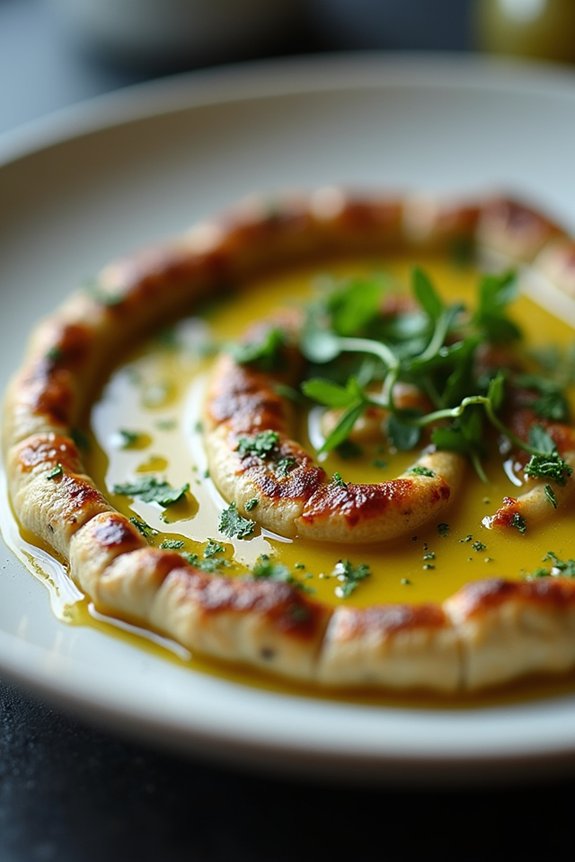
that deep purple skin on an eggplant isn’t just for show. It’s packed with nasunin, a powerful antioxidant that guards your cells from damage. When you roast eggplant for baba ganoush, you’re actually preserving these beneficial compounds rather than destroying them.
The anthocyanins and phenolic compounds in eggplant bring anti-inflammatory benefits to your plate. That’s the science-backed reason why this dish feels nourishing. However—and this matters—the picture gets more complete when you consider dietary fats. The tahini and olive oil in baba ganoush add calories, so portion size really counts.
Think of it this way: you’re getting genuine antioxidant power, but balance remains key to making this dish work within your healthy eating goals.
Baba Ganoush vs. Hummus: Which Dip Fits Your Diet
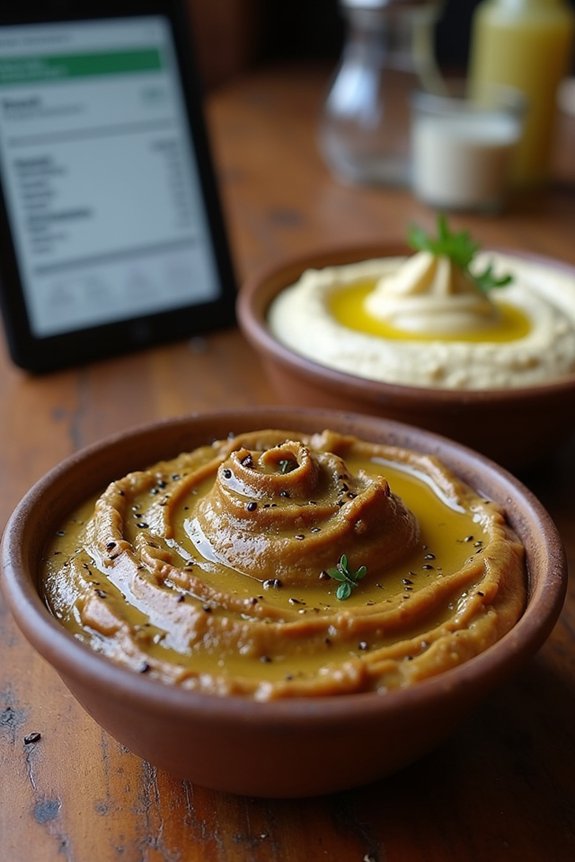
Now that we’ve uncovered the real antioxidant benefits hiding in that roasted eggplant, let’s talk about how baba ganoush actually stacks up against hummus—because knowing the nutrition facts means nothing if you’re picking the wrong dip for what your body needs.
Here’s what separates these two:
- Calories & Fat: Baba ganoush runs 80–120 calories per serving from olive oil and tahini, making it lighter than many creamy dips
- Protein Power: Hummus delivers 2–7 g protein per serving thanks to chickpeas, while baba ganoush offers less
- Texture & Taste: You’ll notice baba ganoush’s chunkier, smoky character versus hummus’s smooth, nutty profile
- Your Goals Matter: Choose baba ganoush for lower calories; pick hummus when you need that plant-based protein boost
Both are gluten-free and dairy-free winners. I’d say pick based on what your body’s asking for today.
When to Choose Baba Ganoush Over Hummus (Based on Your Goals)

How do you know which dip truly matches what your body needs right now? I’ll help you figure it out by looking at what each one brings to your plate.
| Your Goal | Choose This | Why It Works |
|---|---|---|
| Lower calories | Baba ganoush | 80–120 calories per serving |
| More protein | Hummus | Chickpeas add extra protein |
| Higher fiber | Baba ganoush | 2–4 g per serving |
| Weight management | Baba ganoush | Fiber keeps you satisfied longer |
For the baba ganoush vs hummus choice, consider your priorities. Want smoky flavor and fewer carbs? Baba ganoush wins. Need protein content for muscle support? Hummus’s the better pick. Both offer heart-healthy fats, but baba ganoush’s calorie comparison favors lighter eating. Remember, portion control matters regardless—these dips are satiating but energy-dense, so stick to 2–3 tablespoons per serving.
Portion Sizes That Work for Weight Loss
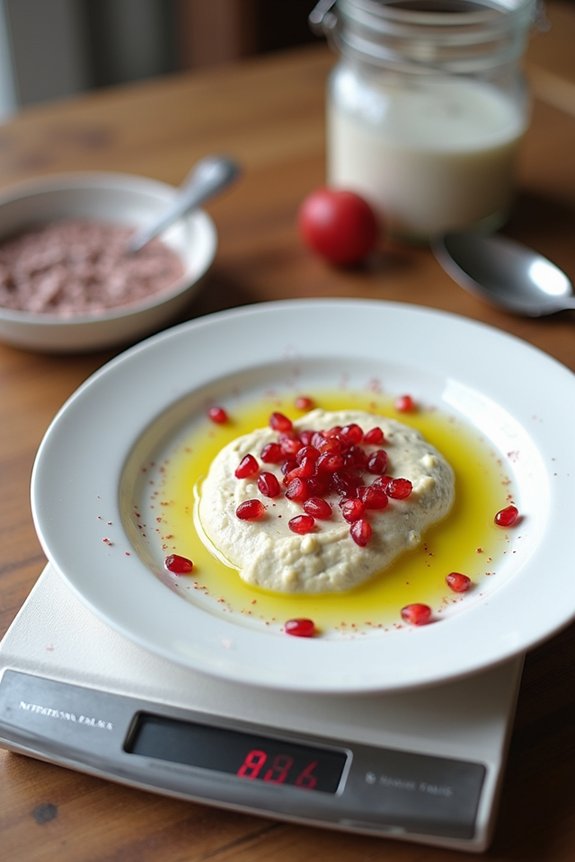
You’ve got the dip choice down, but here’s where most people stumble: they load up their plate without thinking about how quickly those calories add up. I learned this the hard way—baba ganoush feels light, but those healthy fats from tahini and olive oil pack roughly 170–179 calories per 100 grams.
Here’s what actually works:
- Stick to 2–3 tablespoons per serving (about 80–120 calories) to enjoy flavor without derailing progress
- Pair with vegetables instead of pita to increase satiety while keeping calories down
- Measure your portions initially so you develop an intuitive sense of what works
- Remember that fiber from eggplant keeps you fuller longer, making smaller portions surprisingly satisfying
Your weight loss goals aren’t about deprivation—they’re about eating smart amounts of foods you genuinely love.
Can You Eat Baba Ganoush Every Day?
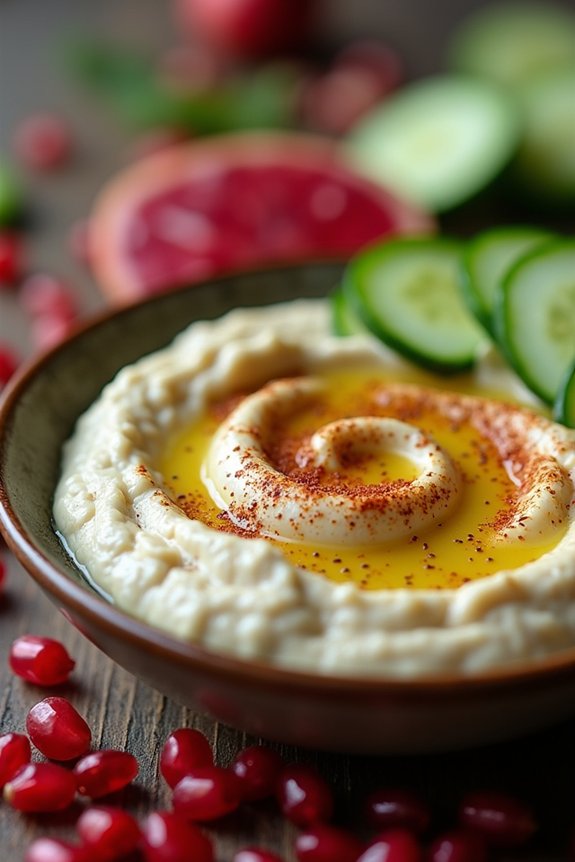
The daily-dip question is one I get asked constantly, and here’s the honest answer: baba ganoush can absolutely be part of your everyday eating plan—but it comes down to how much you’re actually eating. A typical baba ganoush portion size of 2–3 tablespoons delivers 80–120 calories per serving, which fits nicely into most days. The real player here? Olive oil and tahini fat—they’re what make this dip creamy and delicious, but they’re also calorie-dense. Here’s my approach: stick to that modest baba ganoush portion size consistently, and you’re golden. The fiber and satiety from eggplant keeps you satisfied longer, so you’re not reaching for seconds constantly. Daily inclusion works when you’re intentional—think of it as a regular friend you actually enjoy seeing.
The Final Verdict: Is It Healthy for You?
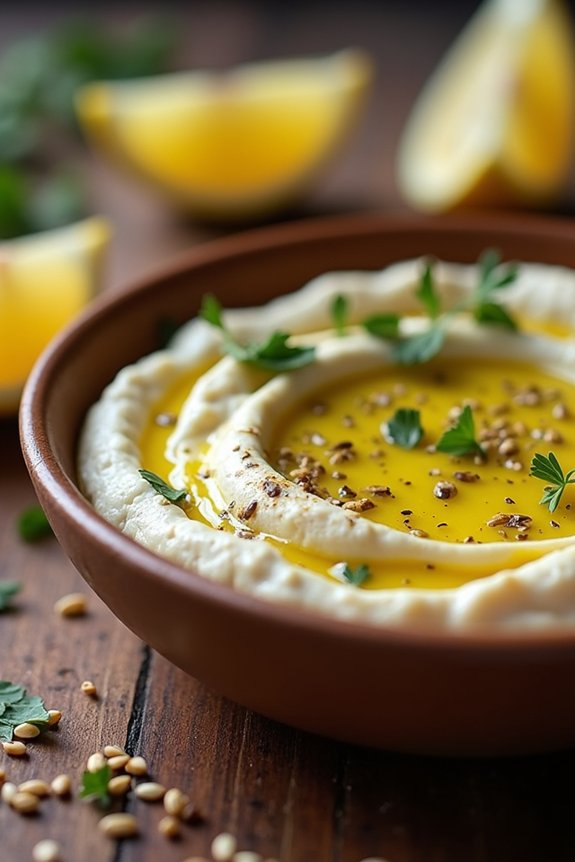
So here’s what I’ve learned after looking at all the numbers: baba ganoush is genuinely good for you, but—and I mean this kindly—it’s not a free-pass dip.
The baba ganoush nutrition profile shines with healthy fats and solid fiber content, supporting your heart and keeping you satisfied. However, that calorie density means you’ve got to respect portion control. Two to three tablespoons is your sweet spot, not half the container.
Here’s my honest take:
- Pair it with protein to make meals more balanced and filling
- Stick to modest servings since tahini and olive oil add up quickly
- Enjoy it regularly without guilt—it fits most eating styles
- Use it strategically as part of meals, not mindless snacking
Bottom line? You’ve found a genuinely nourishing dip that fits your healthy lifestyle.