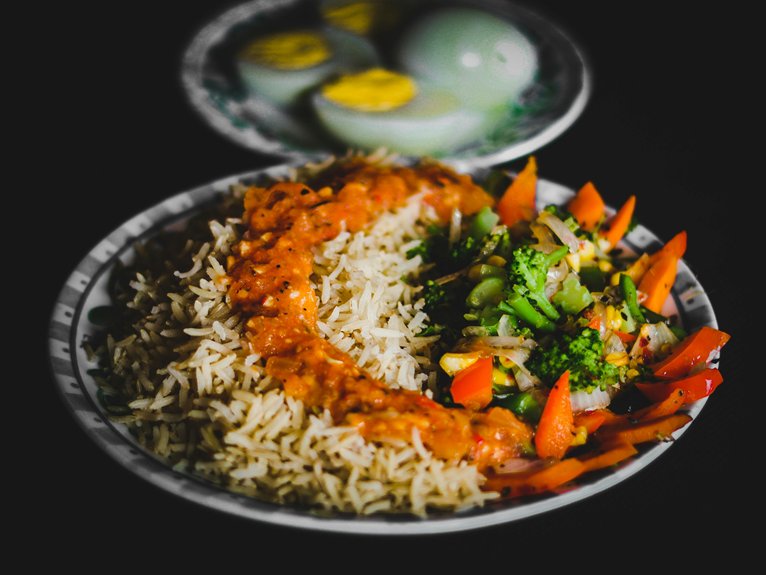
Indian cuisine is genuinely healthy when you cook at home instead of ordering restaurant versions. That’s because home cooking uses yogurt instead of heavy cream, minimal oil, and fresh ingredients—while restaurants load dishes with ghee and fat for speed and flavor. Lentils, beans, and vegetables form the nutritional backbone, offering protein, fiber, and iron. Pair dal with brown rice and you’ve got complete amino acids. The real magic happens in your kitchen, where you control what goes into every bite.
Lentils, Beans, and Vegetables: The Nutritional Foundation of Indian Cuisine
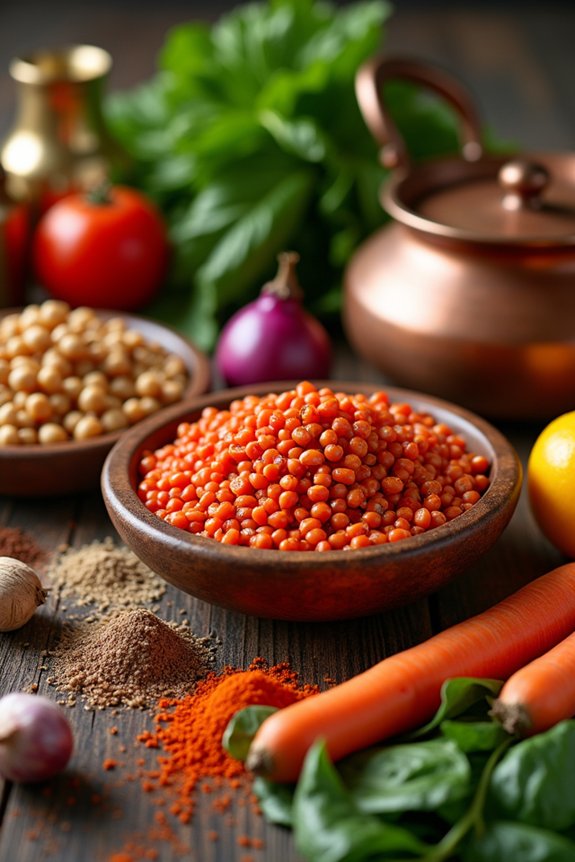
Why do you think Indian families have relied on lentils and beans for thousands of years? I’ll tell you—they’re nutritional powerhouses that’ve sustained generations. Lentils pack plant-based protein, fiber, iron, and folate into every bowl, and when you pair them with rice, you’re creating a complete amino acid profile your body actually needs.
Beans like chickpeas in chana masala deliver similar benefits while tasting absolutely delicious. The magic happens when you combine these protein sources with fresh vegetables and aromatic spices. That’s not just flavor—that’s nutrition working together. Khichdi and dal-rice combinations support your digestion while nourishing you from the inside out. You’re joining a tradition that proves healthy eating doesn’t mean sacrificing taste or comfort. It means belonging to something bigger.
Restaurant vs. Home-Cooked: Where Healthy Indian Food Actually Happens
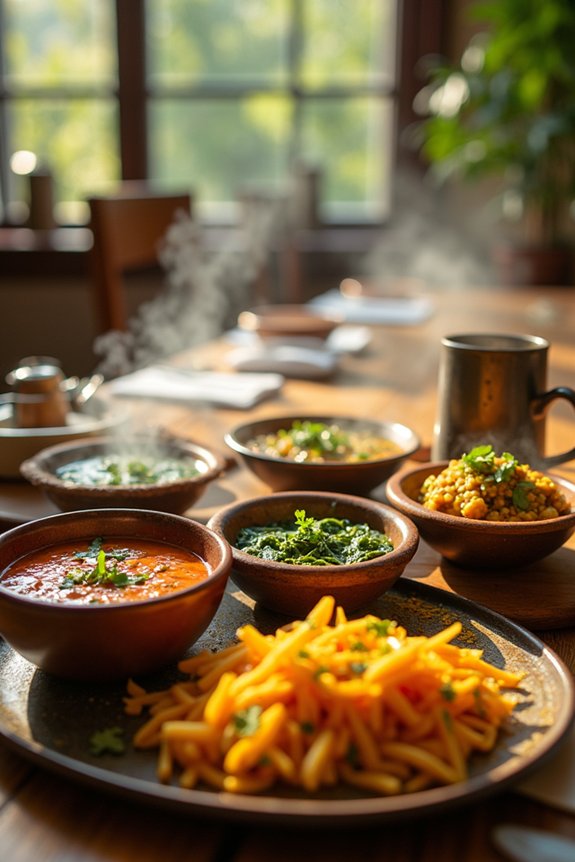
I’ve noticed that when I cook Indian food at home, I can swap out heavy cream for plain yogurt in curries and use just a tablespoon or two of oil instead of the generous pour restaurants use—and honestly, the food tastes just as satisfying. Restaurant versions often hide their calories in creamy gravies and deep-fried breads like naan and parathas, while my kitchen relies on tomato-based sauces and whole grains to keep things balanced. The real difference comes down to ingredient quality and how I blend my spices; I’m building flavor intentionally rather than relying on fat to do the heavy lifting, which means I can actually taste what I’m eating.
The Cream vs. Yogurt Difference
when you’re deciding between restaurant Indian food and home-cooked meals, the choice between cream and yogurt can literally change whether you’re eating something indulgent or something genuinely nourishing.
Restaurants load their curries and dal with heavy cream and ghee, packing in saturated fat that can exceed a day’s worth in one bowl. Meanwhile, I make my dal at home with yogurt or tomatoes, keeping it lighter without sacrificing flavor. The difference? Yogurt gives you calcium and protein with way less fat than cream does.
Here’s what I’ve learned works:
- Request sauces on the side at restaurants
- Swap cream for skim milk yogurt at home
- Choose yogurt-based toppings over cream finishes
You’re making smarter choices without feeling deprived.
Oil Choices And Fat Profiles
Once you start paying attention to oil, you’ll notice it’s the biggest difference between what you get at a restaurant and what you make at home. Restaurants use generous amounts of ghee and oil to build flavor quickly, while you control the pour at home. I’ve discovered that swapping deep-fried fried accompaniments like pakoras and pappadam for grilled options cuts fat dramatically. Your fat profiles shift when you grill proteins instead of frying them. Restaurant vs home cooking really comes down to oil choices—restaurants aren’t being sneaky; they’re just optimizing for taste and speed. When I make dal at home using minimal oil, it tastes lighter yet satisfying. You’re building healthier eating habits simply by choosing which cooking methods work best for you.
Ingredient Quality And Spice Blends
What separates a truly healthy Indian meal from one that just tastes healthy? I’ll tell you—it’s what’s actually in your food.
When you cook at home, you’re in control. You choose fresh yogurt instead of heavy cream, use olive oil thoughtfully, and blend your own spice blends without hidden sugars or preservatives. Restaurants? They often rely on pre-made masalas loaded with additives.
Here’s what makes the difference:
- Fresh ingredients mean better nutrition and fewer mystery chemicals
- Homemade spice blends let you skip the sodium overload restaurants add
- Tomato-based curries give you real flavor without cream dependency
I’ve noticed that when I make my own tandoori chicken with yogurt marinades and tomato-based curries, I taste the actual spices. No weird aftertaste. No guilt. That’s genuine healthy eating—not just the appearance of it.
Five Indian Dishes Worth Ordering (and Why They’re Nutritious)
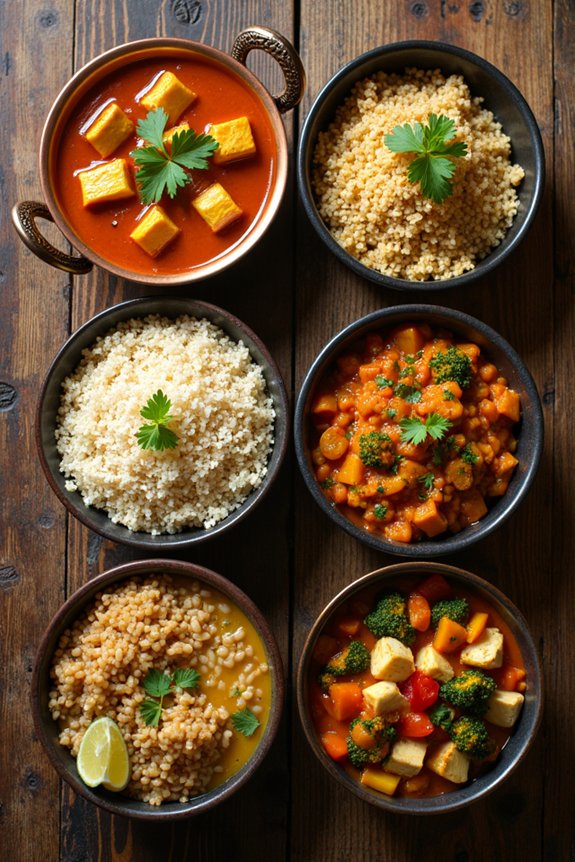
How’d you like to enjoy some seriously delicious Indian food that’s actually good for you?
I’m here to share my favorite picks. Dal makhi delivers plant-based protein and fiber, especially in tomato-based versions that skip the cream. Chana masala brings chickpeas loaded with protein, fiber, and iron—total nutrition powerhouse. Tandoori dishes? Grilled chicken, fish, or paneer with minimal oil means lean protein without heavy guilt. Kebabs paired with brown rice create a balanced meal packed with pure protein and whole grains. Each dish proves you don’t sacrifice taste for health.
These aren’t boring salads, friend. They’re genuinely satisfying meals that nourish your body while treating your taste buds right. Trust me, once you understand what makes these dishes nutritious, you’ll order them proudly.
Nine Unhealthy Indian Dishes and How to Remake Them at Home
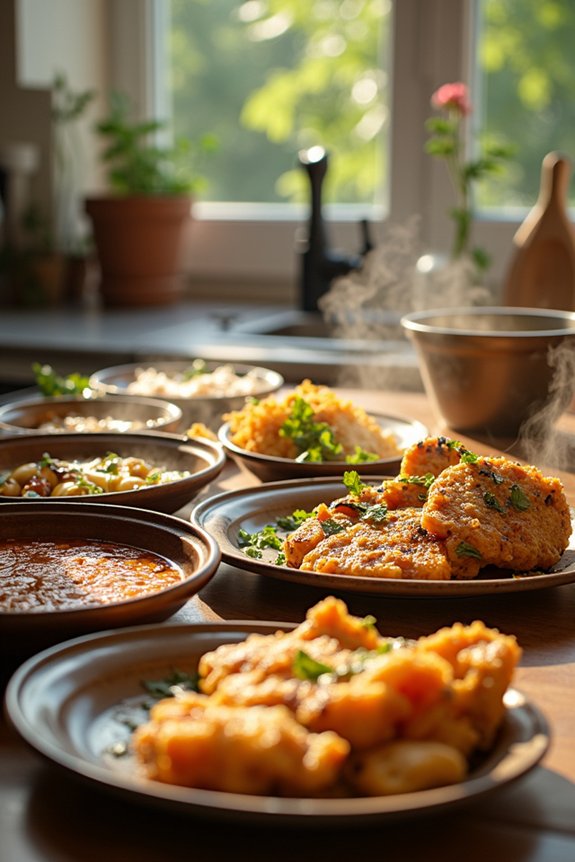
I’ll be honest with you—just because a dish comes from Indian cuisine doesn’t automatically make it healthy. Many traditional favorites pack surprising amounts of unhealthy fats and calories that you might not expect.
Here’s what I’ve learned about remaking Indian unhealthy-dishes:
- Swap deep-frying for baking – Pakoras and samosas become lighter when you bake them instead, cutting calories dramatically while keeping flavor.
- Use Greek yogurt instead of cream – Chicken Tikka Masala tastes creamy without the heavy saturated fat when you substitute traditional ingredients.
- Choose whole-grain naan alternatives – Whole wheat versions give you fiber and protein that refined flour simply can’t match.
These healthy recipes prove you don’t sacrifice taste when cooking smarter Indian dishes at home. You’re just making choices that feel better in your body.
The Anti-Inflammatory Power of Turmeric, Ginger, and Other Indian Spices
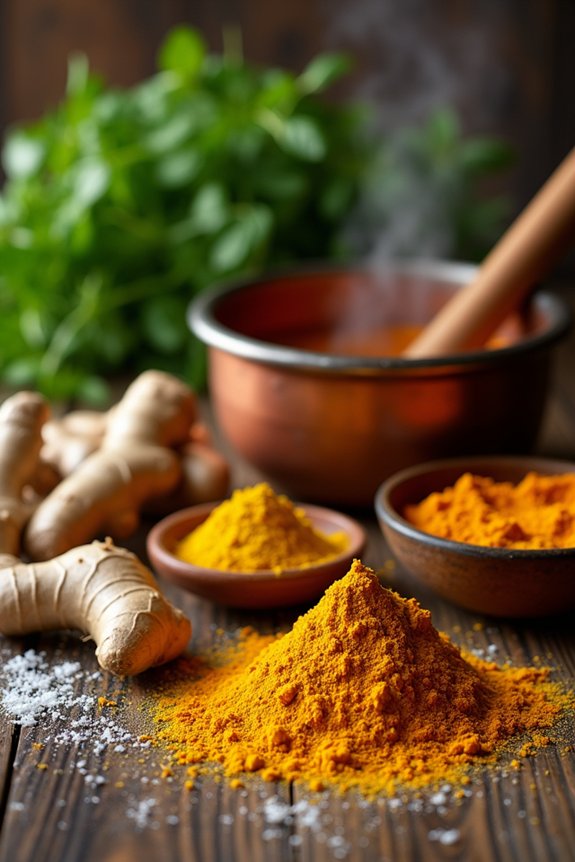
Beyond swapping cooking methods and ingredients, there’s something even more powerful hiding in your spice cabinet—the Indian spices themselves. I’ve discovered that turmeric, with its active compound curcumin, genuinely helps reduce inflammation and joint discomfort. Ginger works similarly, easing digestion while fighting inflammation and pain. What I love most is how these spices work together. Cumin and coriander bring antioxidants that shield your body from stress, while cardamom and fenugreek support digestion and blood sugar balance. Here’s the honest truth though: their benefits are modest and work best alongside a balanced diet. Think of these spices as your health allies, not magic bullets. They’re part of the bigger picture that makes Indian cuisine genuinely nourishing.
How to Order Healthy Indian Food at Restaurants
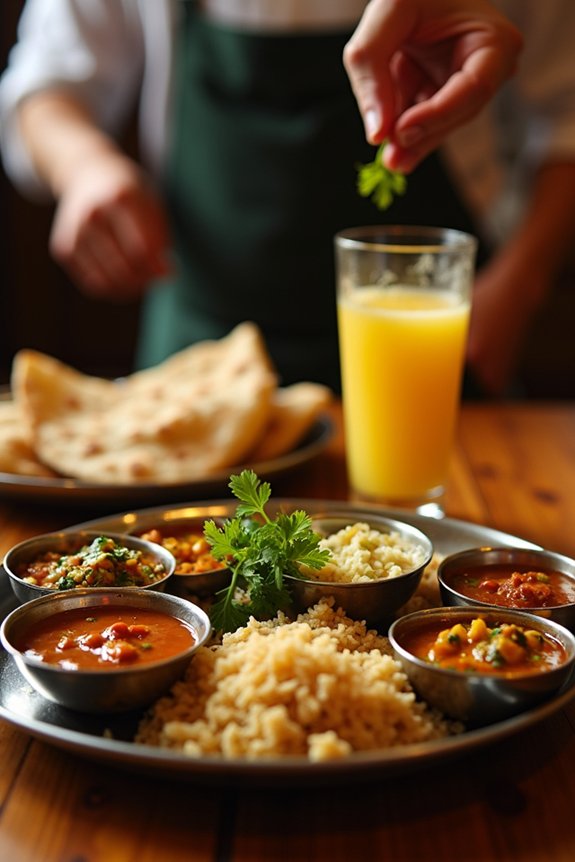
When you’re sitting at your favorite Indian restaurant, do you feel like you’re choosing between delicious food and healthy food?
Here’s the good news: you don’t have to! I’ve learned that ordering healthy Indian food at restaurants is totally doable with smart choices.
- Pick tandoori, grilled, or baked dishes instead of fried ones—your body will thank you
- Choose tomato-based curries over creamy versions to cut unnecessary fat and calories
- Request sauces on the side and pair meals with brown rice or whole wheat rotis
Ask your server for lighter substitutions like soy yogurt instead of cream, less oil, or no ghee. Load up on dal, chana masala, and grilled proteins for satisfying, fiber-packed meals. You’re not sacrificing flavor—you’re just being smarter about how you enjoy the Indian cuisine you love.
Meal-Prep Strategies for Indian Dishes That Last
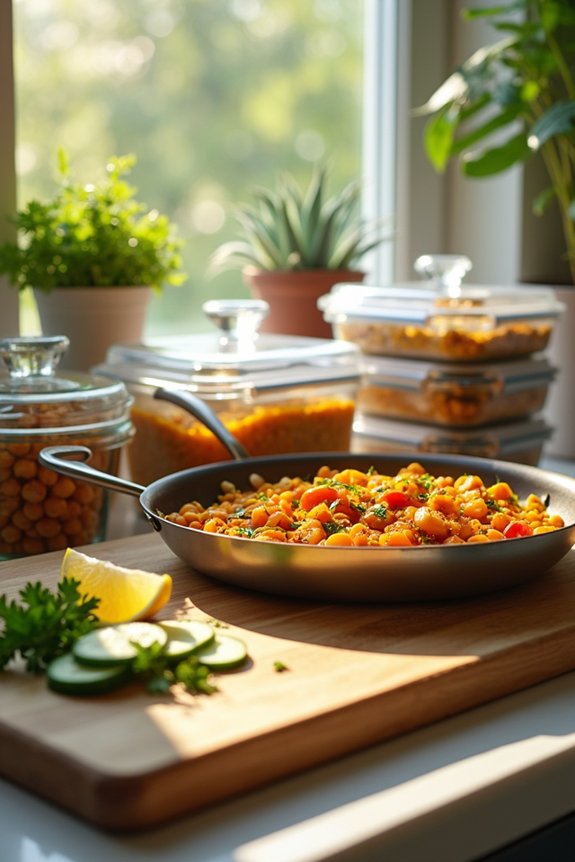
How’d you like to spend just one afternoon cooking and then eat healthy Indian food all week? That’s batch-cooking magic right there. I make dal and chana masala on Sunday, and they’ll stay fresh in my fridge for days—dal lasts 4–5 days, while chana masala keeps the whole week. It’s honestly game-changing for meal-prep.
Here’s my trick: I cook dal with tomato-based sauces and minimal oil to keep things healthy, then pair it with brown rice for complete protein. I freeze palak paneer in individual portions too, reheating gently to preserve nutrients.
The secret? Store raita and chutneys separately in small containers. This prevents soggy reheats and keeps everything tasting fresh. You’re joining countless others who’ve discovered this simple approach to eating well consistently.