Vietnamese food is genuinely healthy because it’s built on lean proteins, fresh herbs, and broth-based cooking that naturally keeps calories low. You’ll find pho around 350–450 calories, fresh spring rolls at 100–150 each, and grilled proteins that drain fat beautifully. The real magic? Cilantro, mint, and basil add bold flavor without extra calories, while minimal oil supports better digestion. Stick with broth-based dishes and load your plate with vegetables and herbs, and you’re golden. There’s much more to discover about which dishes serve your health best.
Is Vietnamese Food Healthy? The Science Behind It
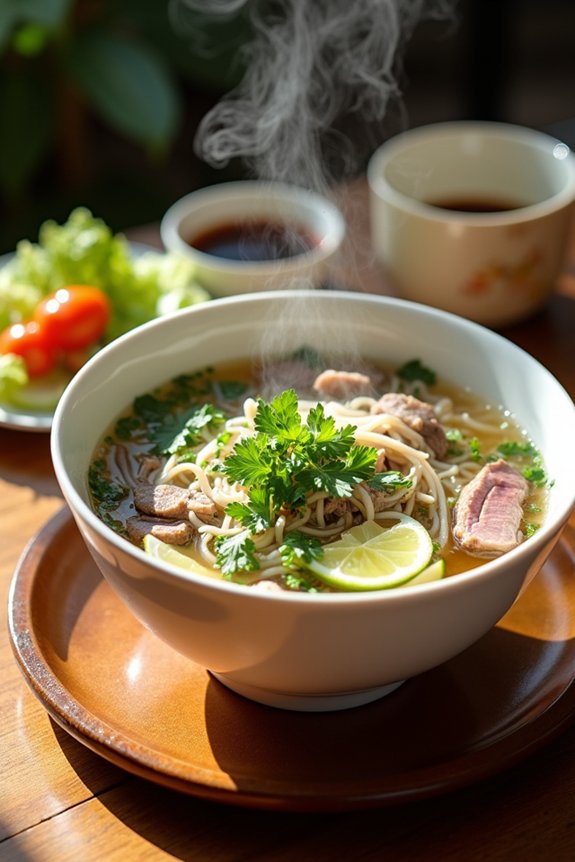
Why does Vietnamese food have such a great reputation for being wholesome? I’ll tell you—it’s built on smart, simple choices. Vietnamese cooking relies heavily on fresh herbs like basil, mint, and cilantro that boost digestion without extra calories. You’re getting lean proteins paired with vegetables, so your meals stay balanced and satisfying.
The magic happens in the broth. When you simmer bones for hours, you extract minerals and hydration that nourish your body. Add minimal oil to the equation, and you’ve got dishes that won’t leave you feeling sluggish afterward.
Fish sauce and lime juice replace heavy creams and rich oils, keeping everything light yet flavorful. It’s not restrictive eating—it’s just good food that happens to be good for you. That’s why I keep coming back.
Why Cooking Methods Keep Calories and Fat Low
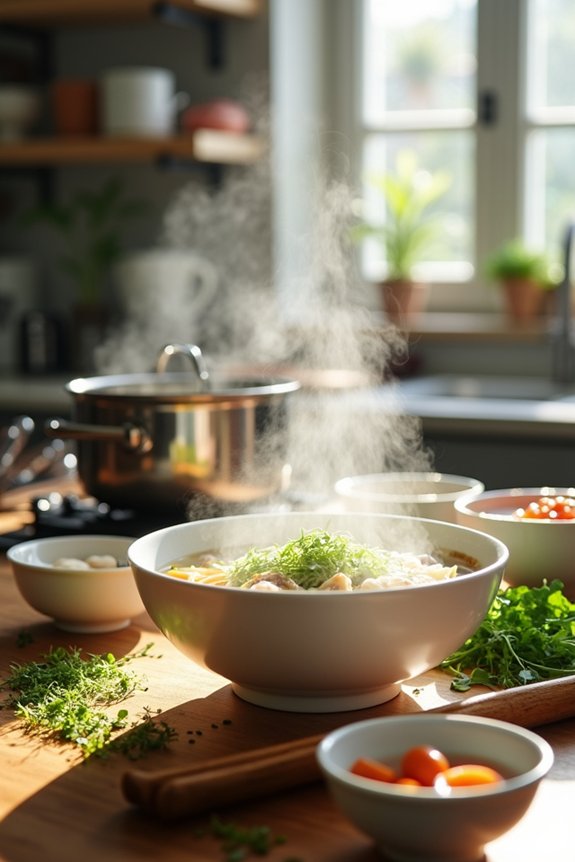
How do Vietnamese cooks pull off such lean, delicious meals without relying on butter, cream, or deep fryers? The secret’s in their cooking methods. I’ve discovered Vietnamese kitchens rely on techniques that keep calories low while flavor stays high:
- Broth-based dishes like pho simmer lean proteins without added fats
- Grilling creates crispy exteriors while fat drips away
- Steaming locks in nutrients and natural flavors
- Light sautéing uses minimal oil for maximum taste
- Fresh herbs add bold flavor without extra calories
These methods work together beautifully. When you’re boiling or steaming lean proteins instead of deep-frying them, you’re cutting serious calories. I find grilled dishes especially satisfying—they taste indulgent without the guilt. Vietnamese cooking proves you don’t need heavy sauces or butter to create meals you’ll actually crave.
Fresh Herbs and Vegetables: Why Healthy Vietnamese Starts Here
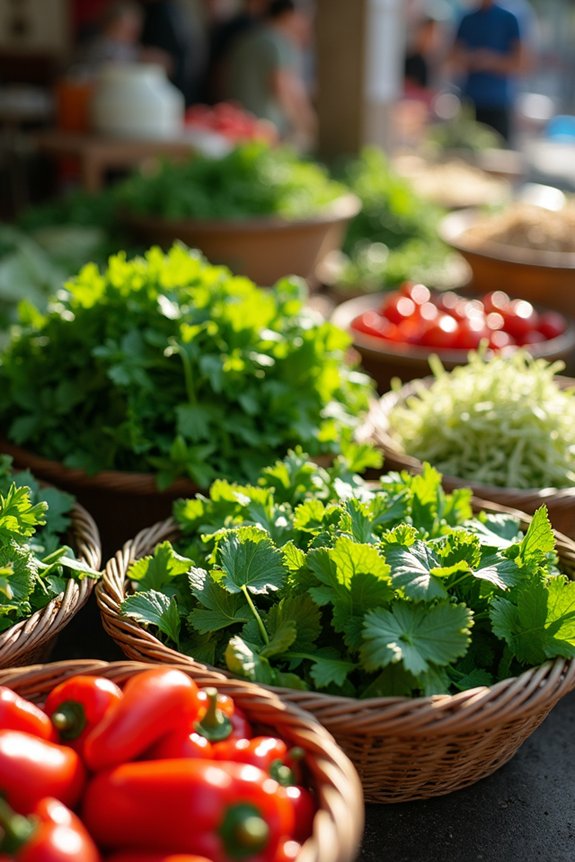
Fresh herbs and vegetables are genuinely the foundation of Vietnamese cuisine’s health appeal, and once you start using them the way Vietnamese cooks do, you’ll understand why. I’ve discovered that cilantro, mint, basil, and lettuce aren’t just garnishes—they’re nutritional powerhouses that transform your meals. You’ll boost fiber and volume without adding heavy calories or fat, which means you’re eating more while staying lighter.
The magic happens when you add fresh herbs at the very end of cooking. This simple habit locks in aroma and keeps nutrients intact. I prep vegetables daily: washing, chopping, and incorporating them raw or lightly cooked alongside broths and grilled proteins. This approach gives you phytonutrients that support digestion while creating balanced, satisfying dishes that nourish your body.
Pho, Spring Rolls, and Grilled Proteins: Nutritional Breakdown
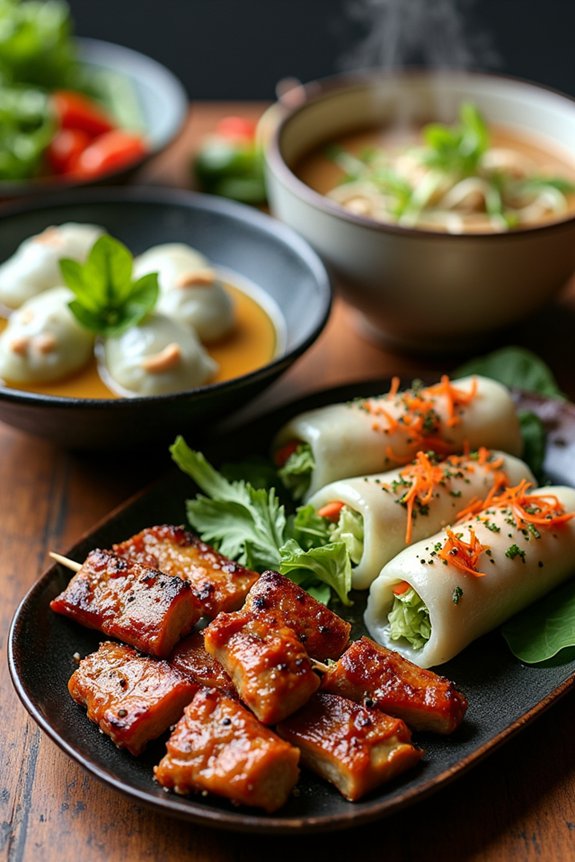
I’ve found that when you’re trying to eat healthier Vietnamese food, three dishes stand out as your best bets: pho (which clocks in around 350–450 calories per bowl), fresh spring rolls (roughly 100–150 calories each), and grilled proteins like Bun Cha or Cha Ca that deliver serious protein without the extra fat. What makes these options so smart is that they build their nutrition from real ingredients—clear broths, lean meats, fresh noodles, and those vibrant herbs and veggies we talked about—rather than relying on heavy sauces to taste good. Let me break down exactly why each one works and how to make them work even better for your goals.
Pho Calorie Content Analysis
When you’re craving a steaming bowl of pho, you’re probably wondering whether you’re making a smart choice for your health—and I’ve got good news for you.
A typical pho calorie count sits between 350 and 450 calories, making it a pretty reasonable meal. Here’s what keeps it light:
- Clear bone broth base (no heavy cream)
- Lean meat options like beef or chicken
- Noodles that you can portion yourself
- Fresh vegetables loaded with nutrients
- Minimal added fats when prepared simply
I’ll be honest—the noodles do pack most of the calories. That’s why I ask for fewer noodles and extra broth when I order. You’re basically getting a warm, satisfying meal that won’t derail your healthy eating goals. Pretty solid choice, right?
Spring Rolls Nutritional Profile
How’d you like a snack that’s both delicious and actually good for you? Fresh spring rolls are your answer. Wrapped in delicate rice paper, these beauties pack about 100–150 calories each and deliver serious nutrition. You’re getting lean protein from shrimp or pork, plus fresh herbs and veggies that fill you up without weighing you down.
Here’s what I love: the fiber keeps your energy steady, and the low fat content means you’re making a genuinely smart choice. The dipping sauce? Sure, it adds flavor, but you control how much you use—way better than heavy fried condiments. When you pair these rolls with grilled proteins, you’ve created something light yet satisfying. Trust me, you’ll feel great about this choice.
Grilled Protein Health Benefits
Vietnamese grilled proteins are where nutrition and flavor shake hands perfectly. When you choose grilled options like tai, bo, or ga, you’re getting serious protein without the extra fat that fried foods pack in. Here’s what makes them so great for you:
- High-quality lean protein for muscle repair
- Lower saturated fat compared to fried meats
- Better satiety to keep you fuller longer
- Grilled preparation needs minimal added oils
- Perfect partners with fresh herbs and veggies
I’ve found that ordering pho with grilled proteins gives you a clear bone broth base that’s genuinely nourishing. You’re looking at substantial protein with way less fat when you skip the crispy stuff. Pair these with plenty of fresh vegetables and herbs, and you’ve built yourself a genuinely healthy meal that tastes incredible.
Which Vietnamese Dishes Are High in Calories (and What to Order Instead)
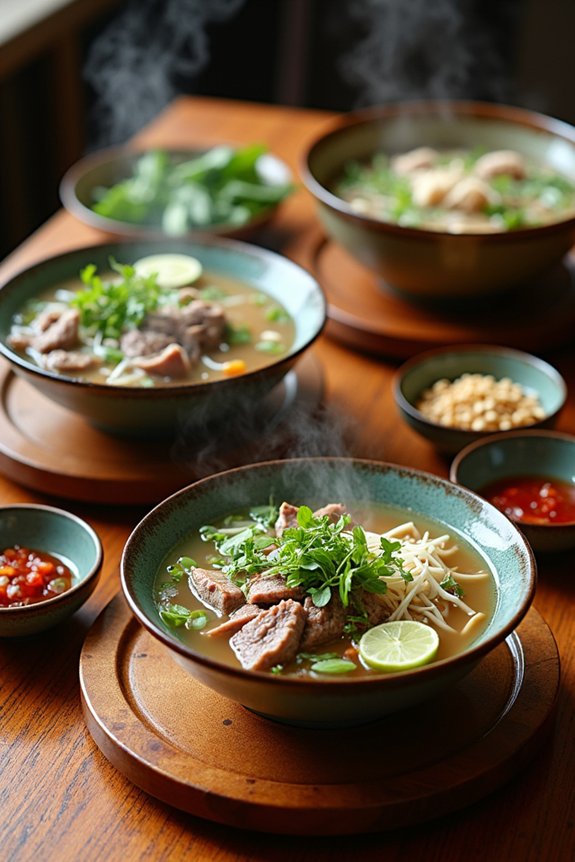
What if I told you that some of your favorite Vietnamese dishes might be sneaking more calories onto your plate than you’d expect? I’ve learned that bánh mì sandwiches pack 400–650 calories thanks to that crusty baguette, pâté, and mayo. Fried spring rolls? They’ll run you 150–200 calories each, so ordering several quickly adds up. Here’s the good news: you don’t have to skip these favorites. I swap bánh mì for fresh goi cuon instead—just 100–150 calories per roll—loaded with shrimp, herbs, and vermicelli. Pho stays reasonable at 350–450 calories when I choose lean beef and extra broth. Making smarter swaps lets you enjoy Vietnamese food while keeping calories in check.
Build Healthy Vietnamese Meals: Portion and Ingredient Tips
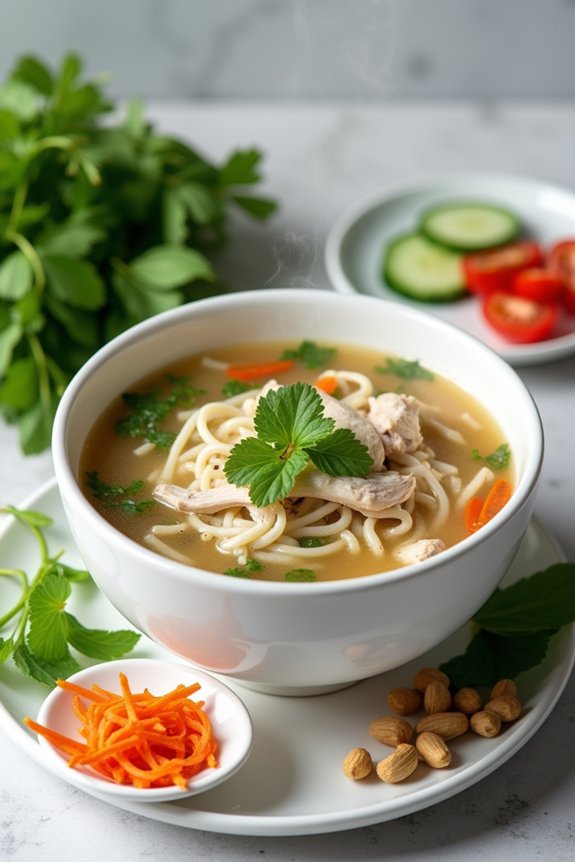
I’ve found that the real magic in building a healthy Vietnamese meal happens when you balance your protein with smart carb choices—think a palm-sized portion of rice or noodles paired with grilled chicken or shrimp. Load up your bowl with fresh herbs like cilantro and mint, plus all those crisp vegetables (they’re basically free real estate for flavor and nutrients), and you’ll naturally eat less of the heavier stuff without feeling deprived. The best part? You’re in control of how much sauce goes on, so you can keep the sugar and sodium in check while still getting all that delicious Vietnamese taste.
Balance Protein And Carbs
How’d you like to eat Vietnamese food that’s both delicious and actually good for you?
I’ve discovered that balancing protein and carbohydrates is the secret to making Vietnamese meals work for your health goals. Here’s how I do it:
- Palm-sized protein portions like chicken, shrimp, or tofu keep me satisfied longer
- Moderate carbs such as jasmine rice or rice noodles fuel my energy without overdoing it
- Vegetables galore—lettuce, herbs, and bean sprouts—bulk up my plate with fewer calories
- Broth-based dishes like pho let me enjoy rich flavor without extra fat
- Smaller noodle portions paired with greens keep meals under 500 calories
When I build my bowl this way, I’m not restricting myself. I’m eating more food that actually nourishes me. That’s the Vietnamese way I’ve learned to love.
Control Noodle And Rice Portions
The real magic in eating healthy Vietnamese food isn’t about giving up your favorite dishes—it’s about right-sizing them. I’ve learned that a typical pho bowl runs 350–450 calories, so I request extra broth and lean protein while cutting back on noodles. This simple swap keeps my meal under 500 calories without sacrificing satisfaction.
When I’m building a rice bowl, I load half my plate with vegetables and herbs—basil, mint, lettuce, cilantro—then add moderate portions of protein and rice. The greens add volume and nutrients with minimal calories, making me feel fuller longer.
Here’s my trick: I ask for sauces on the side so I control how much nuoc mam or peanut sauce goes on. Small adjustments to portions transform Vietnamese meals into genuinely healthy choices I actually enjoy eating.
Maximize Herbs And Vegetables
Want to know the secret that makes Vietnamese food so innately healthy? It’s all about those gorgeous fresh herbs and vegetables that steal the show on your plate.
I’ve learned that loading up on greens transforms every meal into something nutritious and delicious:
- Basil, mint, and cilantro add incredible flavor without extra calories
- Lemongrass brings brightness to broths and grilled lean proteins
- Fresh vegetables like lettuce, cucumber, and carrots boost fiber content
- Herb-forward dishes let you use less salt and sugar
- Mixed greens replace half your noodle portions effortlessly
When you prioritize these fresh ingredients alongside grilled chicken or shrimp, you’re building balanced meals naturally. The herbs do the heavy lifting flavor-wise, so you won’t miss those heavier sauces. Trust me, once you embrace this approach, you’ll discover Vietnamese cooking celebrates what makes food both satisfying and genuinely good for you.
How to Read a Vietnamese Menu for Nutritional Value
When you’re scanning a Vietnamese menu, knowing what to look for can make all the difference between a light, nourishing meal and one that’ll leave you feeling overstuffed. I’d recommend starting with pho—those steaming bowls clock in around 350–450 calories, especially when you choose lean proteins and skip the fatty cuts. Fresh spring rolls are my go-to appetizer at just 100–150 calories each, packed with herbs and veggies. Broth-based soups like canh chua deliver serious nutrition without the calorie load.
Here’s my strategy: ask for grilled or steamed options, request sauces on the side, and load up on those herb-rich dishes swimming in vegetables. You’ll easily keep your meal under 500 calories while actually feeling satisfied and connected to what you’re eating.
Vietnamese Flavors and Digestion: Why Your Gut Loves This Cuisine
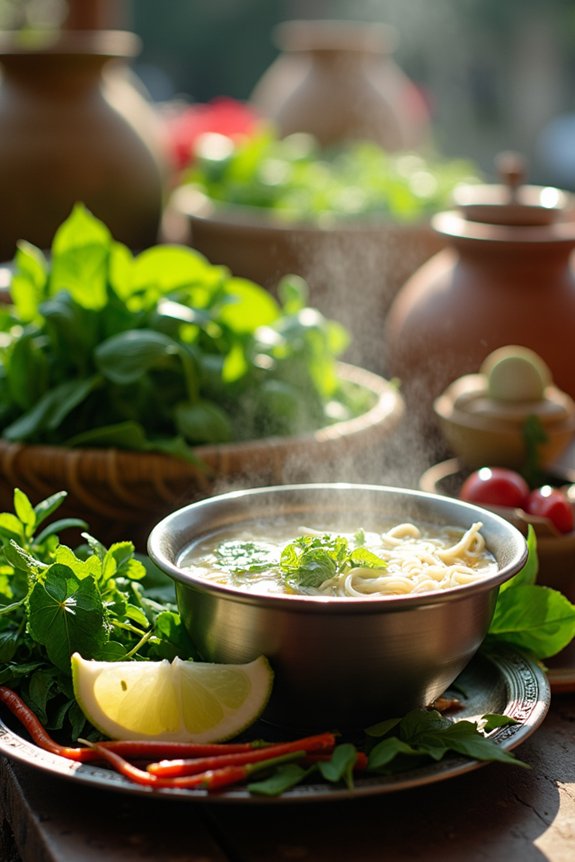
Here’s what makes Vietnamese food so gut-friendly:
- Fresh herbs like basil, mint, and cilantro promote digestive health naturally
- Lean proteins from shrimp and pork keep meals satisfying without heaviness
- Broth-based dishes like canh chua provide light, nutrient-dense comfort
- Fiber from vegetables aids digestion and keeps you feeling full
- Minimal oil cooking methods (boiling, steaming) reduce digestive strain
When you eat Vietnamese food, you’re not just enjoying delicious flavors—you’re giving your gut exactly what it needs to thrive.
Vietnamese vs. Thai and Chinese: A Health Breakdown
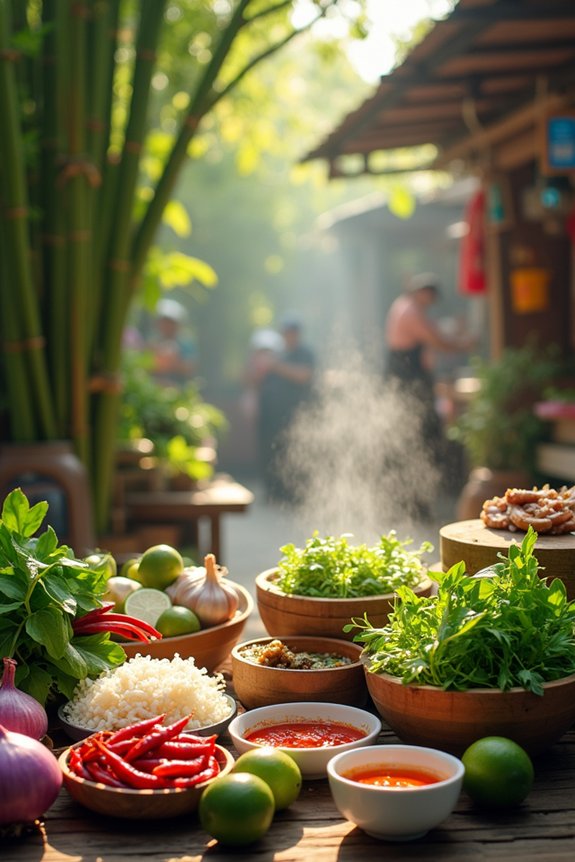
When you compare Vietnamese cooking to Thai and Chinese cuisines, you’ll notice right away that Vietnamese chefs rely on boiling, steaming, and grilling rather than heavy deep-frying or cream-based sauces. Vietnamese dishes pack their flavor punch through fresh herbs, lean proteins like chicken and fish, and crisp vegetables instead of relying on oil or sugar-loaded condiments, which means you’re getting real nutrition without the calorie overload. It’s like the difference between a broth-based pho and a creamy Thai curry—both delicious, but one definitely leaves you feeling lighter and more energized.
Cooking Methods and Fat Content
Three major cooking techniques separate Vietnamese cuisine from its Thai and Chinese cousins, and they make a real difference in your waistline. I’ve noticed how Vietnamese cooks prioritize methods that keep dishes lighter:
- Boiling creates clear broths like pho (350–450 calories per bowl)
- Steaming locks in nutrients without added oil
- Grilling develops flavor by nature without frying
- Light sautéing uses minimal oil compared to heavier preparations
- Fresh vegetables provide fiber and micronutrients throughout meals
Thai and Chinese dishes often rely on fried components and rich sauces that boost fat considerably. When I compare my Vietnamese meals to other Asian options, I’m getting balanced plates with lean proteins, abundant vegetables, and controlled portions. That’s the real advantage—these low-fat cooking methods deliver satisfying flavors without the extra calories weighing you down.
Key Ingredients and Nutritional Value
What makes Vietnamese food stand out nutritionally? I’d say it’s the brilliant use of fresh herbs and lean protein that really sets it apart. When you’re cooking Vietnamese dishes, you’re working with ingredients like lemongrass, cilantro, and mint—flavors that pack a punch without extra calories. Fish sauce adds incredibly depth, yet it’s basically sodium and umami, no hidden fats sneaking in. Compare this to Thai or Chinese cooking, and you’ll notice Vietnamese recipes rely less on oil and cream. You’re getting lean protein from chicken or shrimp, fresh herbs that boost nutrition, and minimal processing. It’s honestly rejuvenating how the flavors do the substantial work here, letting wholesome ingredients shine without drowning everything in fat or sodium-heavy sauces.
Protein Sources and Balance
Most Vietnamese dishes I’ve tried rely on lean proteins—chicken, shrimp, fish, and tofu—that’re prepared in ways that actually protect your health. These protein sources give you the building blocks your body needs without extra fat weighing you down.
Here’s what makes Vietnamese protein sources stand out:
- Grilled preparations lock in flavor while fat drips away
- Steaming methods keep dishes light and nutrient-rich
- Fish and shrimp deliver omega-3s for heart health
- Tofu options work great for plant-based balanced meals
- Chicken breast provides lean protein without the heavy skin
When you’re eating Vietnamese food, you’re getting balanced meals that fuel your body smartly. The cooking techniques matter just as much as the ingredients themselves—that’s the Vietnamese way of keeping things healthy and delicious.
Fermented Sauces and Pickles: Why They’re Gut-Friendly
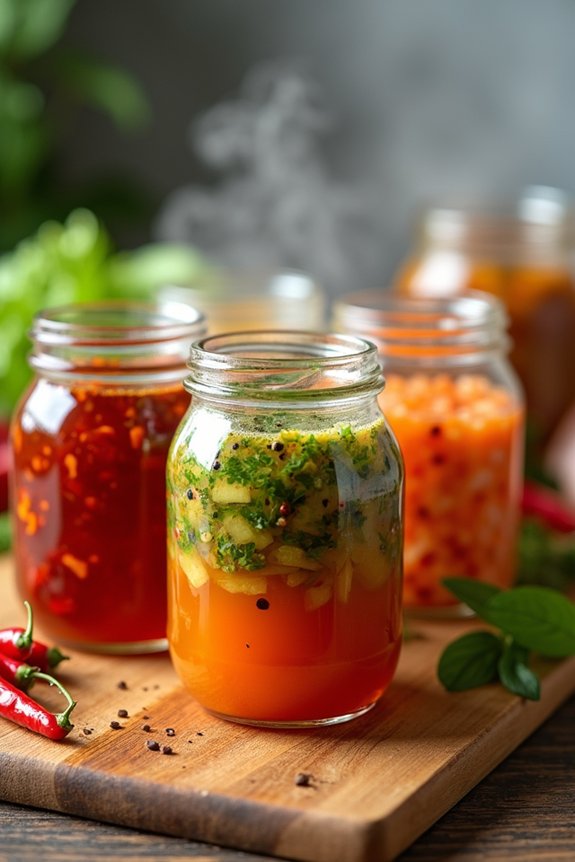
Ever wonder why Vietnamese meals feel so satisfying and energizing? Fermented sauces like nuoc mam and pickled vegetables are your hidden weapons. They’re packed with probiotics and beneficial bacteria that support your gut microbiota, helping your body digest food better and absorb nutrients more effectively.
Here’s what makes them special: the fermentation process creates lactic acid bacteria that work like tiny helpers in your digestive system. When you add pickles or fermented condiments to your bowl, you’re not just getting tangy flavor—you’re getting natural enzymes that aid digestion. Plus, these fermented elements deliver deep umami richness, so you need less salt or sugar to make meals taste remarkable.
Including fermented sauces regularly transforms how your body feels, creating that energized sensation we all crave.