Yes, chocolate-covered raisins can be a genuinely healthy snack when you make smart choices. You’re getting real fruit packed with fiber and antioxidants, plus dark chocolate adds brain-boosting flavonoids. The key? Stick to a quarter-cup serving and pick dark chocolate over milk chocolate—it’s got way less sugar and more protective compounds. Quality matters too, so look for organic options with clean ingredient lists. Keep reading to discover exactly what makes some brands stand out from the rest.
What You’re Actually Getting From Raisins
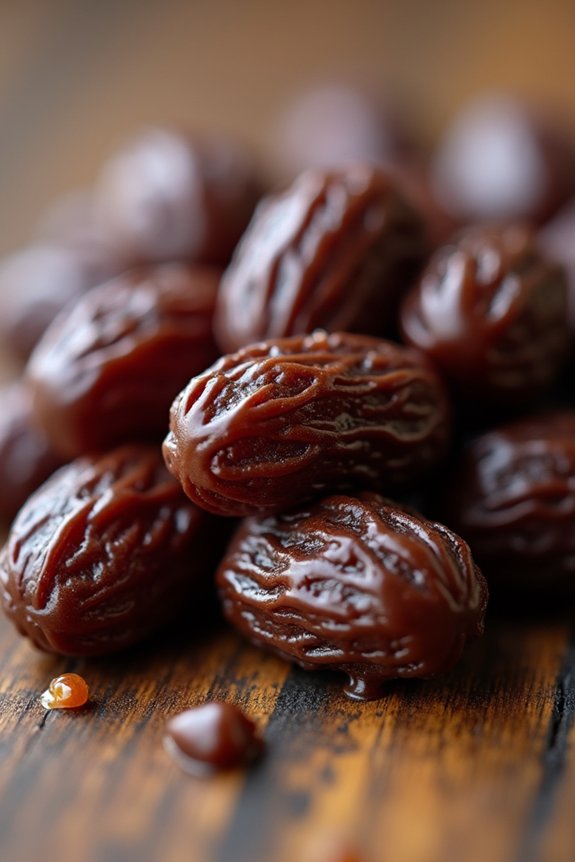
Ever wonder why raisins pack such a nutritional punch? When grapes dry, they transform into little powerhouses that concentrate all their natural goodness. I love that a half-cup serving gives you about 24% of your daily fiber intake—that’s seriously impressive for such a small amount. You’re also getting around 16% of men’s daily iron needs, which varies depending on your age and gender.
What makes raisins special is that their sugars are completely natural, not artificial. The drying process does concentrate those sugars compared to fresh grapes, but you’re still getting genuine fruit nutrition. Plus, you’re scoring antioxidants that support your heart and digestion. That quick energy boost? It comes from real fruit, not processed ingredients. That’s what makes raisins such a trusted choice for anyone seeking wholesome snacking.
How Chocolate-Covered Raisins Stack Up Against Other Snacks
So how do chocolate-covered raisins actually compare when you’re standing in front of your pantry deciding what to grab? I’ll be honest—they’re pretty solid. Unlike candy that gives you empty calories, raisins bring fiber and potassium to the table. Dark chocolate-covered raisins beat out milk chocolate versions because they’ve got flavonoids supporting your brain and heart, not just sugar rush.
Compare them to chips or cookies, and you’re winning. You’re getting real nutrition plus energy. A quarter cup serving gives you sustained fuel without the guilt. Sure, they’ve got added fat and sugar from the coating, but you’re still getting natural goodness from the raisins themselves.
For us who want snacks that actually matter, dark chocolate-covered raisins hit that sweet spot between tasty and smart.
Why Portion Control Prevents Excess Calories and Sugar
I’ve found that a small handful of chocolate-covered raisins—roughly a quarter cup—gives you all the good stuff (fiber, antioxidants, natural sweetness) without going overboard on calories and sugar. When you measure out your portions instead of eating straight from the bag, you’re actually getting more satisfaction because you’re being intentional about what you’re eating, and that mindfulness makes a real difference. Sticking to these reasonable serving sizes lets you enjoy the heart-healthy benefits of dark chocolate and the fiber boost from raisins while keeping your daily sugar and calorie intake in check.
Recommended Serving Sizes
How much is too much when you’re reaching for that bowl of chocolate-covered raisins? I’ve found that sticking to a 1/4 cup serving keeps things in check. That’s roughly 120–140 calories and about 3–4 grams of fiber, which actually helps you feel satisfied longer.
Here’s what I love about portion control with dark chocolate-covered raisins: you’re getting real benefits without going overboard. The raisins give you iron and natural sweetness, while the chocolate adds richness—but only if you measure it out. I grab a small handful, put the bowl away, and enjoy every bite mindfully.
For us active folks, this measured approach works perfectly. You get quick carbs for energy without derailing your daily goals. We’re all in this together, finding that sweet spot between treating ourselves and staying smart about what we eat.
Caloric Impact Management
When you’re mindfully snacking on chocolate-covered raisins, portion control becomes your concealed advantage against hidden calories and excess sugar. I’ve discovered that managing these treats doesn’t mean giving them up entirely—it means being intentional about how much I enjoy them.
Here’s what I’ve learned works:
- Measure out 1/4 cup or 1 oz servings to keep calories consistent
- Choose dark chocolate-coated varieties, which contain less sugar than milk chocolate options
- Pair your snack with balanced meals to feel fuller longer
- Use small bowls or containers to prevent mindless overeating
- Track portions weekly to stay aware of your intake
When I stick to these strategies, I satisfy my cravings without derailing my goals. You’ve got this—portion control isn’t restrictive; it’s liberating.
Dark Chocolate vs. Milk Chocolate: Making the Better Choice
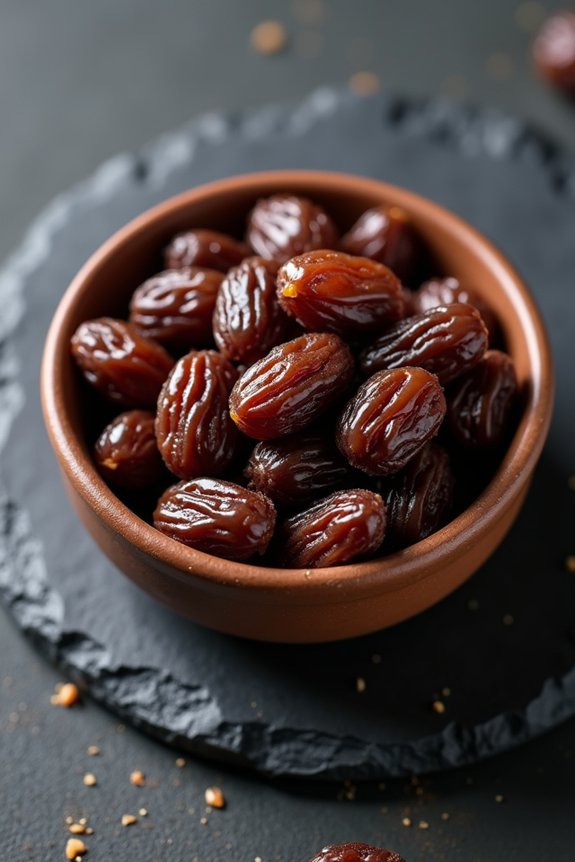
When you’re picking between dark and milk chocolate-covered raisins, you’re really choosing between cocoa solids and antioxidants versus sugar and fat content. Dark chocolate packs about 70% fair-trade cocoa with way more of those good-for-you antioxidants, while milk chocolate loads up on extra sugar and fat that can turn your snack into a calorie bomb. I’d say dark chocolate’s the smarter choice if you’re after real health benefits, but honestly, the best chocolate-covered raisin is the one you’ll actually enjoy in the right portion size.
Cocoa Solids and Antioxidants
Why does the chocolate coating on your raisins matter so much? It’s because dark chocolate brings something special to the table—antioxidants that genuinely make a difference.
When you choose dark chocolate over milk chocolate, here’s what you’re actually getting:
- 50–90% cocoa solids that pack serious antioxidant punch
- Flavonoids linked to better mood and brain function
- Less added sugar than milk chocolate versions
- Essential minerals like copper, iron, and magnesium
- Heart health benefits from those powerful plant compounds
Milk chocolate, while delicious, trades antioxidants for extra fat and sugar. Dark chocolate-covered raisins? They’re your snack sweet spot. You’re combining raisins’ natural nutrients with dark chocolate’s antioxidant powerhouse. Smaller portions maximize those benefits while keeping calories in check. That’s smart snacking that actually feels good.
Sugar and Fat Content
Now that you understand chocolate’s antioxidant superpowers, let’s talk about what else is hiding in that coating—because knowing the sugar and fat difference between dark and milk chocolate can totally change your snacking game.
Dark chocolate wins here, hands down. It contains less sugar and fewer added fats than milk chocolate, making it the smarter choice for your health. A 1/4 cup serving of chocolate-covered raisins packs about 30% saturated fat, so portion control matters. Dark chocolate options keep that fat intake lower while milk chocolate piles on extra sugar without delivering the same antioxidant benefits.
Think of dark chocolate as your top-tier asset—you’re getting nutritional benefits alongside your treat. Milk chocolate? It’s basically empty calories with a sweet kick. Choose dark chocolate, control your portions, and you’ve got yourself a genuinely healthier snack that tastes indulgent.
Nutritional Profile Comparison
Ever wonder what’s actually different inside that chocolate coating? I’ll break down the real differences between dark and milk chocolate varieties because choosing wisely changes your snack game.
When you compare the two, here’s what you’re really getting:
- Dark chocolate contains 50–90% cocoa solids packed with flavonoids
- Milk chocolate adds extra sugar and fat, reducing antioxidant benefits
- Dark chocolate raisins deliver more minerals like copper, iron, and zinc
- Milk chocolate provides calcium and potassium but fewer protective compounds
- White chocolate lacks cocoa solids entirely, offering minimal health perks
Here’s my honest take: dark chocolate-coated raisins genuinely give you more nutritional bang for your bite. You’re getting real antioxidants alongside natural fruit sweetness without the sugar overload milk chocolate brings. That’s the choice that’ll make you feel good about snacking.
How to Pick the Best Chocolate-Covered Raisins
If you’re scanning the snack aisle for chocolate-covered raisins that’ll actually do your body good, here’s what I’d focus on: dark chocolate is your best friend. Dark chocolate delivers more flavonoids and less sugar than milk chocolate varieties, making it the smarter choice for your health goals.
| What to Look For | Why It Matters | Where to Check |
|---|---|---|
| Dark chocolate coating | Higher antioxidants, lower sugar | Ingredient label |
| Organic/fair-trade labels | Fewer additives, better quality | Package front |
| Serving size info | Understand saturated fat content | Nutrition facts |
| Allergen warnings | Avoid cross-contact risks | Bottom of label |
| Clean ingredient lists | Know exactly what you’re eating | Back of package |
I’d also grab organic varieties when possible—they’re cleaner, taste better, and support fair-trade practices. Check those allergen warnings too, especially if tree nuts concern you.
What Real Customers Say (and Why It Matters)
Why does customer feedback matter when you’re trying to pick a healthy snack? Real people tell you what actually works. I’ve found that genuine reviews help you make choices that fit your life.
Here’s what customers are saying about Tierra Farm Organic Dark Chocolate Covered Raisins:
- Perfect taste: Reviewers describe them as tasty, plump, and chewy
- Broad appeal: Grandparents love sharing them with grandchildren
- Dessert replacement: They work great as a post-dinner treat
- Quality ingredients: Dark chocolate and raisins combine naturally
- High ratings: A 4.86 rating from 14 reviews speaks volumes
When real customers rave about a snack, you know it delivers. Their honest feedback shows these dark chocolate-covered raisins satisfy both cravings and nutritional goals. That’s why I trust what people actually say over marketing claims.