
it all comes down to added sugar. Traditional Modena balsamic has just 2–3 grams of net carbs per tablespoon, making it your safest bet. Commercial versions jump to 4–5 grams, while glazes hit up to 18 grams—basically candy you’re drizzling on salad. I check labels for grape must as the main ingredient and skip anything with added sugars. Portion control matters too; I use teaspoons instead of tablespoons to stay within daily carb limits. Stick with traditional, measure carefully, and you’ll keep ketosis on track—but there’s definitely more strategy to master.
Is Balsamic Vinegar Keto-Friendly? The Carb Content Reality

So, can you actually use balsamic vinegar on keto? The answer depends on what you’re buying. Traditional balsamic vinegar from Modena contains about 2–3 grams of net carbs per tablespoon, making it keto-friendly when you’re careful with serving size. However, commercial versions pack 4–5 grams per tablespoon because of their higher sugar content from grape must sweetness.
Here’s where it gets tricky: balsamic glaze? That’s off the table with up to 18 grams per tablespoon. The difference between traditional vs commercial varieties matters substantially for your carb budget. Some brands offer low-carb or sugar-free options with just 1 gram of net carbs per serving.
Check your labels carefully. You’ll find that monitoring serving size keeps traditional balsamic workable for most keto dieters.
Why Balsamic Glaze Isn’t the Same (And Why It Matters)
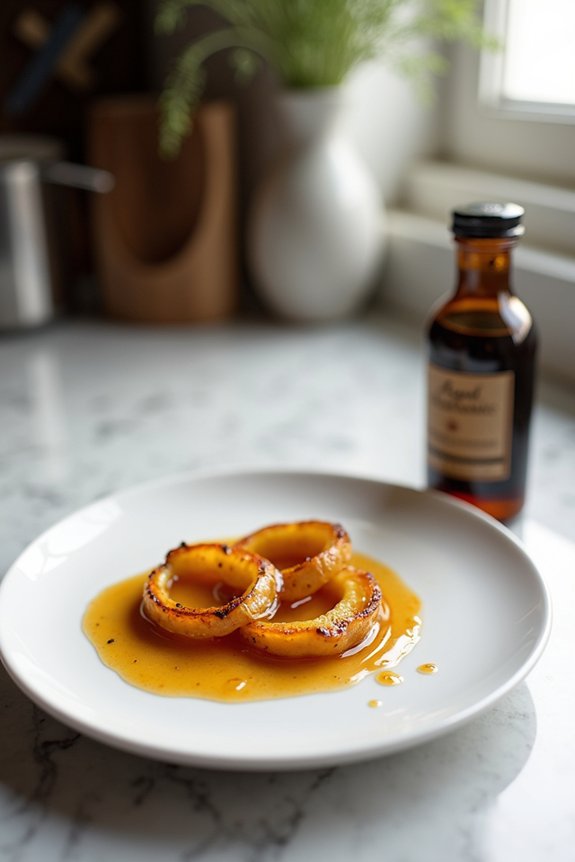
Ever wonder why balsamic glaze tastes so much sweeter and thicker than regular balsamic vinegar?
That’s because manufacturers add glucose and fructose to create that glossy coating you see on fancy restaurant plates. While traditional balsamic vinegar contains just 2–3g net carbs per tablespoon, commercial balsamic glaze can pack up to 18g—that’s basically liquid sugar masquerading as vinegar.
Here’s the difference:
| Product | Net Carbs | Added Sugars | Keto-Friendly |
|---|---|---|---|
| Traditional Balsamic | 2–3g | None | Yes |
| Commercial Balsamic | 5–8g | Sometimes | Moderate |
| Balsamic Glaze | 15–18g | Definitely | No |
| Aged Traditional | 2–4g | None | Yes |
| Balsamic Reduction | 12–16g | Often | No |
I’d skip the glaze entirely on keto. Stick with traditional balsamic instead—it’s your safest bet for staying on track.
How Much Balsamic Can You Use on Keto Without Breaking Ketosis?
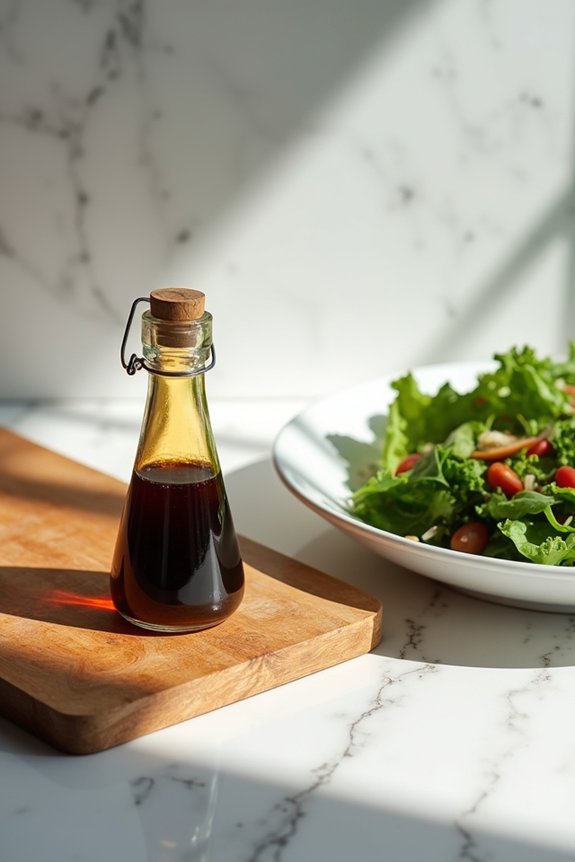
Here’s the thing: your daily carb limit is your real guide, and whether you’re using traditional balsamic (about 2–3 grams per tablespoon) or the commercial stuff (4–5 grams) makes a real difference when you’re trying to stay in ketosis. If you’ve got 20–50 grams of net carbs to work with each day, I’d stick with 1–2 teaspoons per serving so you can flavor your salads and roasted veggies without accidentally tipping over into carb overload. The trick is picking the good-quality balsamic without added sugars, then measuring carefully—think of it like seasoning salt, where a little goes a long way.
Daily Carb Limits Matter
When you’re tracking carbs on keto, every gram counts—and that’s where balsamic vinegar gets tricky. Your daily net carbs determine how much you can actually use, so understanding your personal carb limits is essential for staying keto-friendly.
Here’s what matters most:
- A 20 g/day limit means even 1 tablespoon (2–3 g net carbs) uses up significant allowance
- A 50 g/day limit gives you more flexibility with 1–2 tablespoons
- Traditional Modena balsamic runs 2–3 g net carbs per tablespoon
- Commercial varieties jump to 4–5 g, while glazes spike to 18 g
- Label literacy lets you spot hidden sugar content before committing
You’ll want to check that sugar content carefully. Stricter limits? Stick to 1 teaspoon servings. Higher limits? You’ve got more wiggle room. The key’s knowing your numbers and choosing accordingly.
Traditional Versus Commercial Types
Not all balsamic vinegar is created equal—and that difference matters big time when you’re counting carbs on keto. I’ve learned that traditional Modena balsamic is your keto-friendly friend, containing just 2–3 grams of net carbs per tablespoon since it’s made from pure reduced grape must with zero added sugar. Commercial versions? They’re sneaky culprits, packing 4–5 grams per tablespoon, while glazes can hit a whopping 18 grams. The sugar content makes all the difference. Here’s my go-to strategy: I stick with traditional balsamic and measure carefully—just 1–2 teaspoons per serving keeps me in ketosis. Always check those labels for added sugars, because commercial brands often hide sweeteners that’ll knock you right out of your groove.
Portion Control Strategies
How much balsamic can you actually use without tanking your ketosis? I’ve found that portion control is your secret weapon here. Here’s what works for me and my keto friends:
- Use 1–2 teaspoons per serving to stay safe within a 20-gram daily net carbs limit
- Measure carefully—those tablespoons add up fast with commercial varieties
- Choose low-carb balsamic with minimal added sugars (traditional versions are your best bet)
- Track your net carbs religiously when using keto-friendly vinegar
- Consider splitting servings throughout the day rather than dumping it all on one plate
The truth? One tablespoon of quality balsamic won’t destroy your ketosis if you’re counting carefully. But grab that commercial glaze, and you’re looking at 18 grams in one tablespoon. That’s brutal. Stick with traditional options and those teaspoon measurements, and you’ll keep cruising in ketosis without stress.
Traditional Modena vs. Commercial Balsamic: Which Works for Keto?

Where you shop for your balsamic vinegar makes a real difference if you’re watching carbs. Traditional Modena balsamic is your keto-friendly winner with just 2–3 grams of net carbs per tablespoon because it’s made from 100% grape must and aged in wooden casks. Commercial balsamic, though, sneaks in added sugars that push net carbs up to 4–5 grams per tablespoon—tricky stuff that can derail your day. The PDO-protected Traditional Modena isn’t cheap, but it’s worth it for staying on track. Look for labels saying “zero sugar” or “low sugar” if you’re budget-conscious. Check that nutrition label, measure your portions carefully, and you’ll find your keto-friendly balsamic match.
What to Look for on Balsamic Labels: Sugar, Additives, and Carbs
When you’re standing in the aisle squinting at a balsamic bottle, I want you to flip it over and hunt for three things: the nutrition label’s carb count (traditional Modena sits around 2–3g per tablespoon, while commercial versions can sneak up to 18g), any PGI or Consortium seals that prove it’s the real deal, and sneaky added sugars hiding in the ingredient list. You’ll also want to scan for words like “grape must only” at the top of the ingredients—that’s your green light that you’re getting traditional stuff without all the extra sweeteners and colorings tacked on. If you spot sugar substitutes or zero-sugar claims, that’s another solid option for keto, just make sure there’s no gluten lurking in there if that matters to you.
Decoding Nutrition Labels
What’s really hiding in that balsamic bottle you’re about to pour over your salad? I’ve learned that decoding nutrition labels is your secret weapon for staying keto-friendly. Here’s what I check every time:
- Net carbs per tablespoon – Traditional balsamic vinegar has 2–3g, while commercial versions climb to 4–5g or higher
- Added sugars listed first – If sugar appears early on labeled ingredients, skip it
- Balsamic glaze products – These sneaky bottles pack up to 18g net carbs per tablespoon
- “PGI/Modena” certification – This signals authentic traditional balsamic with lower carb content
- Grape must as main ingredient – This tells me I’m getting the real deal without sweeteners
I’ve found that taking thirty seconds to read labels saves me from accidentally derailing my keto goals. You’ve got this!
Identifying Hidden Sugars
How’d you like to know the sneaky trick manufacturers use to turn innocent grape juice into a carb bomb? They’re hiding added sugars in plain sight. When I’m shopping, I flip that bottle over and scan the ingredient list first—looking for pure grape must, which signals a keto-friendly option. Here’s the thing: traditional Modena balsamic contains only grape must and clocks in around 2–3g net carbs per tablespoon. But commercial brands? They’re sneaking in sugar syrups and caramel that jack up the sugar content dramatically, sometimes hitting 18g net carbs. I avoid colored or flavored varieties because those additives often mask hidden sugars. My strategy’s simple: hunt for labels claiming zero or very low net carbs, then verify the ingredient list checks out. That’s how you stay keto-friendly.
Verifying Quality Certifications
I look for that PGI (Protected Geographical Indication) seal or Consortium stamp on the bottle, which tells me the vinegar’s actually from Modena and made the traditional way.
These certifications matter because they’re basically your guarantee that you’re getting quality, not just marketing fluff. When I verify the label, I’m hunting for:
- PGI or Consortium certification from Modena
- Ingredient list showing 100% grape must only
- Net carbs listed (aim for 2–3g per tablespoon)
- Zero added sugars or artificial sweeteners
- No mysterious thickeners or colorings
That certification isn’t just fancy—it correlates with lower added sugars and purer ingredients. I’ve learned that traditional Modena balsamics keep things simple, which makes them genuinely keto-friendly without any sneaky carbs hiding in the bottle.
Portion Control for Keto: Measuring Tools and Serving Sizes
The real secret to keeping balsamic vinegar on your keto plate isn’t avoiding it entirely—it’s measuring it carefully. I’ve found that using teaspoons and tablespoons makes all the difference when you’re tracking net carbs. Here’s what I recommend:
| Product Type | Net Carbs per Tablespoon | Best Serving | Label Check |
|---|---|---|---|
| Traditional Balsamic | 2–3g | 1 tsp | Essential |
| Commercial Balsamic | 4–5g | 1 tsp | Critical |
| Balsamic Glaze | 18g | Avoid | Skip |
| Apple Cider Vinegar | <1g | 1 tbsp | Optional |
| Zero-Sugar Balsamic | 0–1g | 1 tbsp | Recommended |
I keep my servings to one or two teaspoons in dressings, which keeps me within my daily net carb goals. Label reading saves me every time—those hidden sugars sneak up fast. When I’m uncertain, keto-friendly alternatives like apple cider vinegar work beautifully without the carb worry.
Top Keto-Friendly Balsamic Brands: Net Carbs and Quality Standards

Once you’ve got your measuring spoons ready and you’re tracking those teaspoons carefully, the next step is finding the right brand that’ll actually work with your keto goals—because not all balsamic vinegar are created equal.
I recommend looking for these quality standards when shopping:
- PGI/Consortium seals confirming authentic Modena origin
- Grape must as the first ingredient (no added sugars hiding in there)
- 2–3 grams net carbs per tablespoon on the nutrition label
- No artificial additives or syrups listed
- Brands like Big Horn Olive Oil with transparent labeling
These keto-friendly balsamics let you enjoy rich flavor without derailing your carb count. You’ll notice the difference immediately—traditional versions taste deeper and more complex than commercial knock-offs. Your salads (and your macros) will thank you.
DIY Keto Balsamic: Making Your Own Low-Carb Version

Why spend extra money on specialty keto balsamic when you can whip up your own zero-carb balsamic in about five minutes? I’ll show you how simple this really is.
Here’s what you’ll need: red wine vinegar as your base and a sugar-free sweetener like Lakanto. Mix one cup of red wine vinegar with two tablespoons of your chosen sweetener, then stir until completely blended. That’s it—you’ve made a keto-friendly substitute that’ll cost you a fraction of store-bought options.
This DIY keto balsamic works beautifully in low-carb vinaigrettes and dressings. Simply combine three parts olive oil with one part your homemade version for a quick vinaigrette that keeps carbs nearly zero.
You’re now part of the savvy keto community making smarter ingredient choices at home.
Building Keto Dressings and Marinades With Balsamic
Once you’ve got your keto-friendly balsamic sorted, I’ll show you how to turn it into dressings and marinades that’ll make your proteins sing without derailing your carb count. The magic trick is simple: mix one tablespoon of traditional balsamic with two tablespoons of olive oil, add some garlic and herbs, and you’ve got yourself a vinaigrette with just 1–2 grams of net carbs per tablespoon. For marinades, you can use the same ratio but let your chicken, beef, or fish soak for a few hours—the flavors get deeper while the carbs stay low.
Crafting Keto-Friendly Vinaigrettes
If you’re worried that going keto means saying goodbye to tangy, flavorful dressings, I’ve got good news—you don’t have to.
I make my keto vinaigrettes by mixing 1 part balsamic vinegar with 2 parts olive oil, keeping net carbs low while maximizing flavor. Here’s my simple approach:
- Use just 1 tablespoon of balsamic vinegar per serving
- Choose PGI/Protected Origin labeled bottles (they’re worth it)
- Add garlic, mustard, and herbs for extra taste
- Skip added sugars completely
- Whisk everything together until emulsified
This ratio keeps my daily net carbs in check without sacrificing that rich, tangy taste I crave. I’ve found that balsamic vinegar keto-friendly versions work beautifully when you’re intentional about portions and quality. Your salads deserve better than sad, plain oil anyway.
Marinades For Low-Carb Proteins
How do you get that restaurant-quality tenderness and flavor into your chicken, steak, or pork without derailing your keto goals? I’ll tell you—a smart balsamic marinade does the trick. I combine just 1 tablespoon of traditional balsamic with olive oil, garlic, and Italian seasoning. This ratio keeps net carbs modest while delivering serious flavor depth.
| Protein | Marinating Time | Balsamic Amount | Net Carbs | Best Results |
|---|---|---|---|---|
| Chicken | 2–4 hours | 1 tbsp | 2–3 g | Tender, juicy |
| Steak | 1–2 hours | 1 tbsp | 2–3 g | Rich crust |
| Pork | 4–6 hours | 1 tbsp | 2–3 g | Deep flavor |
| Fish | 30 minutes | ½ tbsp | 1–1.5 g | Delicate |
| Vegetables | 1 hour | 1 tsp | 1 g | Caramelized |
Shorter marinating times prevent carb overload while keeping your keto-friendly proteins tender and flavorful.
The Balsamic Glaze Trap: Why You Should Avoid It on Keto

You’ve probably seen those beautiful bottles of balsamic glaze sitting next to the vinegar in your grocery store—the thick, syrupy stuff that drizzles like liquid caramel over salads and roasted veggies.
Here’s the trap: that gorgeous glaze contains added sugars and syrups that’ll sabotage your keto goals. I’m talking about 18g of net carbs per tablespoon. Even a small drizzle can wreck your daily carb limit.
Instead, I recommend:
- Choose traditional Modena balsamic vinegar (only 2–3g net carbs per tablespoon)
- Skip commercial versions with higher sugar content
- Make your own keto vinaigrette using unglazed balsamic and olive oil
- Measure portions carefully to stay on track
- Read labels for added sugars before buying
The difference is real. Traditional Modena won’t derail your ketosis like that sweetened glaze will.
Using Balsamic in Keto Meals: Dressing, Marinade, and Roasting Strategies
The real magic happens when you treat traditional balsamic vinegar like the strategic asset it is—not as a drench, but as a flavor booster in carefully measured amounts. I’ve found that mixing one part balsamic vinegar with two parts olive oil creates a keto-friendly dressing with just one to two grams of net carbs per tablespoon. For marinades, I use about one tablespoon per serving, which keeps things manageable for my daily carb count. When roasting, I drizzle it over asparagus or Brussels sprouts alongside proteins, letting the acidity work its magic without derailing ketosis. The key is remembering that traditional balsamic—unlike those sugary commercial glazes—gives you genuine flavor without sabotaging your goals.
Quick Reference: Balsamic Vinegar Carb Content by Type
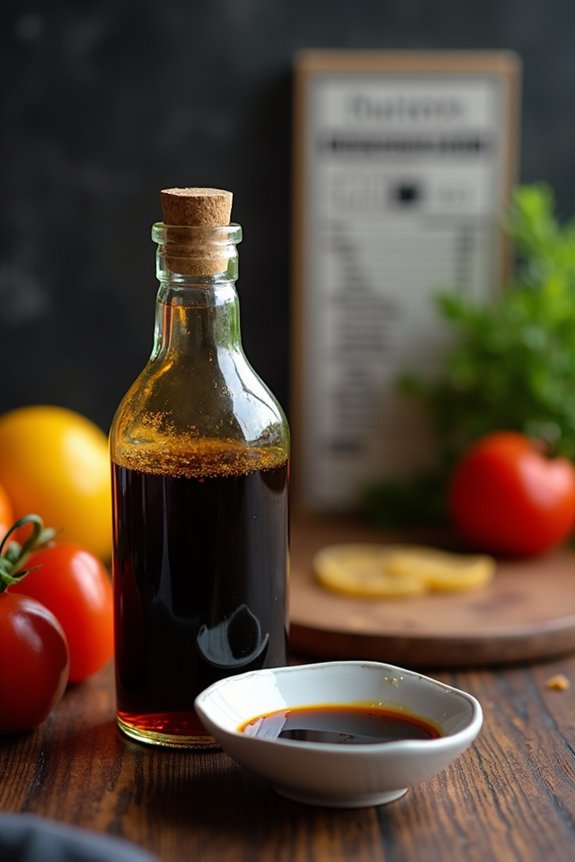
Knowing what’s actually in your bottle makes all the difference when you’re counting carbs. I’ve learned that not all balsamic vinegars are created equal, and understanding the carbohydrate content by type helps you stay confident in your keto choices.
Here’s what you’re really working with:
- Traditional Balsamic: 2–3 grams net carbs per tablespoon (your safest bet)
- Commercial Balsamic: 4–5 grams net carbs per tablespoon (requires portion control)
- Balsamic Glaze: Up to 18 grams net carbs per tablespoon (skip this one)
- Apple Cider Vinegar: Less than 1 gram net carbs per tablespoon (excellent alternative)
- Products with Added Sugars: Variable carbohydrate content (always check labels)
When you’re building keto-friendly meals, I recommend choosing traditional balsamic made from grape must without added sugars. Check those ingredient lists carefully, and you’ll feel empowered knowing exactly what fits your goals.