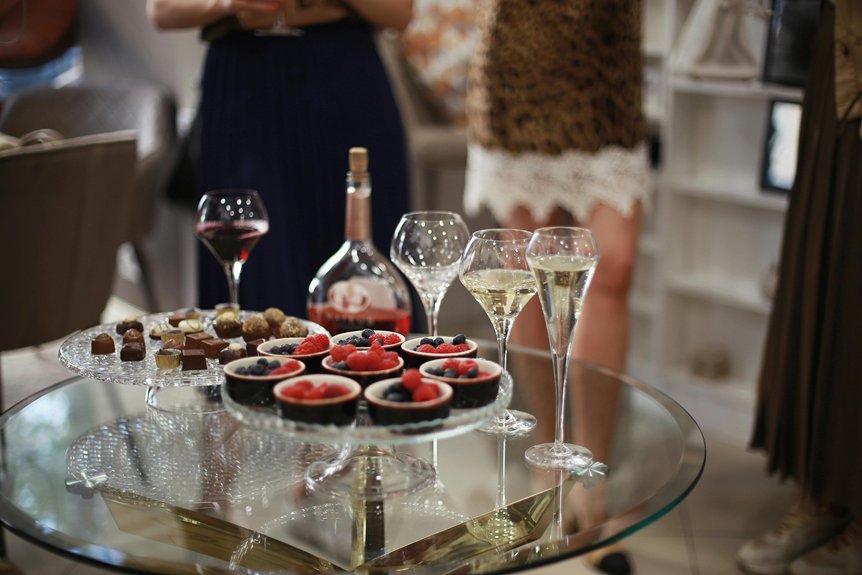
Dessert wine is basically grape juice that kept more of its natural sweetness—think of it like concentrating flavor by leaving grapes on the vine longer or freezing them. What makes it special isn’t just the sugar though; it’s the acidity that keeps it from tasting syrupy and heavy. I’d choose one by matching its sweetness level to your dessert, then let the wine’s weight and brightness guide you. The right pairing transforms both bites and sips into something genuinely memorable—and there’s a whole world of styles waiting to surprise you.
What Makes Dessert Wine Different From Other Wines
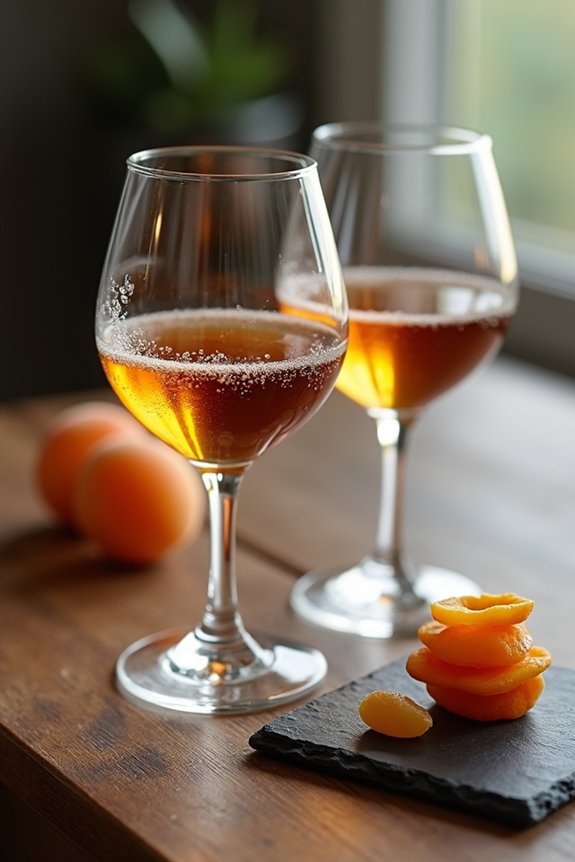
Ever wondered why dessert wines taste so different from the regular wine you might have with dinner? The secret’s in the sugar. I’ve found that dessert wines contain higher natural grape sugars—sometimes concentrated through late harvest or noble rot methods—which gives them their signature sweetness. Here’s what makes them special: they’re balanced by acidity, which prevents them from tasting heavy or cloying. During fermentation, winemakers control how much sugar converts to alcohol, creating that perfect lingering finish you’ll love.
The styles vary wildly too. You’ll discover sparkling options, lightly sweet wines, or richly sweet varieties. Each style develops its own unique aroma profile. What I appreciate most is their versatility—they’re perfect for pairing with desserts, cheeses, or enjoying solo. Once you understand these differences, choosing your favorite becomes genuinely fun.
How Production Methods Create Sweetness (Late Harvest, Botrytis, Ice Wine)
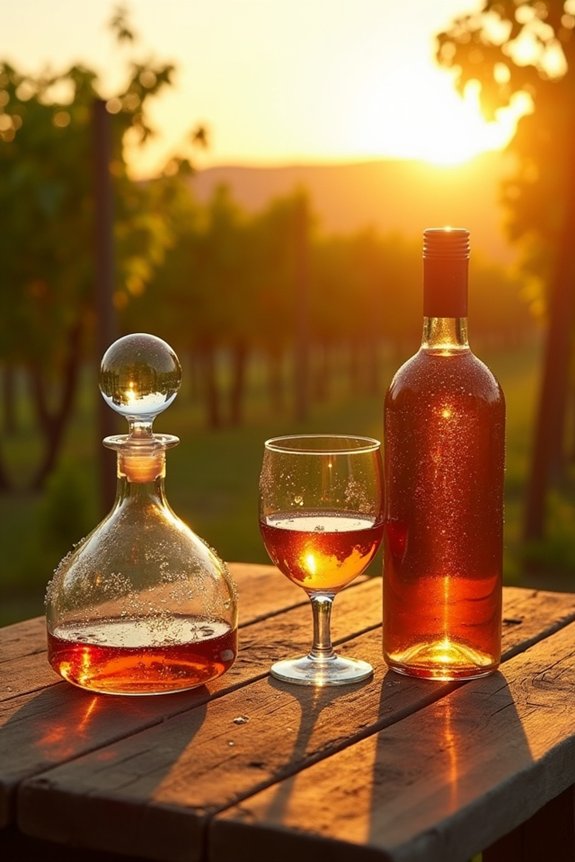
I’ll show you how winemakers concentrate those natural sugars into liquid gold, and it’s honestly pretty clever—they’re basically giving grapes extra time or special conditions to become sweeter versions of themselves. With late harvest wines, growers let grapes hang on the vine longer so the sun does its job, packing in more sugar while keeping enough tartness to keep things balanced (it’s like reducing a sauce to intensify flavor). Then there’s botrytis, noble rot, and ice wine—three completely different tricks that all aim for the same goal: maximum sweetness with enough acid backbone so you’re not left with a syrupy mess.
Late Harvest Grape Concentration
How do winemakers turn grapes into liquid candy without dumping in sugar? They let nature do the heavy lifting through late harvest techniques. When you leave grapes on the vine longer than usual, something magical happens—the sun keeps shining, water evaporates from each grape, and the sugars become super concentrated. It’s like making raisins, except the grapes stay intact on the branch.
This grape concentration method works beautifully because dehydration intensifies sweetness naturally. Some winemakers even encourage noble rot (Botrytis cinerea), a beneficial mold that dehydrates grapes further while adding honeyed, tropical notes. The trick? Maintaining high acidity throughout the process prevents your dessert wine from tasting flat or cloying. That balance between sweetness and brightness is what separates memorable winemaking methods from forgettable ones.
Noble Rot Sugar Enhancement
Now that you understand how concentrated grapes become the foundation of dessert wines, let me show you the three main production methods winemakers use to push that sweetness even further.
Noble rot—fancy name for the fungus Botrytis cinerea—works like nature’s dehydrator. It pierces grape skins, letting water escape while sugars stay put. The result? Intensely sweet wine styles with complex flavors that dance on your tongue.
Late harvest wines skip the rush. Winemakers leave grapes hanging longer, letting them absorb more sunshine and develop deeper sweetness before fermentation begins.
Ice wine takes a different path. Frozen grapes get pressed, yielding concentrated juice packed with sugar and bright acidity for balance.
Each method proves that patience and precision create dessert wines worth savoring.
Frozen Grapes Intense Sweetness
What makes ice wine taste like liquid gold? When I harvest grapes at freezing temperatures, the water inside them turns to ice while the grape sugars stay liquid. I press these frozen grapes, and only the concentrated juice flows out—creating ice wine with incredibly high sugar content and bright acidity that balance beautifully.
This natural sweetness happens because the fermentation halt occurs when yeast can’t work in such high-sugar conditions. The result? A dessert wine that feels luxurious on your tongue, packed with intense grape sugars and that signature golden color.
I love pairing ice wine with desserts like vanilla cake or fresh berries. You’re joining a community of wine lovers who appreciate how freezing grapes transforms them into something truly special and unforgettable.
The 5 Main Types of Dessert Wine Explained
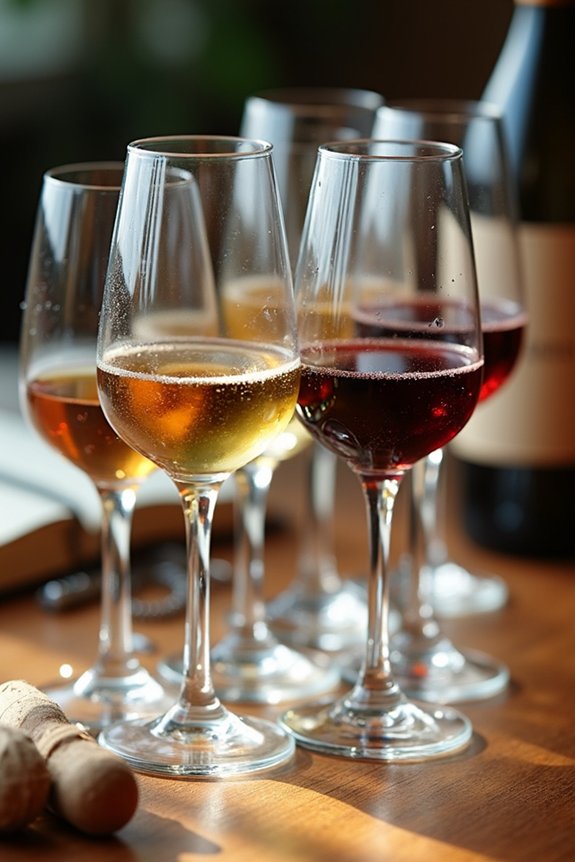
Ever wonder why some dessert wines taste like liquid honey while others tickle your nose with bubbles? I’ll walk you through the five main categories so you can find your perfect match:
- Sparkling Dessert Wines – Think Moscato d’Asti with its fun fizz and balanced sweetness
- Lightly Sweet (Off-Dry) Wines – Riesling offers refreshing sweetness without being overwhelming
- Rich and Sweet Wines – Sauternes, Tokaji Aszú, and Ice Wine (Eiswein) deliver concentrated honey-like flavors
- Sweet Red Wines – These offer fruity sweetness for red wine lovers
- Fortified Wines – Port and Sherry get their intensity from added spirits
Each type brings something special to your dessert table. Whether you’re craving bubbles, balanced sweetness, or rich indulgence, you’ve got options. Start exploring, and you’ll discover your favorite.
Match Dessert Wine to Your Dessert: The Essential Rules
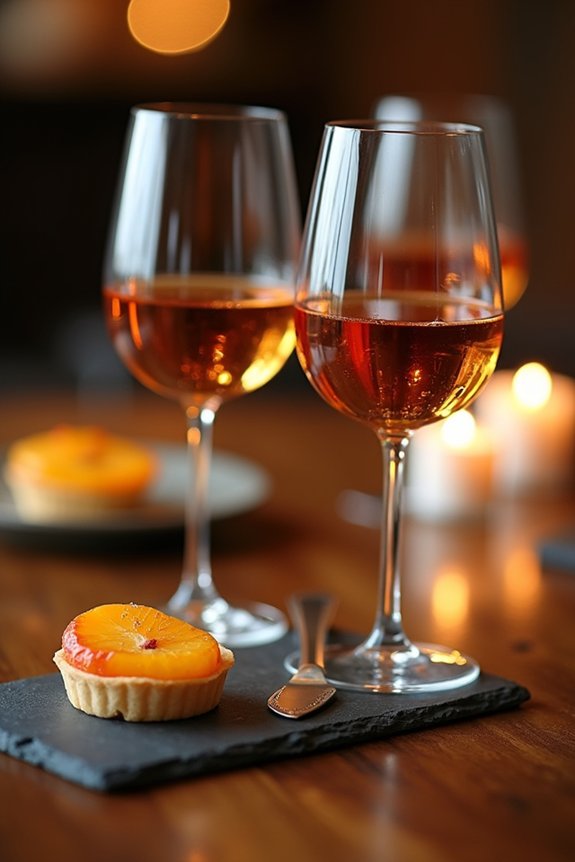
I’ve learned that matching dessert wine to your dessert really comes down to three key rules, and once you know them, you’ll never second-guess yourself again. First, your wine should be at least as sweet as your dessert—otherwise you’ll get that awkward, dry feeling that makes both taste flat; second, you want the wine’s weight and body to match your dessert’s texture, so a rich chocolate cake gets a full-bodied wine while a light fruit tart gets something delicate; and third, a bit of acidity in your wine cuts through sweetness beautifully and keeps everything from feeling too heavy or cloying. Think of it like this: sweetness, weight, and brightness working together make the magic happen.
Sweetness Balance Fundamentals
How do you know if a dessert wine’ll actually taste good with your dessert? I’ve found the secret lies in understanding sweetness balance fundamentals. You want your wine’s sweetness level at least matching your dessert’s sugar content—otherwise, the dessert’ll overpower everything, leaving you disappointed.
Here’s what I focus on:
- Acidity matters most—it cuts through richness and refreshes your palate between bites
- Wine weight should match dessert weight—heavy creamy desserts need full-bodied wines; light fruits need delicate ones
- Sugar levels must align—sweeter desserts demand sweeter wines for complementary flavors
- Flavor intensity creates balance—strong chocolate needs concentrated wine; subtle flavors need gentler options
The real magic happens when acidity prevents cloying sweetness. Your dessert wine becomes palate refreshment, not just sugar on sugar. That’s when wine and dessert pairings truly shine.
Weight And Structure Harmony
Think of pairing dessert wine like matching dance partners—the two need to move together smoothly, not fight each other. I’ve learned that weight matters tremendously when selecting your dessert wine. A light, delicate dessert deserves a fresh, fragrant wine that won’t overpower it, while rich, creamy treats demand full-bodied wines with more intensity and alcohol content.
Here’s where structure comes in: you’ll want acidity and tannins to balance the sweetness, preventing that flat, syrupy finish nobody enjoys. I think of it like this—the wine’s acidity cuts through richness like a knife through butter, creating harmony instead of heaviness.
When you match dessert weight to wine structure thoughtfully, you’re not just serving drinks; you’re crafting an experience that feels refreshing and leaves you satisfied, not stuffed.
Acidity Creates Complementary Contrast
When’s the last time you bit into something sickeningly sweet and wished you had a glass of water nearby? That’s where acidity in dessert wine saves the day. I’ve learned that acidity creates the perfect complementary contrast, cutting through richness and preventing that cloying mouthfeel we all dread.
Here’s how acidity works its magic:
- Balances sugar levels by reviving your palate between bites
- Enhances the wine and dessert pairing through brightness
- Carries the finish smoothly across your tongue
- Prevents sweetness from overwhelming your taste buds
Think of acidity as your palate’s best friend. When you match a high-acid dessert wine with your sweet treat, you’re creating harmony that feels natural and satisfying. The acidity cuts through creamy textures beautifully, leaving you wanting another sip and another bite—the mark of truly belonging at any dessert table.
The Best Dessert Wines to Try by Style and Budget
Where do you even start when the dessert wine aisle looks like a fancy treasure map?
I’ve found that exploring dessert wine styles by budget makes it manageable. For splurges, Sauternes delivers honeyed richness that pairs beautifully with chocolate desserts. Tokaji from Hungary offers similar elegance at varied price points, with Eszencia representing the ultimate luxury. Want something bright and crisp? Eiswein’s high acidity cuts through sweetness perfectly.
Port gives you serious bang for your buck—Ruby styles cost less than Vintage. For budget-friendly options, botrytized wines and Madeiras surprise everyone. Madeiras age incredibly well and span dry to sweet, so you’ll find something fitting your taste.
Start with what calls to you, then explore similar dessert wine styles. You’ll discover your favorites quickly.
How to Serve Dessert Wine: Temperature, Glassware, and Storage
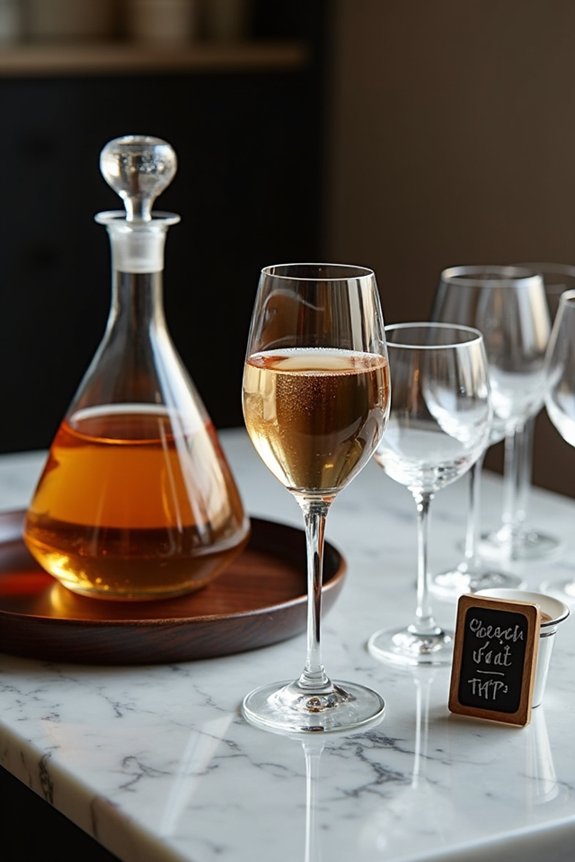
Getting the temperature right makes all the difference—it’s honestly one of those small details that transforms your whole dessert wine experience. I’ve learned that nailing your dessert wine serving temperature and storage really matters, and here’s what I’ve discovered:
- Serve sweet reds at 14–16°C and white passito at 10–12°C for best results
- Use small glassware to preserve aromas and prevent over-concentration
- Store unopened bottles in cool, stable environments away from direct light
- Know that opened fortified dessert wines last longer due to higher alcohol content
The right chilled serving temperature and aroma preservation through proper glassware actually change how you experience the wine. Your opened bottle shelf life extends substantially with fortified dessert wines, so you’re not rushed. These serving temperature guidelines matter because temperature directly influences perceived sweetness and aroma release.