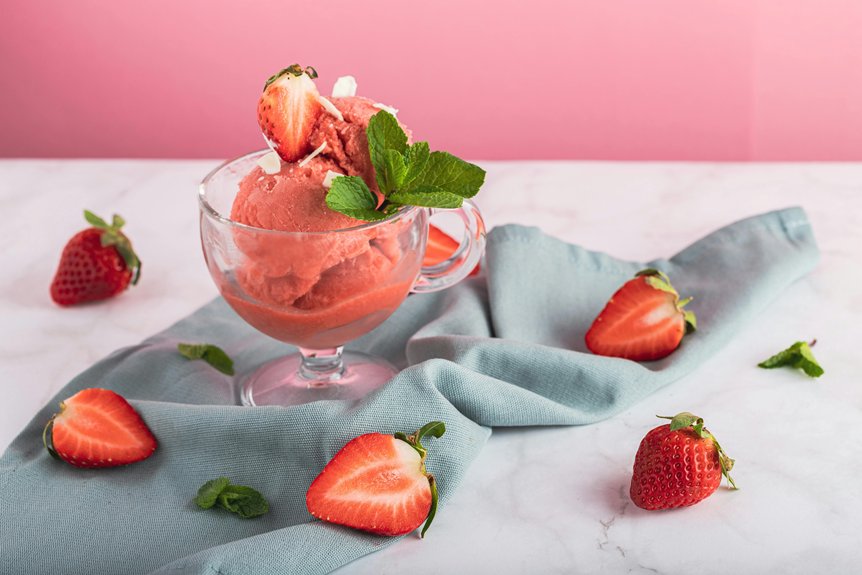
Sorbet’s inherently vegan because it’s just fruit, water, and sugar—no dairy involved. But here’s the tricky part: manufacturers sometimes sneak in hidden animal stuff like whey, honey, or milk powder. Even worse, “vegan” labeled sorbets can get contaminated on shared equipment with dairy products. Chocolate and citrus flavors are particularly risky. I always check labels for allergen warnings and cross-contamination notices, then decide if homemade’s worth the effort. Stick around, and I’ll show you exactly what to watch for.
The Base Ingredients That Keep Sorbet Vegan
What makes sorbet such a innately vegan-friendly dessert? I’ll tell you—it’s refreshingly simple. The magic happens when you combine just three humble ingredients: fruit puree, water, and sugar. That’s it. No dairy sneaking in, no eggs hiding anywhere, no animal fats involved (which honestly makes our job easier).
When I’m making sorbet, I’m working with pure fruit flavor. Whether I’m blending fresh berries into puree or using fruit juice, I’m creating something naturally dairy-free. The water keeps everything smooth and scoopable, while sugar adds sweetness and helps achieve that perfect frozen texture.
Here’s what I love: sorbet’s vegan status comes built-in. The base ingredients don’t require any animal products whatsoever. You’re starting with a dessert that’s already aligned with plant-based values. Pretty cool, right?
Hidden Non-Vegan Additives in Store-Bought Sorbet
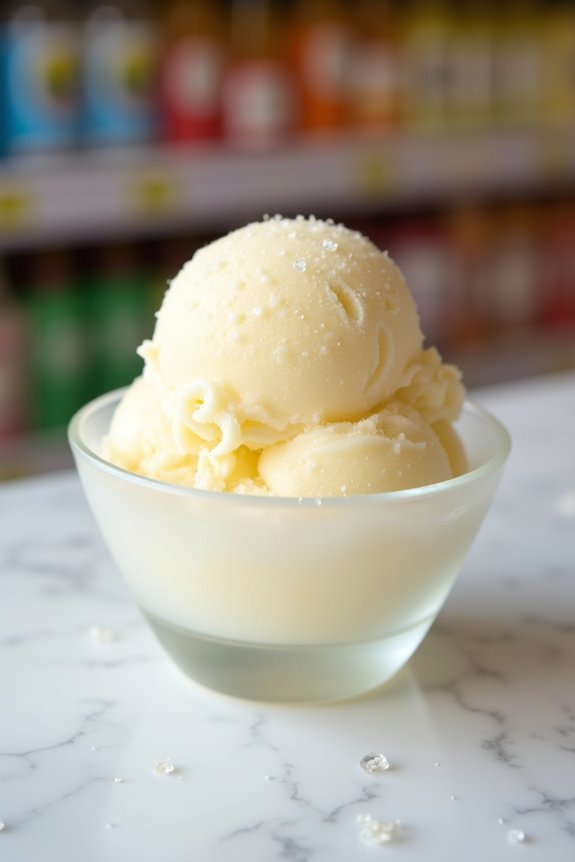
When you’re shopping for sorbet, I’ve learned that reading the ingredient label is absolutely essential because some brands sneak in dairy products like whey or milk powder, even when you’d expect a fruit-based frozen treat. You’ll also want to watch out for sneaky additives such as honey, certain food colorings (those E-numbers), or processing aids that come from dairy sources—things that aren’t always obvious at first glance. The good news is that choosing vegan-certified brands takes the guesswork out of it, so you can feel confident grabbing a pint without playing detective every single time.
Common Hidden Additives
The sneaky culprit lurking in many store-bought sorbets? Hidden ingredients that aren’t always obvious at first glance. I’ve learned that vegan additives aren’t guaranteed just because a label looks clean. Dairy derivatives hide in chocolate and lemon flavors, while stabilizers keep that creamy texture—but they’re sometimes animal-sourced. Watch out for gelatin and honey, which sneak into unsuspecting flavors. E-numbers can be tricky too; certain gelling agents come from animal sources. Here’s what gets me: cross-contamination warnings mean trace dairy might’ve touched your sorbet during production on shared equipment. That’s why I always flip the package over and read every single ingredient. Don’t assume—verify. Your vegan choice deserves that extra attention.
Reading Ingredient Labels
How do you actually know if that sorbet sitting in your freezer is truly vegan?
I’ll be honest—it’s easier than you’d think once you know what to look for. Start by flipping that container around and reading the ingredients list carefully. You’re hunting for sneaky dairy products, gelatin, and honey that hide in plain sight. Check the allergen labeling too, since it’ll flag milk or cream immediately.
Here’s what I focus on:
- Scan for milk, cream, whey, or lactose anywhere on that list
- Look for gelatin (animal-derived) and honey in the additives
- Check allergen warnings about cross-contamination risks
- Search for vegan certification logos from trusted organizations
- Verify specific flavors like chocolate or lemon, since they’re trickier
Honestly, vegan-certified products make my job simpler. That little label means someone’s already done the detective work, so I grab those confidently.
Flavor-Specific Dairy Risks: Chocolate and Citrus Sorbets
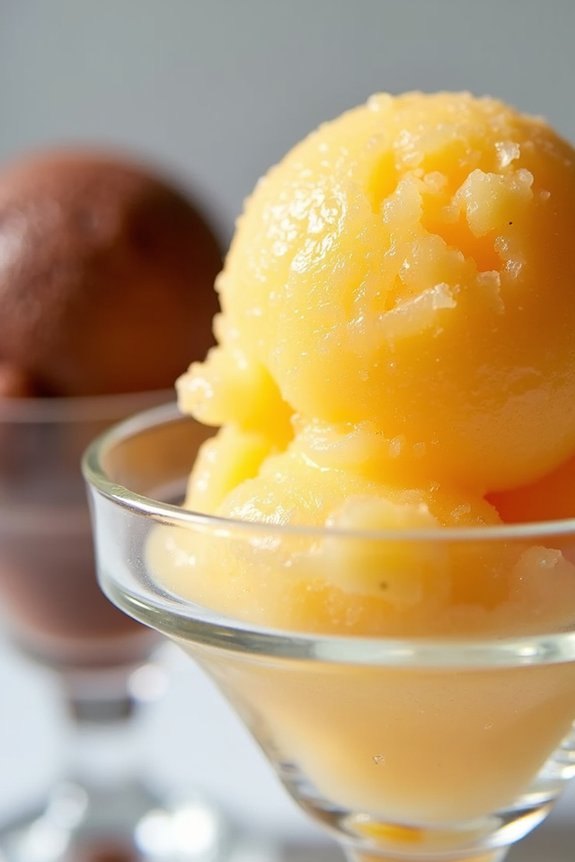
I’ll be honest—chocolate and citrus sorbets are where you’ve got to watch out most carefully, because they hide dairy in sneaky ways. Chocolate sorbet often blends cacao fats with milk or cream to get that creamy texture, while citrus versions might slip in dairy-based stabilizers you’d never expect in a fruit dessert. That’s why I always flip over the label and hunt for milk, whey, casein, or lactose before I assume any sorbet’s actually vegan.
Chocolate Sorbet Dairy Content
When you’re craving that rich, chocolatey sorbet, here’s what you need to know: not all chocolate sorbets are created equal in terms of dairy. I’ve found that many chocolate sorbets hide milk ingredients you won’t expect. Here’s what matters for finding truly vegan chocolate sorbet:
- Water-based recipes with cocoa are naturally dairy-free
- Milk, cream, and milk solids disqualify sorbets from vegan status
- Chocolate inclusions often contain hidden dairy content
- Dark chocolate sorbets achieve creaminess from cocoa fats, not dairy
- Always check labels for whey, casein, and milk derivatives
The dairy content varies wildly between brands. Some recipes use whole milk or skim milk, while others stick purely to water and sugar. Cross-contamination happens too when chocolate chips contain dairy. Reading ingredient lists carefully ensures you’re choosing genuine dairy-free options that match your vegan lifestyle.
Citrus Sorbet Hidden Ingredients
Why does citrus sorbet seem like the safest vegan choice, yet still demand careful label-reading?
I’ll tell you—lemon and orange sorbets look innocent, but hidden ingredients lurk inside. You’ve got to check for dairy derivatives like whey, milk solids, and casein that sneak into flavor additives and stabilizers. Even when a citrus sorbet claims vegan status, cross-contamination matters hugely if it’s made in facilities processing dairy products.
Here’s my trusted approach: read every ingredient carefully. Look beyond the fruit juice and sugar for non-vegan additions like honey or gelatin. Chocolate-covered citrus sorbets? They’re risky territory. Don’t assume brands are transparent about their dairy-derived emulsifiers either.
Your safest bet? Contact manufacturers directly when you’re uncertain. That’s how I ensure my choices truly align with my values.
How to Spot Non-Vegan Ingredients on Sorbet Labels
Reading ingredient lists carefully is your best defense against accidentally buying non-vegan sorbet. I’ve learned that sneaky dairy ingredients hide everywhere, so I always scan for milk, cream, or whey. Honey’s another culprit some brands slip in, which many of us prefer to avoid.
Here’s what I watch for:
- Dairy ingredients like casein, butter, or milk powder that instantly disqualify sorbet
- Vegan labeling or certifications that confirm the product meets our standards
- Stabilizers and e-numbers that might signal animal-derived additives
- Cross-contamination warnings about shared facilities with dairy products
- Fruit sorbet ingredients listing only fruit purée, water, and sugar
When you find a clean label with simple fruit-based ingredients and explicit vegan certification, you’ve hit the jackpot. Trust your detective skills.
Trusted Vegan Sorbet Brands
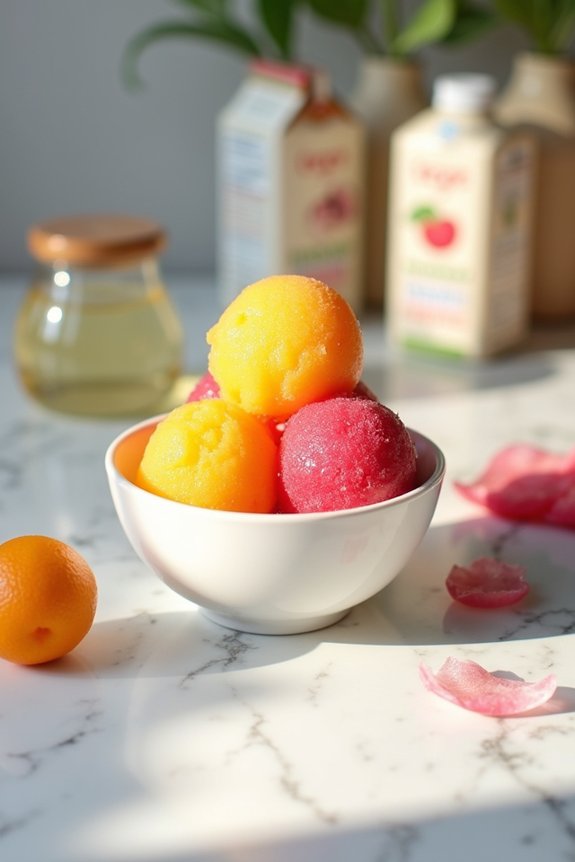
Once you’ve mastered label-reading, finding brands you can actually trust makes shopping so much easier. I’ve discovered some solid vegan sorbet brands that genuinely deliver.
Ben & Jerry’s and Häagen-Dazs offer vegan options in stores and supermarkets, though I check for corn syrup in their ingredients. Halo Top’s promoted as a reliable vegan sorbet choice too. Here’s my favorite find: Sambazon markets sorbet with organic ingredients and explicitly skips corn syrup entirely—that’s a win in my book.
The real game-changer? Looking for certified dairy-free labels. I always watch for cross-contamination risks since vegan-labeled sorbets sometimes share equipment with dairy products. A clearly certified dairy-free certification gives me peace of mind when I’m shopping at Tesco, Sainsbury’s, or Waitrose. These trusted vegan sorbet brands help me feel confident about my choices.
Making Vegan Sorbet at Home
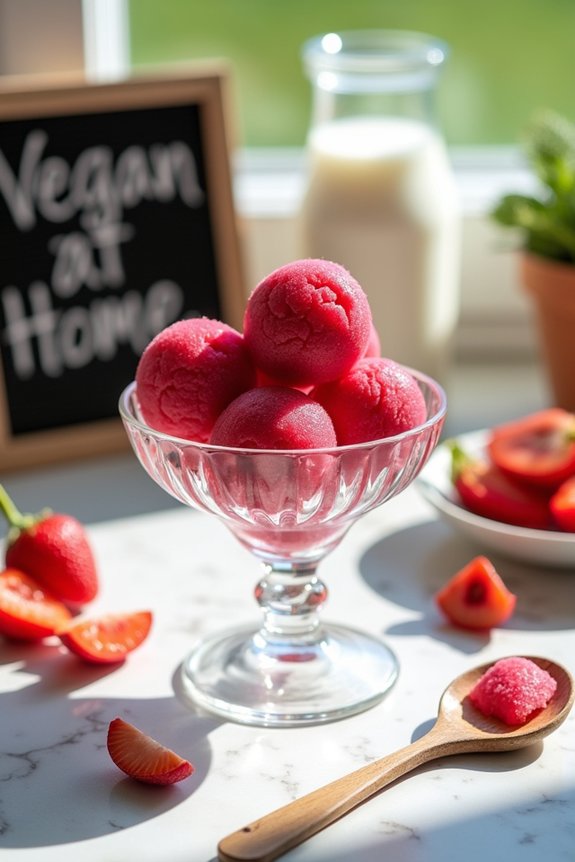
While shopping for trusted brands gives you plenty of delicious options, I’ve found that making sorbet at home is honestly just as rewarding—and way simpler than you’d think.
You’ll need just three basics: frozen fruit, a liquid sweetener (maple syrup or agave work great), and water. Blend everything until smooth and creamy using your food processor or high-speed blender. For a dairy-free, vegan result that’s extra smooth, add a splash of lemon juice or vodka—I promise you won’t taste it.
Here’s what makes homemade sorbet so satisfying:
- You control every ingredient
- It’s naturally vegan and dairy-free
- Takes minutes to prepare
- Tastes fresher than store-bought
- Freeze 2–4 hours for the perfect scoop
If it gets icy, just re-blend. That’s seriously it!
Cross-Contamination Risks in “Vegan” Sorbet Products
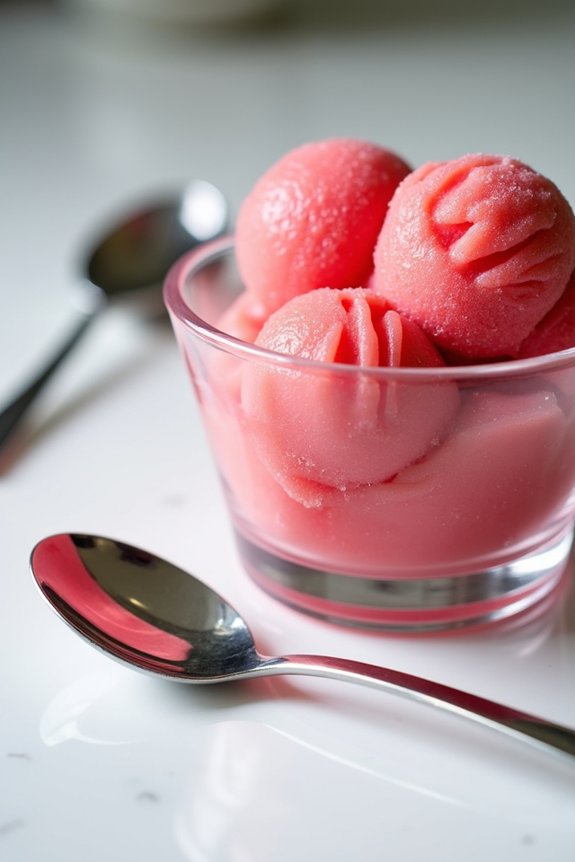
Did you know that a sorbet labeled “vegan” might still carry hidden dairy risks? I learned this the hard way when checking ingredient labels! Even vegan-certified products can have cross-contamination warnings because they’re made on shared processing lines with dairy equipment. Chocolate sorbets are particularly risky since chocolate gets processed alongside milk products.
| Risk Level | Sorbet Type | Check For |
|---|---|---|
| High | Chocolate | Allergen warnings |
| Medium | Fruit blends | Shared equipment |
| Low | Pure fruit | Dedicated facility |
When shopping, I always scan for “may contain milk” or “produced on shared equipment with dairy” statements—red flags I skip entirely. That’s why I’ve embraced making sorbet at home. You control everything: your ingredients, your equipment, your peace of mind. No surprises. Just pure, trustworthy vegan sorbet.