
Traditional Caesar dressing gets its savory punch from anchovies, which dissolve into the dressing to create that signature umami flavor—and that’s the main reason it’s not vegetarian. But anchovies aren’t the only culprit. Worcestershire sauce often hides anchovies too, and Parmesan cheese typically uses animal rennet from calves, lambs, or goats. Even store-bought versions may contain eggs or dairy-derived additives. The good news? You’ll find plenty of vegetarian swaps that keep that tangy, salty bite you’re craving.
Why Traditional Caesar Dressing Isn’t Vegetarian
Ever wonder why that creamy Caesar dressing you love might not fit your vegetarian lifestyle? I’ll tell you—it’s all about the hidden ingredients. Traditional Caesar dressing relies on Worcestershire sauce, which contains anchovies. Those tiny fish give it that distinctive umami punch, but they’re definitely not vegetarian-friendly. Then there’s the Parmesan cheese. Most classic Parmesan uses animal rennet during production, making it unsuitable for vegetarians unless the label specifically says otherwise. Add in the egg yolk that typically binds everything together, and you’ve got a dressing that conflicts with vegetarian diets. The good news? You’re not stuck choosing between Caesar and your values. Vegetarian Worcestershire sauce and vegetarian Parmesan exist, giving you delicious alternatives that honor your dietary choices.
Why Anchovies Make Caesar Dressing Non-Vegetarian
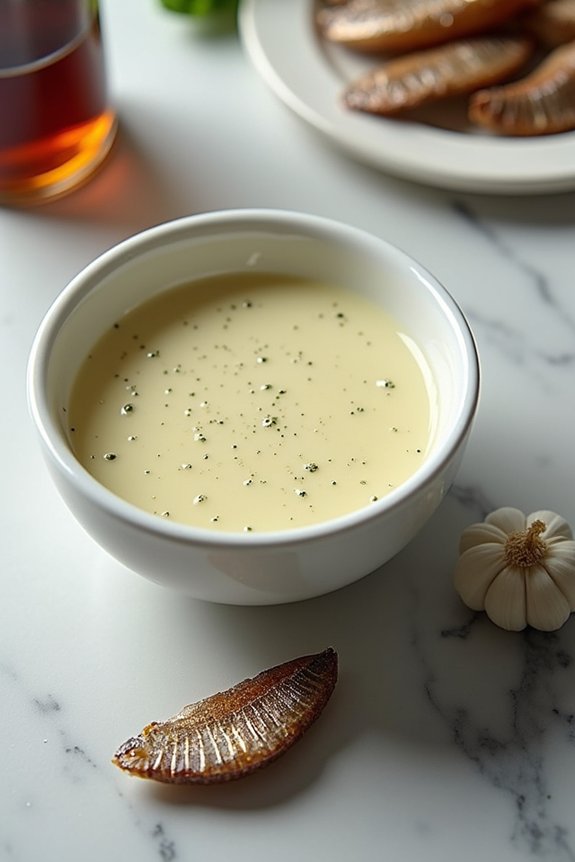
The secret ingredient that makes traditional Caesar dressing non-vegetarian is actually the anchovies (or anchovy-based Worcestershire sauce) that give it that savory, briny kick. If you’ve ever wondered why your homemade version doesn’t taste quite like the restaurant version, it’s probably because you’re missing those little fish that pack serious umami punch. The good news is that you can find vegetarian alternative brands and anchovy-free Worcestershire sauces at most grocery stores, or you can swap in capers and nutritional yeast to get that same salty, complex flavor without the fish.
Traditional Anchovy Inclusion
If you’ve ever wondered why Caesar dressing tastes so irresistibly savory and umami-rich, here’s the secret: anchovies. These little fish pack a serious flavor punch that transforms ordinary greens into something special. You won’t taste “fishy” at all—instead, you’ll experience that deep, salty complexity that makes Caesar dressing legendary.
Here’s the thing: anchovies dissolve into the dressing, creating umami magic. Many traditional recipes also use Worcestershire sauce, which sneakily contains anchovies too. So you’re getting a double dose of that savory goodness that keeps you coming back for more.
That’s precisely why classic Caesar dressing isn’t vegetarian. The anchovies are what make it work, delivering the authentic flavor profile generations have loved. Understanding this connection helps you appreciate what makes Caesar truly special.
Vegetarian Alternative Brands
Looking for a Caesar dressing that skips the fish? You’re in luck! Several vegetarian brands now offer anchovy-free options that taste surprisingly close to the real deal. I’ve found that these vegetarian brands use clever substitutes like capers, plant-based Worcestershire, and vegan Parmesan to capture that briny, umami punch you’re craving.
| Brand | Key Feature | Flavor Profile |
|---|---|---|
| Option A | Caper-based | Tangy, salty |
| Option B | Vegan Parmesan | Rich, cheesy |
| Option C | Plant Worcestershire | Deep, savory |
Here’s the thing: not all anchovy-free versions hit the mark perfectly, but they’re getting better. I recommend trying a few brands to find your favorite, because joining the vegetarian dressing club doesn’t mean sacrificing that delicious Caesar taste you love.
Identifying Non-Vegetarian Worcestershire
Now that you’ve got vegetarian brands on your radar, here’s what you really need to know: Worcestershire sauce is the sneaky culprit hiding in most Caesar dressings, and it’s almost always made with anchovies.
Here’s the thing—when you’re scanning ingredient lists, you’ll spot “Worcestershire” pretty easily, but the anchovies hiding inside aren’t always obvious. Most traditional brands use these little fish as a key flavoring component, which automatically makes your dressing non-vegetarian. I know it’s frustrating because Worcestershire adds that umami punch everyone loves.
The good news? You can totally outsmart this. Check labels carefully for “anchovy-free” Worcestershire or brands specifically marked vegetarian. Some companies make versions without fish, so you’re not stuck. Just verify before you buy, and you’ll nail that creamy, tangy Caesar flavor everyone craves—without compromising your values.
The Umami Depth Anchovies Provide
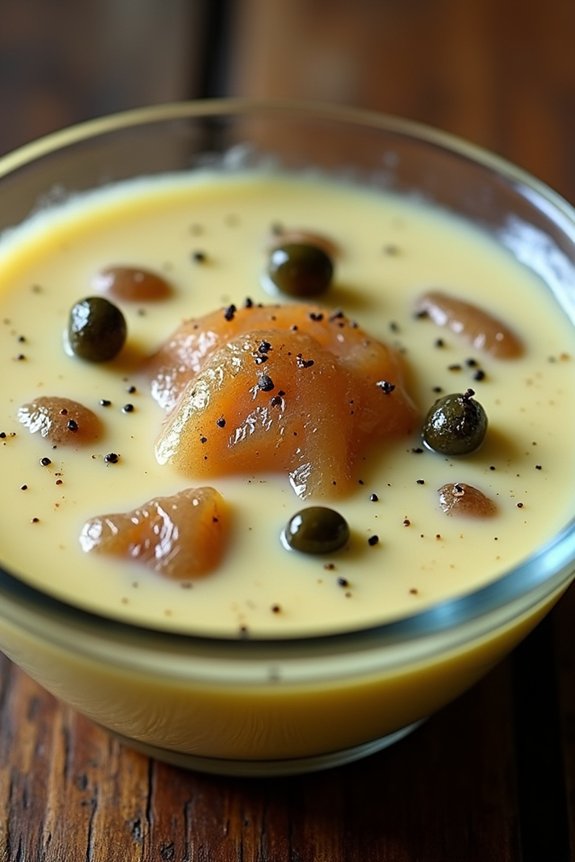
Why do Caesar dressings taste so impossibly savory and satisfying? The answer lies in anchovies, those tiny fish that pack an enormous umami punch. I’ll tell you, once you understand what anchovies do, you’ll never taste Caesar dressing the same way again.
| Ingredient | Umami Level | Role |
|---|---|---|
| Anchovies | Very High | Primary savory base |
| Parmesan | High | Salty depth |
| Garlic | Medium | Aromatic boost |
| Lemon | Low | Brightness |
| Egg | Medium | Richness |
You see, anchovies dissolve into the dressing, creating that addictive savory flavor we crave. They’re not fishy-tasting; they’re transformative. That’s why vegetarian versions struggle without them—they’re replacing something truly special with capers or other substitutes trying to capture that same magic.
Worcestershire Sauce: The Sneaky Non-Vegetarian Ingredient
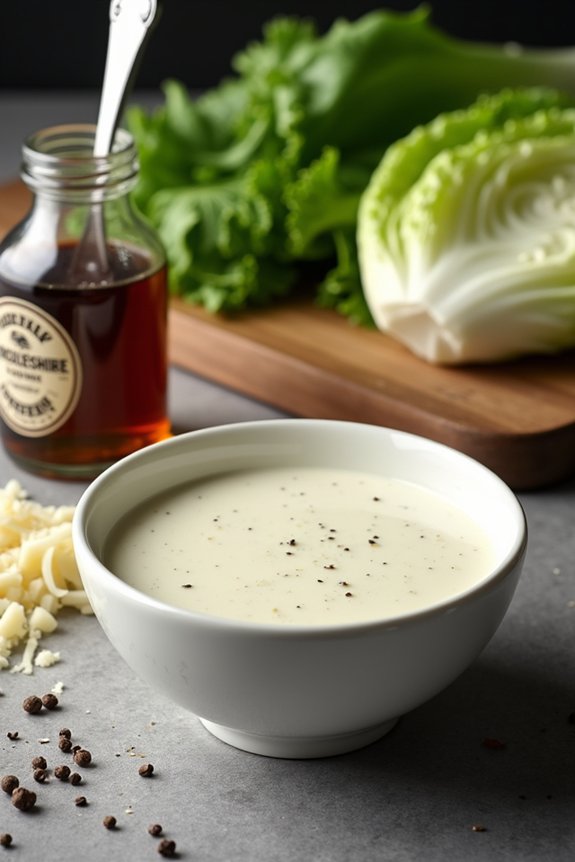
Just when you think you’ve identified all the fish in your Caesar dressing, along comes Worcestershire sauce—that innocent-looking brown liquid hiding another layer of non-vegetarian ingredients.
Here’s what you need to know about this sneaky culprit:
- Traditional recipes contain anchovies as a key ingredient, making most store-bought Worcestershire sauce non-vegetarian
- Labels can be misleading because “vegetarian” doesn’t always mean anchovy-free
- Plant-based alternatives exist using tamari or other substitutes to keep the umami flavor you love
- Check specific brands like Annie’s and 365, which offer anchovy-free options
I’ve learned that removing or swapping out Worcestershire entirely keeps your Caesar dressing vegetarian without sacrificing taste. You’re not alone in navigating these hidden ingredients—we’re all discovering that being vegetarian takes detective work in the kitchen!
Parmesan Cheese and Animal Rennet Concerns
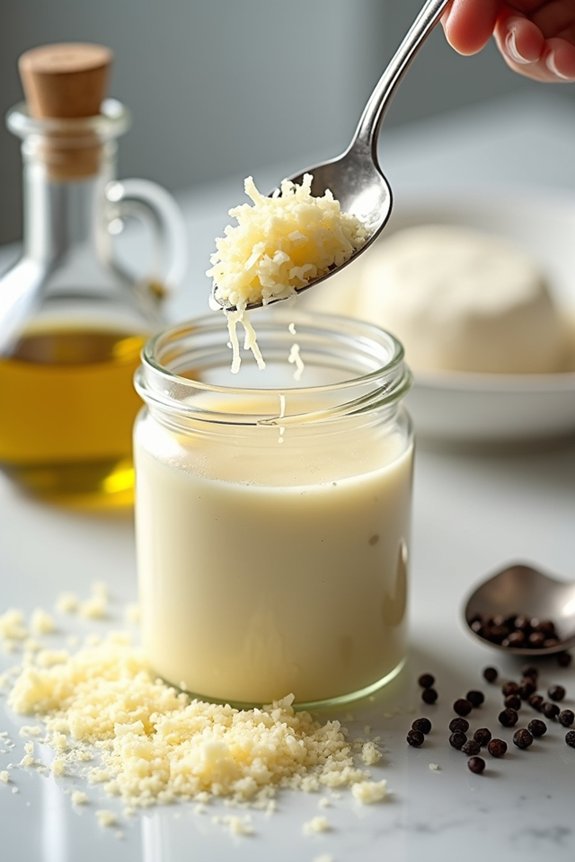
Here’s the thing about Parmesan cheese—most traditional versions use animal rennet (enzymes from animal stomachs) to make the cheese, which means you’re eating an animal product even if there’s no meat involved. The good news? You’ve got options like microbial or plant-based rennet alternatives, and many cheese makers now label their products as vegetarian-certified so you know exactly what you’re getting. When you’re hunting for Caesar dressing ingredients, just peek at that Parmesan label for “vegetarian” certification, and you’ll solve half the puzzle.
Animal-Derived Rennet Sources
When you’re shaving that wedge of Parmesan onto your Caesar salad, you might not realize you’re potentially adding an animal product that has nothing to do with the cheese itself—the rennet.
Here’s what I’ve learned about animal rennet:
- It comes from the stomach lining of calves, lambs, or goats
- It helps curdle milk during cheese-making
- Many traditional Parmesan brands use it without labeling it separately
- Vegetarian Parmesan uses plant-based or microbial rennet instead
I understand this discovery can feel surprising. The good news? You’re not stuck choosing between your values and delicious Caesar dressing. Brands like BelGioioso make vegetarian Parmesan specifically for folks like us who want to enjoy cheese without the animal rennet concern. Once you know what to look for, finding vegetarian-friendly options becomes easier.
Microbial And Plant Alternatives
Now that you know animal rennet’s the culprit hiding in regular Parmesan, I’ve got good news: you’ve got options that work just as well. Microbial rennet comes from fungi or bacteria, making it vegetarian-friendly without compromising that sharp, salty flavor you love. Plant-based rennets work similarly, breaking down milk proteins to create authentic texture.
Here’s the thing: you can also swap traditional Parmesan for vegetarian-certified brands that clearly label their rennet sources. Beyond cheese, remember that anchovies often hide in Worcestershire sauce—another sneaky non-vegetarian ingredient. By choosing anchovy-free versions and microbial-based Parmesan, you’re building a genuinely vegetarian Caesar dressing.
The best part? Your guests won’t taste the difference. You’ll get that umami punch and creamy richness you’re after, guilt-free.
Vegetarian Cheese Certification Standards
So how do you actually know if that Parmesan sitting in your fridge is truly vegetarian? I’ll be honest—it’s trickier than you’d think. Here’s what I’ve learned about vegetarian certification standards:
- Look for “vegetarian” labels on packaging that specify the rennet source
- Check if the cheese uses microbial or plant-based rennet instead of animal rennet
- Verify certification marks from trusted vegetarian organizations
- Read ingredient lists carefully for any animal-derived additives
When you’re shopping, I recommend flipping that cheese package around and actually reading it. Certification standards require dairy companies to disclose their rennet sources clearly, which makes our job easier. Many brands now offer vegetarian Parmesan options, so you’re not alone in this quest. Trust the labels, and you’ll feel confident knowing exactly what’s going into your Caesar dressing.
The Hidden Animal Products You Might Miss
Have you ever wondered why your vegetarian Caesar dressing still doesn’t taste quite right? I’ve learned that hidden animal products lurk in unexpected places. Worcestershire sauce, that mysterious ingredient giving Caesar its signature kick, often contains anchovies you can’t even taste. Even when you skip the obvious anchovies, they’re sneaking in through this condiment. Parmesan cheese presents another tricky situation—many versions use animal rennet during production, making them non-vegetarian despite being dairy. You’ll want to hunt for specifically labeled vegetarian parmesan. Then there’s mayo, which relies on eggs as a binder. Some processed flavor enhancers and ingredients in store-bought versions hide animal derivatives too. Reading labels carefully helps you join the truly vegetarian cooking community and create dressings aligned with your values.
How Vegetarian Caesar Differs: Flavor, Texture, and Cost
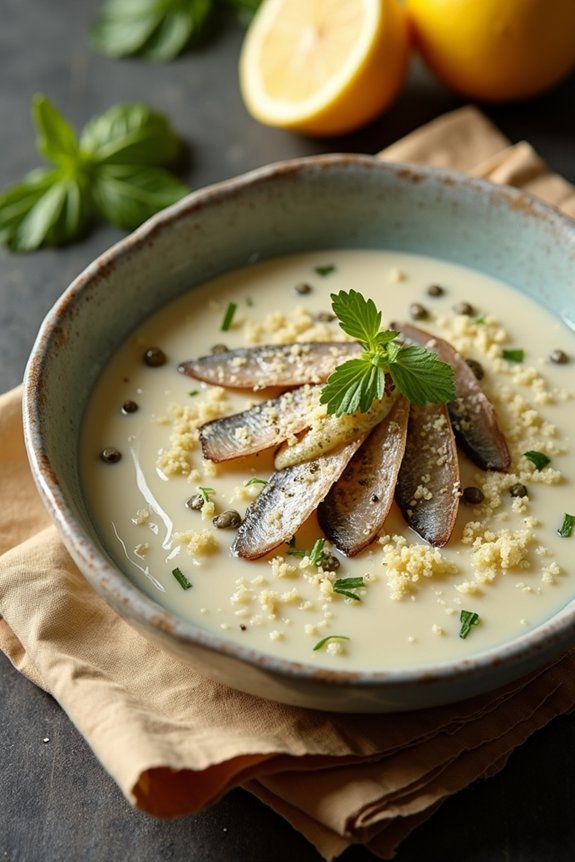
Once you’ve identified all those sneaky animal ingredients hiding in traditional Caesar, you might wonder what actually changes when you swap them out for vegetarian alternatives.
Here’s what I’ve discovered:
- Flavor shifts – Without anchovies and traditional Parmesan, I use capers, garlic, and lemon to create that signature tangy punch
- Texture transforms – Vegan mayo or tahini replaces eggs and oil, giving a different (but still creamy) mouthfeel
- Umami magic – Nutritional yeast mimics that savory depth anchovies once provided
- Your wallet takes a hit – Plant-based cheeses cost more than standard dairy Parmesan
The trade-off? You’re not sacrificing taste; you’re gaining peace of mind. Your vegetarian Caesar tastes bold and satisfying, just made with ingredients that align with your values. That’s something worth celebrating.
Using Capers in Vegetarian Caesar Dressing
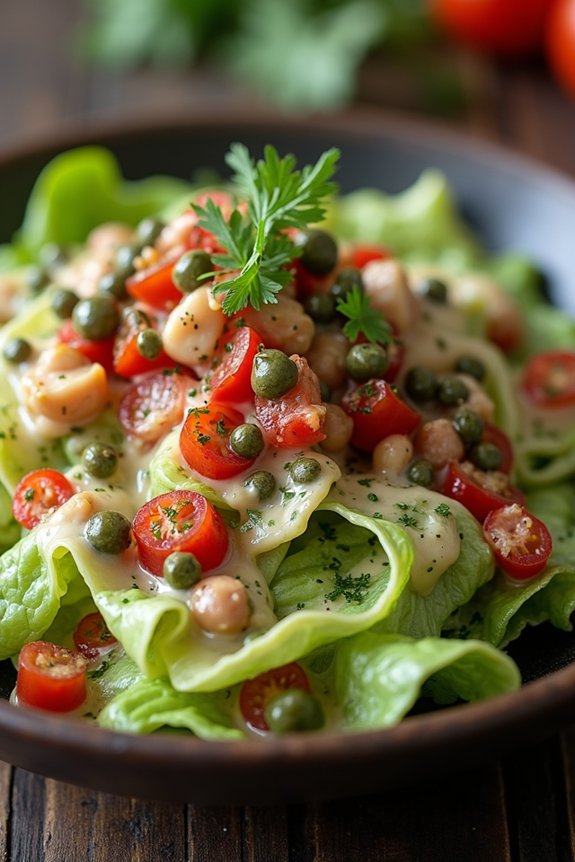
I’ll be honest with you—capers and their briny liquid are what’ll make your vegetarian Caesar taste authentically bold, because they deliver that salty, umami punch you’d normally get from anchovies. The trick is using the brine itself (not just the capers) to control both your saltiness and tanginess, so you’re not oversalting the dressing while still hitting that classic Caesar profile. Start with a tablespoon of capers plus a teaspoon of their brine, then taste and adjust—you can always add more, but you can’t take it back.
Caper Brine Flavor Profile
Why do capers work so well as a hidden asset in vegetarian Caesar dressing? The answer lies in their brine’s remarkable flavor profile. I’ve discovered that caper brine delivers several game-changing benefits:
- Creates anchovy substitute through salty, umami-rich depth
- Adds natural acidity from preservation solution
- Reduces sodium needs from other ingredients
- Smooths harsh tang when mashed or reduced
When I use caper brine in my vegetarian Caesar, it mimics that traditional savory quality anchovies provide. The brine’s slight acidity actually helps balance the dressing’s overall flavor, so I don’t need excessive salt elsewhere. I’ve found that mashing capers or concentrating the brine lets me dial in the exact tang level I want. It’s genuinely transformative—your vegetarian Caesar suddenly tastes wonderfully authentic without any dairy or fish involvement whatsoever.
Saltiness and Sodium Control
Now that we’ve covered how caper brine creates that authentic Caesar punch, let’s talk about what that briny goodness means for your salt levels. I’ve found that capers pack serious sodium, so you’ll want to stay intentional here. The brine alone can make your dressing quite salty, which is why I often rinse my capers before using them. You can also reduce the brine amount you’re adding, or mash the capers instead of leaving them whole—this gives you that signature Caesar bite without overdoing the sodium. If you’re watching salt intake, grab low-sodium capers when possible. A little adjustment goes a long way, and honestly, controlling saltiness while keeping that umami flavor is what separates a mediocre vegetarian Caesar from an exceptional one.
Hidden Animal Products in Store-Bought Caesar Dressing
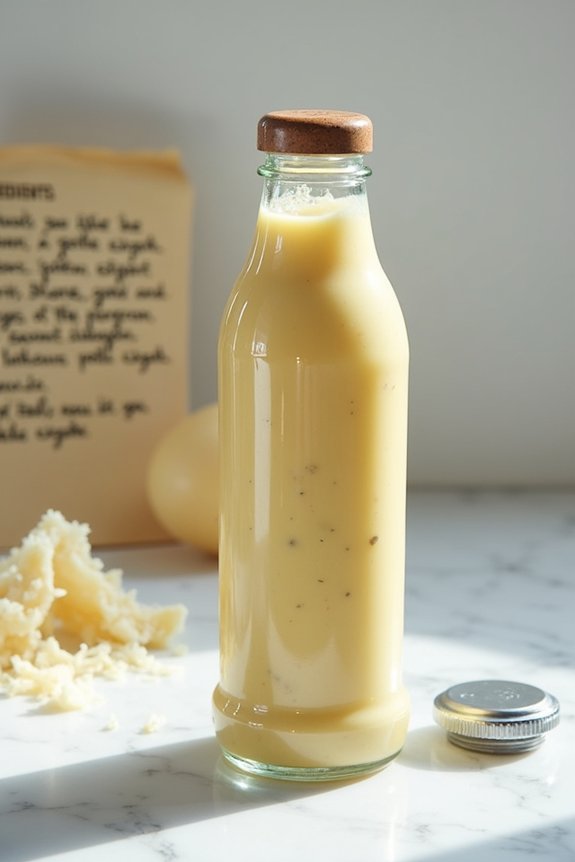
When you’re scanning the grocery store shelves for a quick Caesar dressing, you might assume that a bottle labeled “vegetarian” means it’s free of animal products—but here’s where things get tricky. I’ve discovered some sneaky hidden ingredients lurking in store-bought versions:
- Anchovies and anchovy-derived ingredients hidden in Worcestershire sauce
- Animal-based rennet used to make the Parmesan cheese
- Dairy products like whey and casein in creamy formulas
- Cross-contamination from facilities processing fish and meat
Even when labels claim vegetarian status, these animal-derived components slip right past us. The eggs and dairy ingredients achieve that creamy texture we love, while anchovy-derived Worcestershire adds that signature umami punch. It’s frustrating, honestly, but knowing what to look for helps us make choices aligned with our values.
How to Make Vegetarian Caesar That Tastes Just as Good
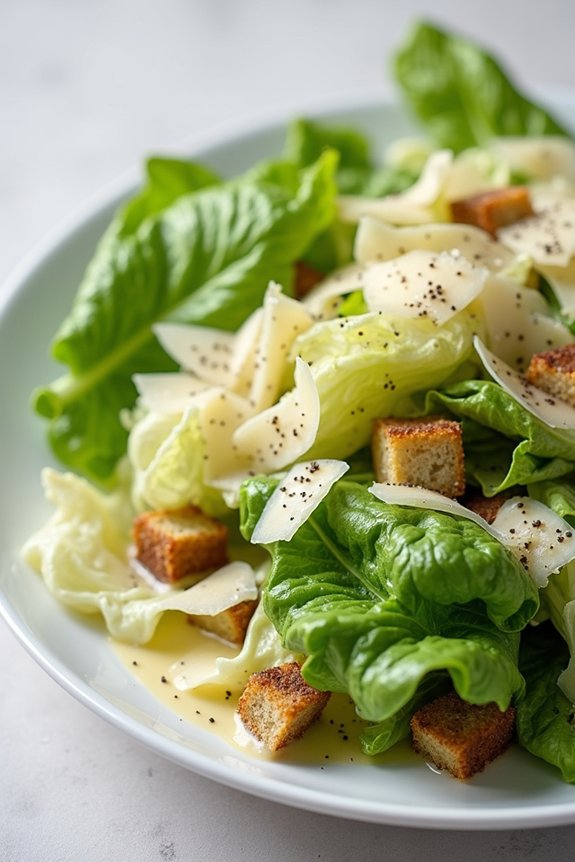
you don’t need anchovies or mystery animal products to make a Caesar dressing that’ll knock your socks off. I’ve discovered that swapping traditional ingredients for vegetarian alternatives delivers equally delicious results.
Start by using anchovy-free Worcestershire sauce—it’s genuinely hard to tell the difference. For parmesan, grab vegetarian varieties made without animal rennet; they melt beautifully and taste authentic. Replace eggs with tahini or hummus; they create that creamy richness you’re craving while keeping everything plant-based.
Combine these swaps with garlic, lemon juice, and Dijon mustard, then whisk everything together. Drizzle in olive oil slowly until you reach that perfect consistency. I promise you’ll create a dressing that satisfies everyone at your table, whether they’re vegetarian or not. Your Caesar salad’s never tasted better.
Plant-Based Swaps That Keep Caesar’s Signature Bite
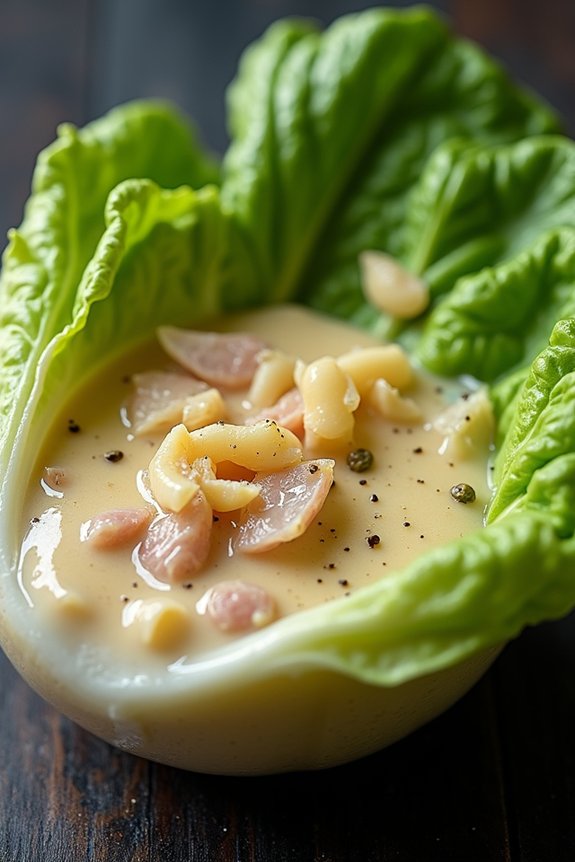
The magic of a killer Caesar dressing isn’t actually in the anchovies—it’s in those bold, salty, umami-packed flavors they bring to the table, and I’ve found plant-based ingredients that deliver that same punch. Here’s what I use for vegetarian substitutes that’ll make you forget what you’re missing:
- Capers or caper brine – they bring that briny, salty kick anchovies provided
- Tahini or hummus – creates creaminess while adding depth and richness
- Nutritional yeast – gives you that savory umami punch you’re craving
- Lemon juice and Dijon mustard – they sharpen everything up with tang
Combine these with vegan mayo, garlic, and anchovy-free Worcestershire sauce, and you’ve got yourself a dressing that’s honestly better than traditional versions. Trust me on this one.
How to Choose Vegetarian Caesar Dressing (Label Guide)
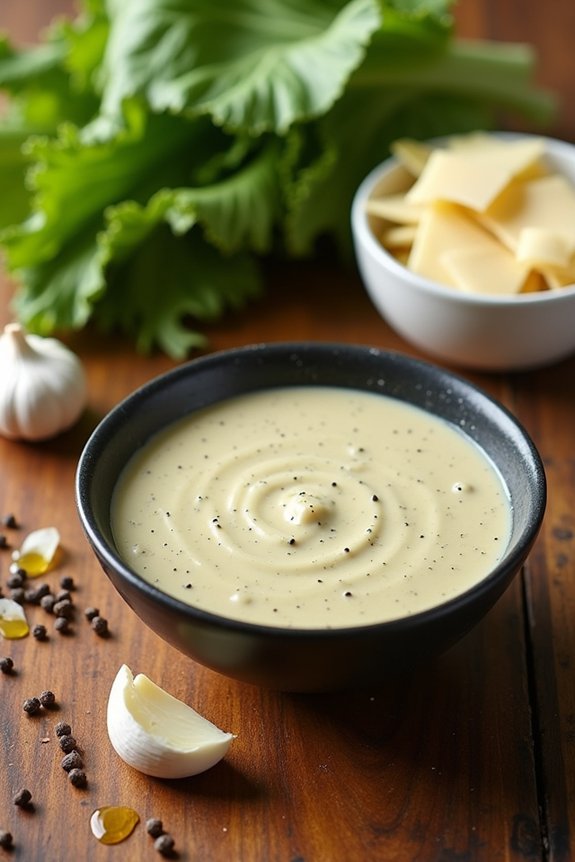
When you’re hunting for vegetarian Caesar dressing at the store, I always check the ingredient label first—look for “anchovy-free” Worcestershire sauce and “vegetarian” or “animal rennet-free” Parmesan, which tells you right away that no fish or certain animal enzymes snuck in. You’ll also want to scan for certified vegetarian brands (they usually have a little label on the bottle), since that official seal takes the guesswork out of whether eggs or dairy came from animal-friendly sources. Once you spot those key phrases, you’ve found yourself a Caesar dressing that keeps the savory, salty punch without the hidden animal products.
Reading Ingredient Labels
How do I know if a Caesar dressing is actually vegetarian just by looking at the bottle? I’ve learned that reading ingredient labels carefully is crucial because brand names can fool you. Here’s what I check for:
- Worcestershire sauce – it often hides anchovies, so I look for “anchovy-free” versions
- Parmesan cheese – I search for “vegetarian” labeling indicating animal-rennet-free options
- Fish-derived additives – I scan the entire ingredient panel for sneaky anchovy extracts
- Egg products – I verify the dressing doesn’t contain them for true vegetarian choices
Don’t assume anything’s vegetarian without reading the fine print. I’ve caught myself nearly buying non-vegetarian dressing multiple times! Taking thirty seconds to examine labels protects my dietary choices and helps me feel confident about what I’m eating.
Identifying Animal-Derived Components
Why do so many Caesar dressings sneak animal products past unsuspecting shoppers? The culprits hide in plain sight. I’ve discovered that anchovy paste and fish sauces lurk in ingredient lists, while parmesan cheese often contains animal rennet. These sneaky additions make traditional versions non-vegetarian.
Here’s what I look for when scanning labels:
| Component | Non-Vegetarian | Vegetarian Alternative |
|---|---|---|
| Worcestershire | Anchovy-based | Anchovy-free version |
| Parmesan | Animal rennet | Vegetarian parmesan |
| Base | Fish products | Tahini or hummus |
| Umami flavor | Anchovy paste | Nutritional yeast |
| Brine | Fish sauce | Caper brine |
I’ve learned that vegetarian-certified labels save time. Once you spot these swaps, you’ll confidently choose dressings that align with your values—no compromises needed.
Selecting Certified Vegetarian Brands
Once you’ve spotted those sneaky animal products hiding in regular Caesar dressing, finding a vegetarian version gets a whole lot easier. I’ll share my go-to strategy for picking brands that actually match your values.
Here’s what I look for:
- Vegetarian labeling on the front or back of the bottle—it’s your best friend
- Anchovy-free markings on Worcestershire sauce ingredients
- Vegetarian Parmesan (not just regular Parmesan, which uses animal rennet)
- Egg-free mayo or vegan alternatives listed in the base
Brands like Annie’s and 365 have solid options, but I always read the actual label anyway. Don’t assume anything—companies change recipes constantly. Once you know what to hunt for, you’ll spot vegetarian Caesar dressing in seconds, and you’ll feel genuinely good about what you’re buying.
Plant-Based Swaps That Keep the Salty, Tangy Flavor
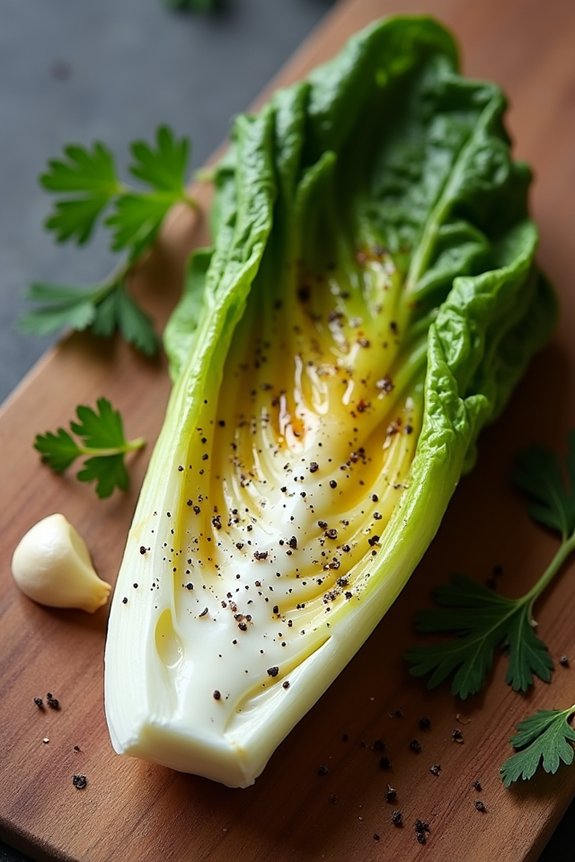
When you bite into a Caesar salad, that punch of salty, briny flavor comes straight from anchovies—but instead of relying on fish: you don’t actually need fish to get it.
Capers are your go-to advantage. These tiny brined buds deliver that distinctive salty bite anchovies provide, and their tangy punch keeps everything authentic. I swap them in at about one tablespoon per batch, and honestly, most people can’t tell the difference.
| Ingredient | Traditional | Plant-Based |
|---|---|---|
| Anchovy flavor | Anchovies | Capers + caper brine |
| Creaminess | Mayo + dairy | Tahini or hummus |
| Umami depth | Parmesan | Nutritional yeast |
Pair capers with Dijon mustard and nutritional yeast, and you’ve got all the complexity you’re craving. The result? A dressing that tastes just as bold and satisfying.
How to Make Vegetarian Caesar Without Compromise
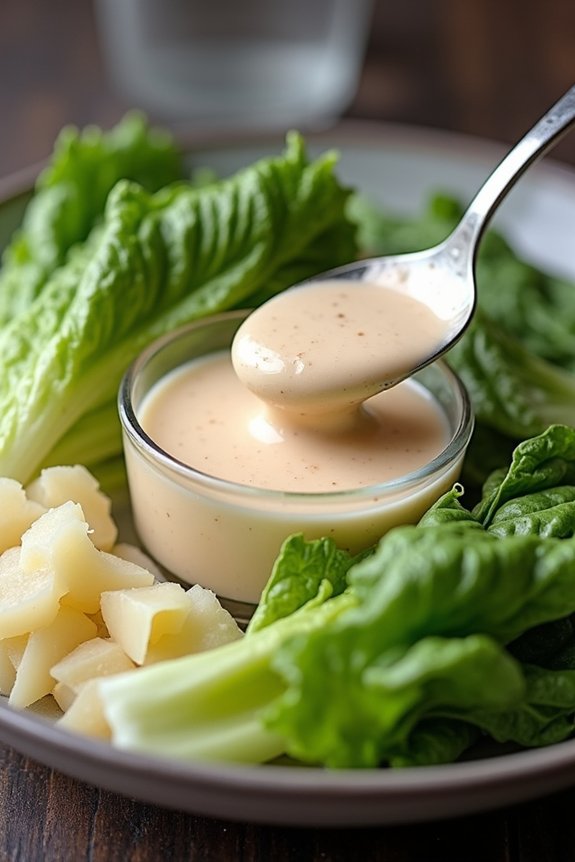
- Use anchovy-free Worcestershire sauce to preserve that savory depth without animal products
- Swap dairy mayo with vegan mayo or creamy cashew base for richness
- Add capers or caper brine for that salty, briny punch you’re craving
- Finish with finely grated vegan parmesan to mimic authentic umami
The secret? Combining Dijon mustard, garlic, lemon juice, and nutritional yeast creates remarkable complexity. You’re not missing anything—you’re building something equally delicious. Trust me, once you’ve tasted what these plant-based ingredients can do together, you’ll never feel like you’re settling.