One Hawaiian roll packs about 80–90 calories, mostly from carbs. A single pack of 12 rolls totals roughly 960–1,080 calories, while two packs hit around 1,920–2,160. Each roll contains about 14 grams of carbs and 3 grams of protein, with minimal fat. The tricky part? Added sugars sneak in at 2–4 grams per roll. I’d treat these as a side dish paired with protein rather than the main event. Check your label since brands vary, and keep portions in mind for your daily intake. There’s plenty more worth knowing about making these rolls work for your meals.
One Roll Contains About 80–90 Calories
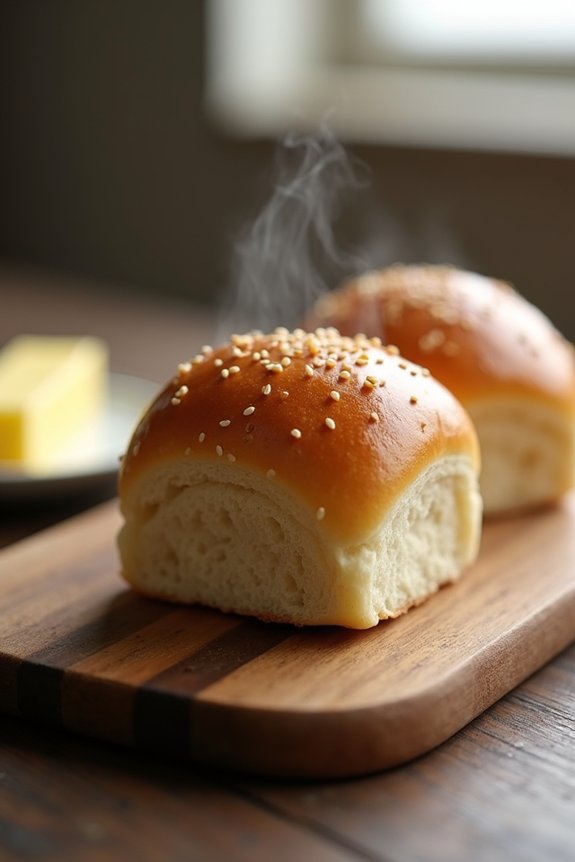
Ever wonder why Hawaiian dinner rolls are such a popular side dish? I’ll tell you—they’re delicious and surprisingly light! When I’m planning my meals, I love that one Hawaiian roll contains about 80–90 calories, making them a reasonable choice for most diets.
Here’s what matters: a typical serving size is just 28 grams per roll. That modest per-roll calories count means you’re getting genuine satisfaction without guilt. Most nutrition labels show around 80 calories, though some variants clock in at 90 calories depending on the recipe.
Since a 2,000-calorie daily value is the standard reference, a single roll contributes only a small percentage of your total intake. I appreciate knowing that calorie content stays consistent across batches, though slight variations exist from recipe to recipe. These rolls truly fit beautifully into balanced eating.
Two Packs (24 Rolls) Equal Roughly 1,920–2,160 Calories
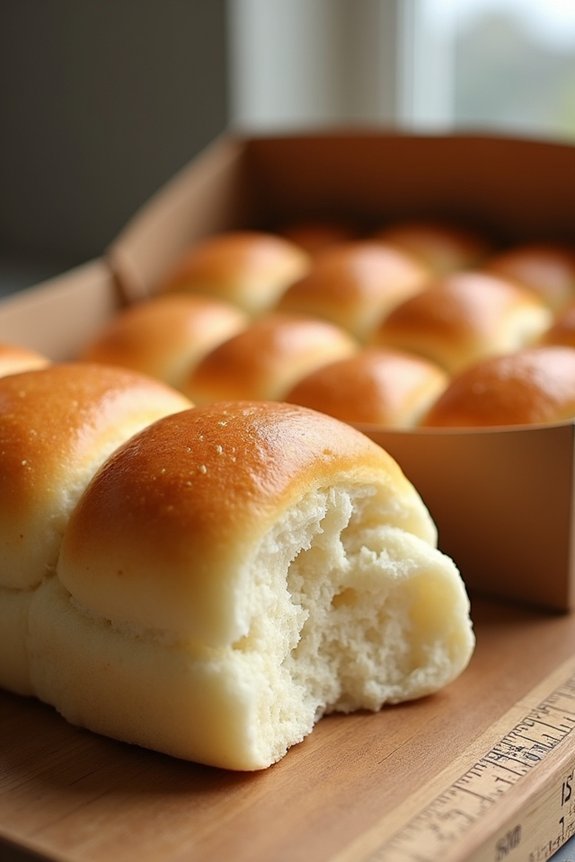
When you grab two packs of Hawaiian dinner rolls from the store, you’re holding about 1,920–2,160 calories total. That’s a lot of delicious carbs and protein packed into one shopping trip! Let me break down what you’re really getting here.
| Metric | Low End | High End |
|---|---|---|
| Total Calories | 1,920 | 2,160 |
| Per-Roll Calories | 80 | 90 |
| Total Servings | 24 | 24 |
Since each roll contains roughly 80–90 per-roll calories, multiplying across your two packs gives you that impressive range. Whether you’re planning a family dinner or meal prepping for the week, knowing your total calories helps you make smart choices. These rolls work wonderfully as part of balanced meals, especially when you’re feeding a crowd who loves comfort food.
Carbohydrates Supply Most of the Energy
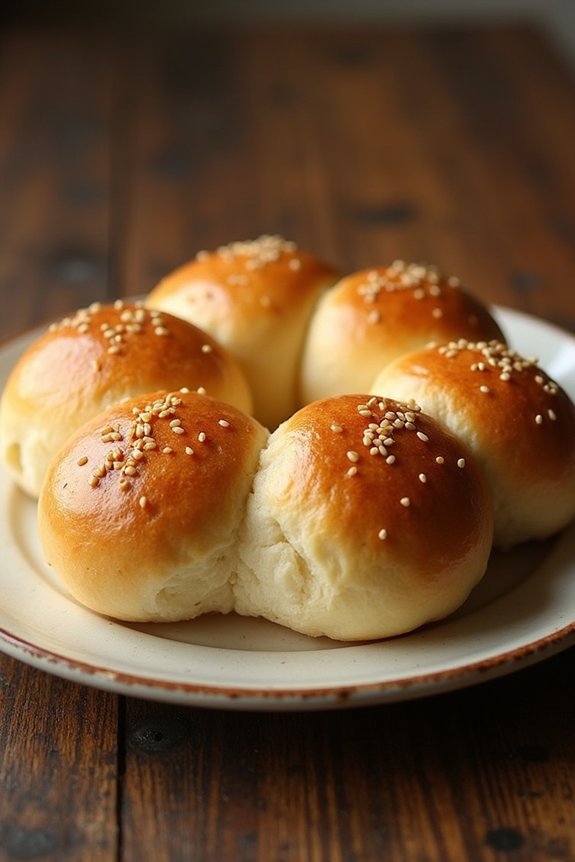
Now that you know the calorie count, let’s talk about what actually fuels those rolls. Here’s the thing—carbohydrates are the real MVPs in a Hawaiian dinner roll. Each roll packs about 14 grams of carbohydrates, which supplies the bulk of its 80–90 calories. Think of carbs as the fuel that powers your body, and that’s exactly what’s happening here.
Your total carbohydrates per roll represent about 5% of your daily value, making these rolls genuinely carb-forward. Now, not all those carbs are created equal. You’ll find roughly 4–5 grams of total sugars per roll, with 2–4 grams being added sugars. So while these rolls taste deliciously sweet, you’re getting energy primarily from carbohydrates rather than protein or fat. Understanding this breakdown helps you make informed choices about fitting them into your meals.
Added Sugars Account for a Significant Portion
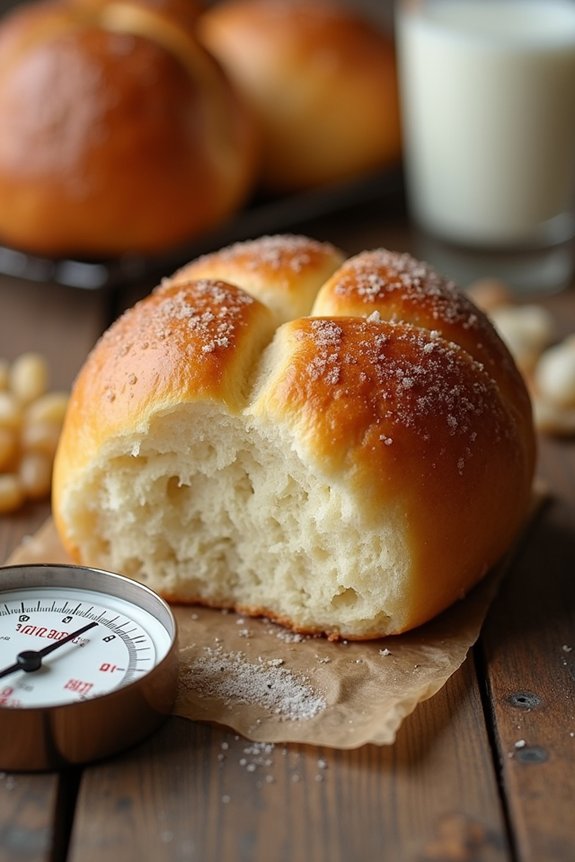
How much of that sweet taste comes from added sugars? Well, I’ll be honest—it’s more than you’d think. Each Hawaiian dinner roll packs 4 grams of added sugars per serving, which accounts for 8% of your daily value. That might seem small, but here’s the thing: when you’re looking at the nutrition label, you’ll notice those added sugars make up the entire 4 grams of total sugars in each roll.
What does this mean for you? If you’re grabbing multiple rolls (and let’s face it, who stops at one?), those added sugars accumulate quickly. With 12 servings per container, you’re looking at real sugar intake that adds up. I recommend checking that nutrition label and being mindful of your serving size—it’ll help you make choices that fit your health goals.
Fat Content Is Minimal Per Roll
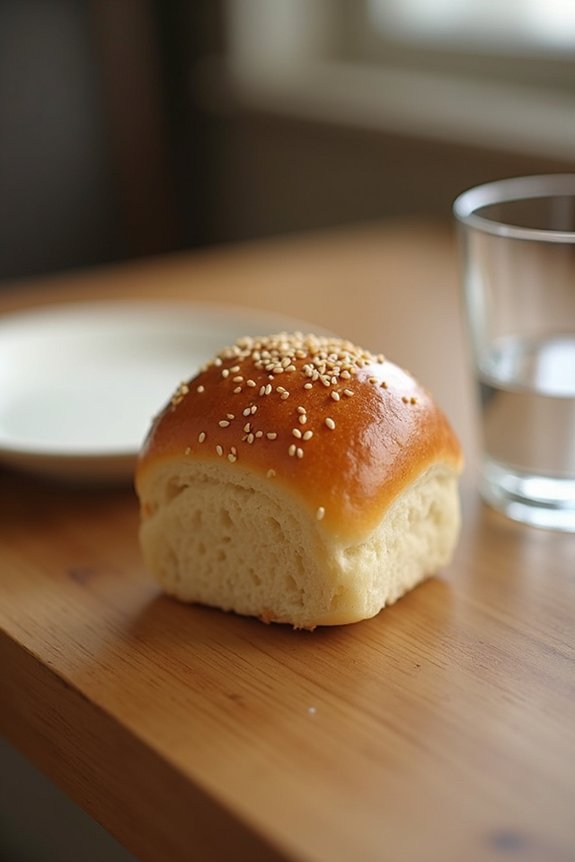
The fat content in Hawaiian dinner rolls is surprisingly low—you’re looking at just 1.5 grams of total fat per roll, which clocks in at only 2% of your daily value. Here’s what makes this great news: saturated fat is basically zero, so you’re not eating anything heavy or guilt-inducing with each bite.
Since bread-based rolls inherently contain minimal fat, these little treats fit nicely into most eating plans. That 1.5 grams of fat contributes roughly 13.5 calories per roll, leaving the remaining calories per roll (about 67) coming from carbs and protein instead.
If you’re watching your fat intake, Hawaiian dinner rolls are truly your friends. They let you enjoy something warm and comforting without worrying about exceeding your daily value limits.
Protein Delivers Modest Nutritional Support
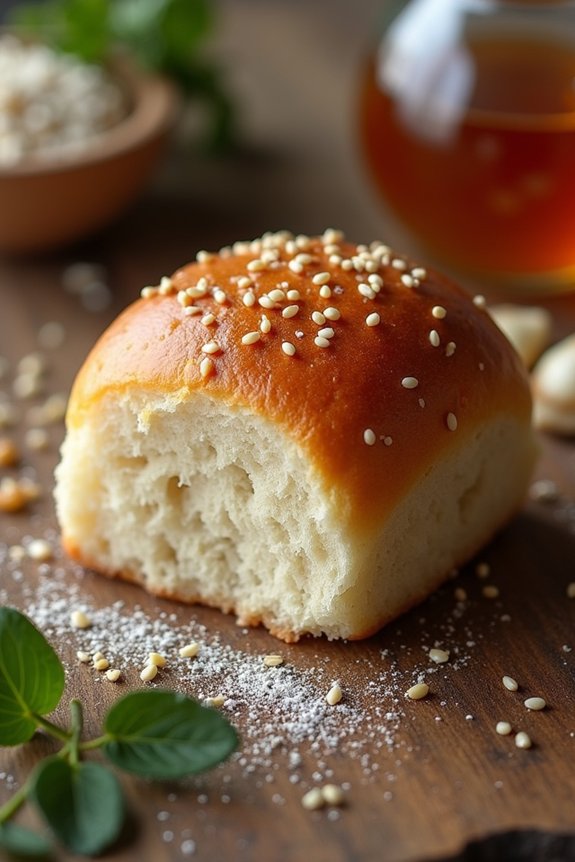
Each Hawaiian dinner roll packs about 3 grams of protein, which gives you some amino acids to support muscle repair—though it’s not going to be your roll’s main job. I won’t pretend these rolls are a protein powerhouse, but when you pair them with chicken, fish, or beans, they’ll play nicely in a balanced meal without stealing the spotlight. Think of the protein here as a helpful sidekick rather than the main character in your nutritional story.
Protein Content Per Roll
When you’re thinking about whether a Hawaiian dinner roll fits into your meal plan, protein’s probably on your mind. I’ll be straight with you—each roll delivers about 3 grams of protein per 28-gram serving. That’s honest but modest, honestly.
Here’s the thing: you won’t hit your daily protein goals with rolls alone. But that’s totally okay! I pair mine with something hearty—maybe grilled chicken, turkey, or even beans. That combination strategy works beautifully.
The nutrition information stays consistent across standard serving sizes, which makes planning easier. Think of your Hawaiian roll as a supporting player rather than the star. When you combine it with higher-protein foods, you’re building balanced, satisfying meals that actually stick with you throughout the day.
Muscle Building Support
Muscle building’s all about protein, and here’s where I’ll be honest with you: a Hawaiian dinner roll’s 3 grams of protein is a solid start, but it’s not going to build your muscles on its own. Think of it this way—one roll contributes about 3 percent of a typical daily value for protein, which means you’ll want to pair it with other protein-rich foods like chicken, eggs, or yogurt to hit your muscle-building goals. The roughly 80–90 calories per serving fit nicely into most eating plans, giving you room for those additional protein sources. So enjoy your roll as part of a balanced meal, not as your only protein player. Stack it smart, and you’re on your way.
Amino Acid Composition
Now that we’ve covered how those 3 grams of protein fit into your muscle-building picture, let’s talk about what’s actually inside that protein—the amino acids. Each roll delivers amino acids from wheat-based sources and yeast, creating your nutritional profile per serving. Here’s the thing: while Hawaiian rolls aren’t protein powerhouses, they do contribute meaningfully to your daily value when you’re building meals throughout the day. Think of it like this—one roll won’t transform your muscles, but it’s a solid building block alongside other foods. The amino acids present support your body’s everyday functions, from maintaining tissues to creating enzymes. They’re modest contributions, sure, but they count toward your total protein intake when you’re tracking your daily value.
Vitamins and Minerals Are Present in Small Amounts
While Hawaiian dinner rolls aren’t nutritional powerhouses regarding vitamins and minerals, they do contain modest amounts of several important ones. I find it helpful to know what you’re actually getting in each roll, even if the amounts seem small.
Here’s what I discovered in a typical serving:
- Thiamin: 8% of your daily value (0.1 mg)
- Calcium: 2% of your daily value (about 15 mg)
- Iron: 4% of your daily value (about 0.7 mg)
- Niacin: around 10% of your daily value
You’ll also find trace amounts of potassium sprinkled in there. These vitamins and minerals support your body’s functions, though the rolls serve primarily as a carbohydrate source. Think of them as a tasty foundation rather than your main nutrient supplier.
How Serving Size Affects Your Daily Intake?
Ever wonder why the nutrition label shows such small numbers for calories? That’s because we’re looking at calories per serving, not the whole package. One Hawaiian roll equals one serving at about 80–90 calories, which seems pretty modest, right?
Here’s where it gets interesting: if you’re eating three rolls, you’re actually consuming 240–270 calories. That’s nearly 15% of your daily value in a single sitting. When you check your daily intake against a 2,000-calorie diet, serving size becomes your best friend.
Understanding your nutrition profile helps you make smarter choices. You might think one roll is tiny, but multiply that by however many you’re grabbing, and suddenly you see the bigger picture. That’s how serving size truly shapes what you’re putting in your body.
Why You Should Always Check the Nutrition Label
I’ve learned that the nutrition label is your best friend when you’re trying to understand what’s actually in that fluffy roll—because serving size matters most, and you might eat more than one without realizing it. You’ll also spot those hidden added sugars (sometimes 4g per roll!) that really add up if you’re not paying attention, and comparing labels across brands can shock you with how different they actually are. Trust me, spending thirty seconds reading the label now beats wondering later why your calorie counts don’t match what you expected.
Serving Size Matters Most
How many calories are actually in that Hawaiian roll you’re about to eat? I’ll tell you—it depends on what you’re really counting as your serving size. One roll contains about 80–90 calories, but here’s where it gets tricky:
- A serving size is officially 1 roll (28 g)
- One container holds 12 servings total
- Nutrition facts list daily value percentages based on 2,000 calories
- Different Kings Hawaiian products vary slightly in calories
I’ve learned the hard way that eyeballing portions doesn’t work. You’ve got to check that nutrition label yourself because variations exist between products. When you understand your actual serving size, you’re not guessing anymore—you’re making informed choices about what goes into your body.
Hidden Added Sugars Alert
Now that you’ve nailed down your serving size, there’s something else lurking in those fluffy rolls that deserves your attention—sugar. I’ve discovered that many Hawaiian dinner rolls pack around 4 grams of added sugars per roll, which sounds small until you realize it’s roughly 10% of your daily value. The point is: you won’t know what you’re actually eating unless you check the nutrition facts label. Different brands vary wildly in their sugar content, and even variations like sweet versions contain different amounts. The daily value percentages assume a 2,000-calorie diet, so your needs might differ. I always compare labels before buying because those added sugars add up quickly, affecting your total calories throughout the day.
Comparing Nutritional Differences Across Brands
When you’re standing in the grocery store aisle comparing Hawaiian rolls, you might think one package looks pretty much like another—but that’s precisely where brands try to slip different nutrition facts past you.
I’ve learned that checking nutrition labels saves me from surprises. Here’s what I compare:
- Calories per serving: ranges from 80–90 across brands
- Total fat: varies between 1–1.5 g per roll
- Added sugars: differs significantly by product line
- Per-serving comparisons: essential since serving sizes aren’t always identical
Different Hawaiian roll brands list different nutrition facts, even when packages look similar. One brand might have 5 g sugars while another has less. That’s why I always flip those packages over. You deserve knowing exactly what you’re eating, friend. We’re in this together!
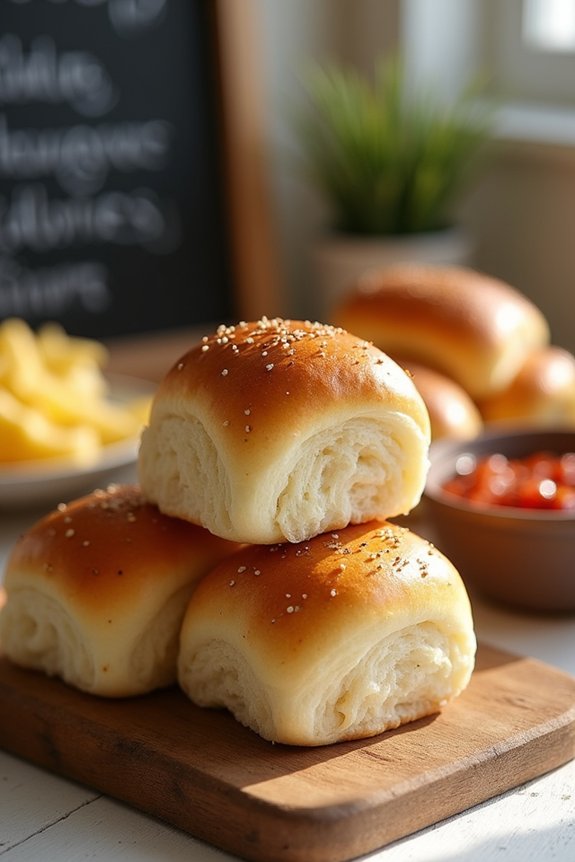
Make Hawaiian Rolls a Side, Not the Main Event
Because Hawaiian rolls are so delicious, it’s easy to accidentally make them the star of your dinner—but they’re actually at their best when they play a supporting role. I’ve found that serving them as sides keeps calories in check and helps you maintain better portion control. By pairing them with turkey, ham, or grilled proteins, you’re creating balanced meals rather than roll-focused feasts. Check the nutrition facts on your package to understand serving size and calories per roll, then plan accordingly. I like using them for slider-style meals or alongside hearty dishes where they complement without overwhelming. Keep them warm in a basket nearby—guests appreciate having them available without feeling pressured to overindulge. This approach lets everyone enjoy Hawaiian rolls guilt-free.