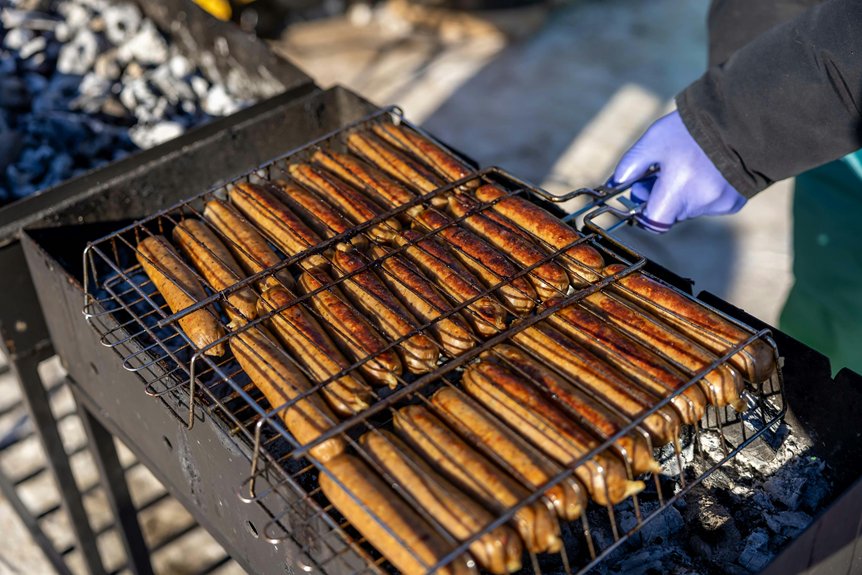
Grilling sausage might seem like a simple task, but it’s actually a balancing act between timing, temperature, and technique. I’m going to show you how to nail it every single time—no more burnt casings or undercooked centers. The difference between mediocre sausage and truly perfect sausage comes down to a few key steps you probably haven’t considered. Here’s what you need to know.
How Long to Grill Sausage: The Quick Answer
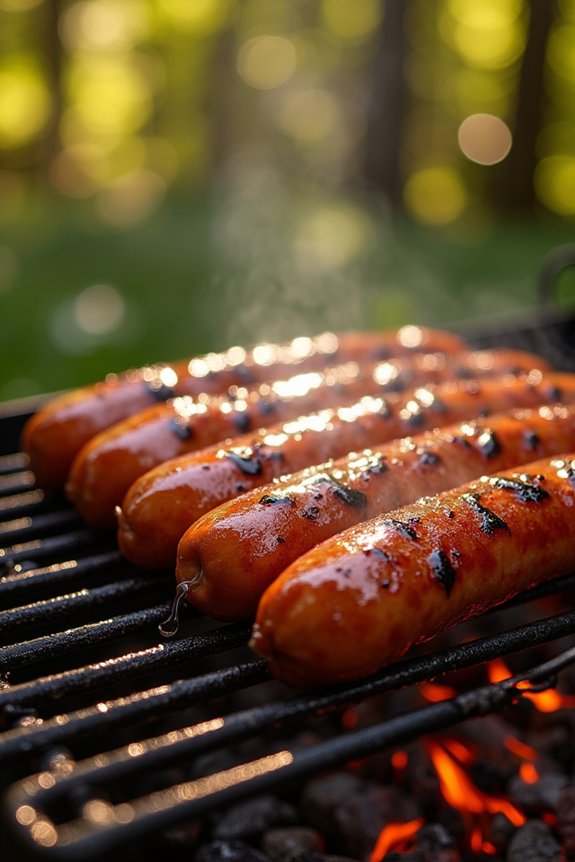
Ever wonder why some sausages come off the grill charred on the outside but raw in the middle? I’ll share the secret: timing and temperature control.
For Italian sausages on a gas grill, I cook them about 8–10 minutes total at 450°F, turning once halfway through. The key is reaching that magic 165°F internal temperature—no guessing allowed.
Here’s my go-to method: I use a thermometer and insert it into the end of the sausage, avoiding mid-grill punctures that’d drain all that delicious juiciness. This simple step transforms your results from uncertain to reliable every single time.
Want even better outcomes? Let them rest a few minutes after cooking. Your sausages’ll stay juicy and flavorful—totally worth the wait.
Choose the Right Sausage: Links vs. Loose, Raw vs. Smoked
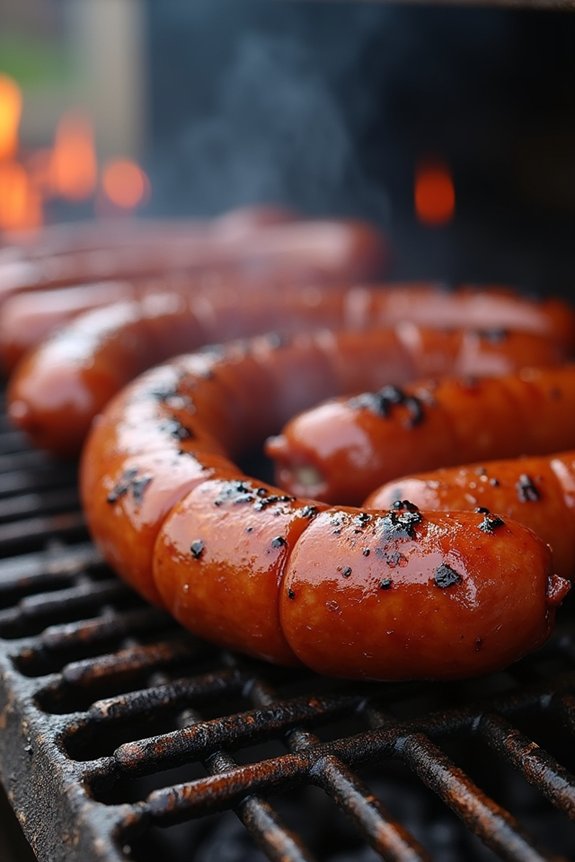
Before you fire up the grill, I’ll help you pick the sausage that’ll give you the best results—and honestly, sausage links beat loose meat every time because they’re way easier to handle and cook more evenly. You’ve also got to decide between raw sausages, which need to hit 160°F–165°F internally, and pre-cooked smoked varieties that just need warming through. The choice between raw and smoked really comes down to how much time you want to spend grilling: raw sausages take longer but deliver that fresh flavor, while pre-cooked smoked sausages get you to the table faster with minimal fuss.
Links Over Loose Meat
When you’re standing at the butcher counter deciding what sausage to buy for your grill, you’ve basically got two main choices: links or loose meat. I’d recommend grabbing links every time—they’re simply easier to handle on the grill. Here’s why links win:
| Factor | Links | Loose Meat |
|---|---|---|
| Handling | Grab and place | Requires patties |
| Flipping | One motion | Multiple turns |
| Juice Loss | Minimal | Significant risk |
| Cooking Time | 6–12 minutes | Longer, uneven |
| Pre-cooked Option | Yes, just warm | Rarely available |
Links stay intact, preventing juice loss and messy flare-ups. You’ll flip them once or twice with tongs, keeping everything contained. Even pre-cooked links only need warming—no guesswork required. Loose meat demands constant attention and patty formation, making grilling unnecessarily complicated. Stick with links, and you’ll nail perfectly cooked sausages every single time.
Raw Versus Smoked Sausages
Now that you’ve settled on links instead of loose meat, you’ll face another important choice at the butcher counter: raw or smoked sausages. Here’s the deal: raw sausages need more attention. You’ll grill them longer, monitoring their internal temperature until they hit 160°F–165°F. Pre-cooking them beforehand helps prevent bursting and gives you better control. Then finish them on medium-high heat to brown that casing.
Smoked sausages? They’re your shortcut. Since they’re already partially or fully cooked, they need less time—just reheating to reach that safe 160°F–165°F internal temperature. This means faster grill time and less stress about undercooking.
Either way, always use a meat thermometer to verify doneness. Don’t puncture the casing while checking—that releases precious moisture. Choose based on how much time you’ve got and how involved you want to get.
Pre-Cooked Convenience Factor
Why settle for raw sausages when pre-cooked links can save you time and stress on the grill? I’ve found that pre-cooked sausages, like grilled Italian sausage, require just 3-5 minutes of heating on medium heat. You’re essentially reheating and browning the exterior while the interior’s already done—no guesswork needed.
Links are genuinely easier to handle than loose sausage meat. They won’t fall apart, won’t roll around, and won’t demand constant attention. I simply place them over medium heat, turning occasionally until they’re golden brown.
Here’s the catch: always verify internal temperature hits 160°F–165°F with a meat thermometer. Even pre-cooked sausages need this confirmation. You’ll join countless grillers who’ve discovered that convenience doesn’t mean compromising food safety or flavor.
Grill Time by Sausage Type and Thickness
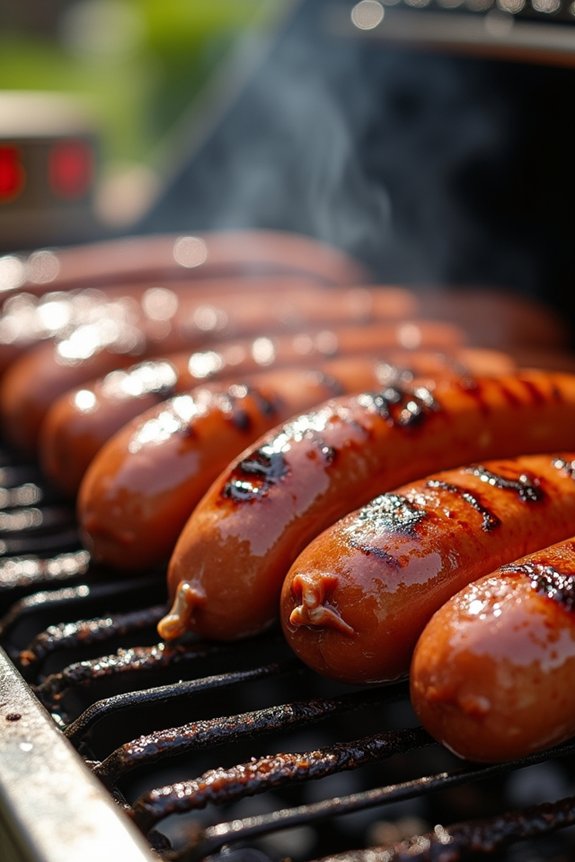
The thickness of your sausage makes a real difference in how long it’ll spend on the grill. I’ve found that skinnier brat sausages need just 6–8 minutes total on medium-high heat (turning once), while thicker ones require 10–12 minutes with occasional turns—and honestly, that extra time is worth it for a juicier result. Either way, you’ll want to verify your sausages hit 160–165°F internal temperature with a meat thermometer before declaring victory.
Skinny Versus Thick Sausages
How much time you’ll spend grilling sausages depends mainly on their thickness—and that’s the key to getting them cooked just right every time.
I’ve found that grill temperature and sausage size work together to determine your cooking timeline:
- Skinny sausages need about 6–8 minutes total on a gas grill
- Thick sausages require 10–12 minutes total for even cooking
- Internal temperature should reach 160–165°F for food safety
- Gas grills cook about one minute faster per side than charcoal
Here’s the thing—don’t rush them. Insert a meat thermometer into the sausage’s end and monitor progress. You’ll avoid the rookie mistake of piercing the casing, which lets juices escape. Once you nail these timing basics, you’ll grill sausages like someone who actually knows what they’re doing.
Time Adjustments By Type
Ever notice that not all sausages cook the same way? I’ve learned that timing depends on thickness and your grill type. Skinny sausages need about 6–8 minutes total, while thicker ones require 10–12 minutes to reach that safe 160–165°F internal temperature. Gas grills shave off roughly one minute per side compared to charcoal, thanks to their consistent heat.
| Sausage Type | Thickness | Total Time | Temperature | Grill Type |
|---|---|---|---|---|
| Skinny | Thin | 6–8 min | 160–165°F | Charcoal |
| Standard | Medium | 8–10 min | 160–165°F | Charcoal |
| Thick | Thick | 10–12 min | 160–165°F | Charcoal |
| Skinny | Thin | 5–7 min | 160–165°F | Gas |
| Thick | Thick | 9–11 min | 160–165°F | Gas |
Here’s the thing: use a meat thermometer for accuracy instead of guessing.
Temperature Targets Per Thickness
What’s the real difference between grilling a skinny sausage and a fat one? Thickness changes everything about your cook time and internal temperature targets.
Here’s what you need to know:
- Skinny sausages: Cook 10–12 minutes total, targeting 160°F internal temperature
- Fat sausages: Need 20–25 minutes, aiming for 165°F internal temperature
- Thin bratwurst: Grill 6–8 minutes on medium-high heat, hitting 160–165°F
- Parboiled sausages: Reduce grill time to 8 minutes total after pre-cooking
I won’t sugarcoat it—thickness matters more than you’d think. Thinner sausages cook faster because heat penetrates quicker. Fatter ones need extra time to reach safe internal temperature throughout. Skip the guessing game and grab a meat thermometer. That’s how we all nail it every single time, no surprises.
Preheat Your Grill to the Right Temperature
The secret to perfectly cooked sausages? Getting your grill temperature right from the start. I’d recommend preheating your grill to around 450°F on high heat before you place those sausages on the grates. If you’ve got charcoal available, use it—you’ll get that smoky flavor we’re all after, plus more even heat distribution across your cooking surface. Here’s the thing: don’t skip the preheating step. A properly heated grill ensures your sausages cook consistently and develop those nice grill marks you’re looking for. Once your grill temperature reaches 450°F, you’re ready to go. Keep that lid closed while cooking to maintain consistent heat and prevent annoying flare-ups. You’ve got this.
Pre-Cook or Grill Raw: Which Method Works Best?
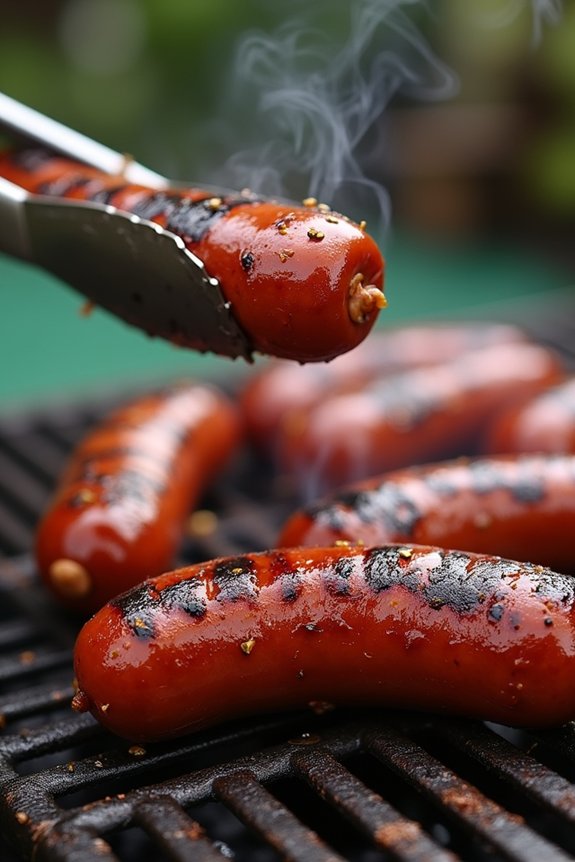
When you’re grilling sausages, you’ve got two main paths: throwing them straight on the grill raw, or giving them a quick simmer first. If you go the raw route, you’re looking at 8–20 minutes depending on thickness, but you’ll need to turn them carefully to avoid burning and risk some moisture loss along the way. I’d say pre-cooking in broth or beer to 150–160°F before finishing on the grill is the move—it guarantees even doneness, prevents casing splits, and gets you a crispy exterior in just a few minutes.
Raw Sausage Grilling Method
Since you’re working with raw sausages, you’ve got two main paths to juicy, perfectly cooked links: pre-cook them first or throw them straight on the grill. Grilling sausages raw demands patience and attention. Here’s your game plan:
- Heat your grill to medium-high temperature
- Place raw sausages directly on grates, turning frequently to prevent bursting
- Cook for 8–12 minutes total, rotating every few minutes
- Check internal temperature at 160–165°F with a meat thermometer
The raw method takes longer but rewards you with crispy skin and juicy interiors when done right. Frequent turning prevents those dreaded flare-ups and ensures even cooking throughout. Don’t skip the thermometer—it’s your insurance policy against undercooked sausages. You’ve got this.
Pre-Cooking Advantages and Outcomes
Now that you’ve seen how raw sausages work on the grill, let’s talk about a smarter shortcut: pre-cooking. I’ve found that simmering sausages in broth, beer, or water before grilling gives you serious control. You’ll cook them to 150°F internal temperature using a thermometer, which prevents casings from bursting—no exploding sausages on your grill. This method cuts your final grilling time dramatically, letting you finish with just a quick sear for crispy skin. Pre-cooking works especially well for thicker sausages that need more time inside. You’re essentially removing the guesswork. After simmering about five minutes, grill each side four minutes at 450°F. You’ll reach that safe 165°F mark confidently, delivering juicy interiors and perfectly browned exteriors every single time.
Choosing Your Preferred Approach
So which method should you actually choose? I’ll break down what works best for your grilled sausage goals:
- Pre-cook for control – Simmer sausages in broth or beer to 150–160°F first, then finish on the grill for a crispy exterior without burst casings.
- Grill raw for speed – Cook directly over high heat in just 8–12 minutes, but watch carefully to prevent uneven doneness and splitting.
- Consider your priorities – Want juiciness and easier cooking? Pre-cook. Crave maximum char and faster results? Grill raw.
- Handle accordingly – Use tongs on raw sausages to avoid punctures; pre-cooked ones need minimal turning.
Honestly, both methods work. Pick whichever fits your cooking style and what you’re hungry for that day.
The Direct Grilling Method for Sausages
The most straightforward way to grill sausages is the direct method, and it’s honestly hard to mess up once you’ve got the basics down. I place sausages directly on grill grates over high heat around 450°F, then close the lid. I cook them 4–5 minutes per side, flipping once or twice for even browning. The whole process takes about 8–10 minutes total. Here’s the essential part: I use a meat thermometer to check that the internal temperature reaches 165°F at the sausage’s end, avoiding punctures that’d lose those delicious juices. Once they hit that temperature, I remove them and let them rest a few minutes. This resting period redistributes the juices, making each bite juicier and more flavorful.
Check Sausage Doneness With a Meat Thermometer
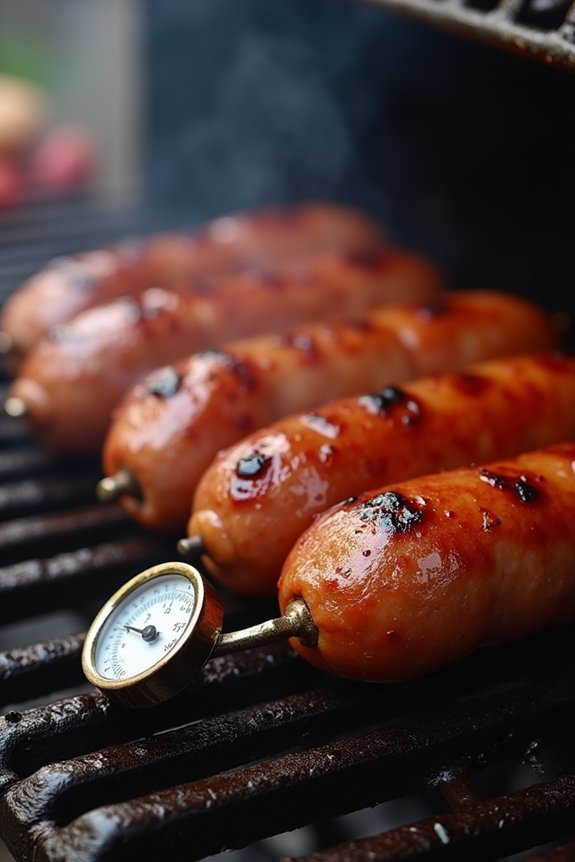
A meat thermometer is honestly your best friend when grilling sausages, and I can’t stress enough how much it’ll improve your results. Skip the guesswork—you’re joining countless grillers who’ve ditched the cutting-and-checking method.
A meat thermometer is your best friend when grilling sausages—skip the guesswork and join countless grillers who’ve ditched the cutting-and-checking method.
Here’s how I do it:
- Insert the thermometer into the thickest end of the sausage
- Aim for an internal temperature between 160°F and 165°F
- Check multiple sausages if cooking a batch
- Remove from heat immediately once you hit target temperature
The beauty of this approach? You’ll never overcook or undercook again. A meat thermometer takes the stress out of timing, especially when you’re handling different sausage sizes. Once you hit that magic temperature range, pull your sausages off and let them rest a few minutes. Your meat thermometer just made you a better griller.
Why Avoiding Punctures Matters (and How)
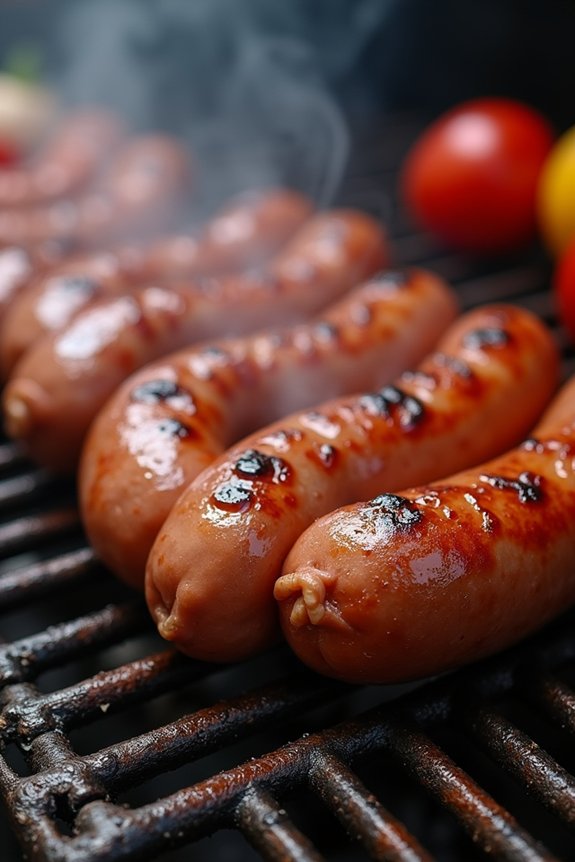
Ever wonder why your grilled sausages sometimes turn out dry and bland? Puncturing sausages during grilling is the culprit. When you pierce that casing, you’re essentially letting all the flavorful juices escape—it’s like opening a dam. I’ve learned that keeping the casing intact is crucial.
Here’s my approach: use tongs instead of forks. Tongs let me flip sausages without puncturing them. An unbroken casing does two important jobs. First, it traps moisture inside, keeping your meat tender and juicy. Second, it prevents rendered fats from causing flare-ups that char the outside.
If I need to check doneness, I insert a thermometer through the end, never the side. Aim for 160°F internally. Pre-cooking sausages in water beforehand reduces grilling time, eliminating the temptation to pierce them.
Gas Grill vs. Charcoal: Time Adjustments
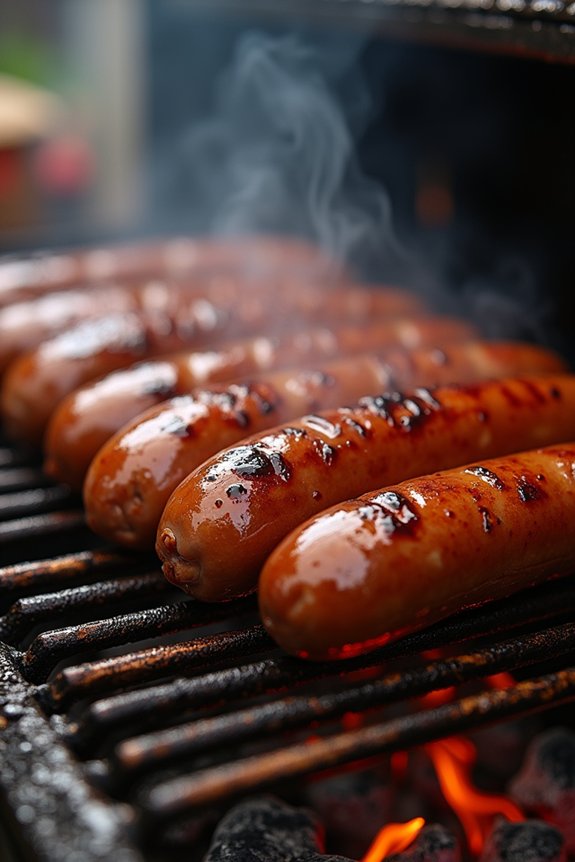
How much difference does your grill type actually make? More than you’d think. I’ve found that gas and charcoal require different timing strategies to nail that perfect 160–165°F internal temperature.
Here’s what I’ve learned works best:
- Gas grills heat evenly and predictably, shortening cook time by about 1 minute per side
- Charcoal grills create hotter spots requiring you to rotate sausages frequently to prevent blistering
- Grill temperature should hit around 450°F on direct heat for both types
- Total time typically runs 8–10 minutes on high heat, though charcoal may need extra minutes for temperature consistency
The key difference? Gas delivers uniform heat, while charcoal demands active management. Either way, skip the guesswork—use a thermometer inserted into the sausage end to confirm doneness without puncturing.
Keep Sausage Casings Intact: Avoid Splitting and Juice Loss
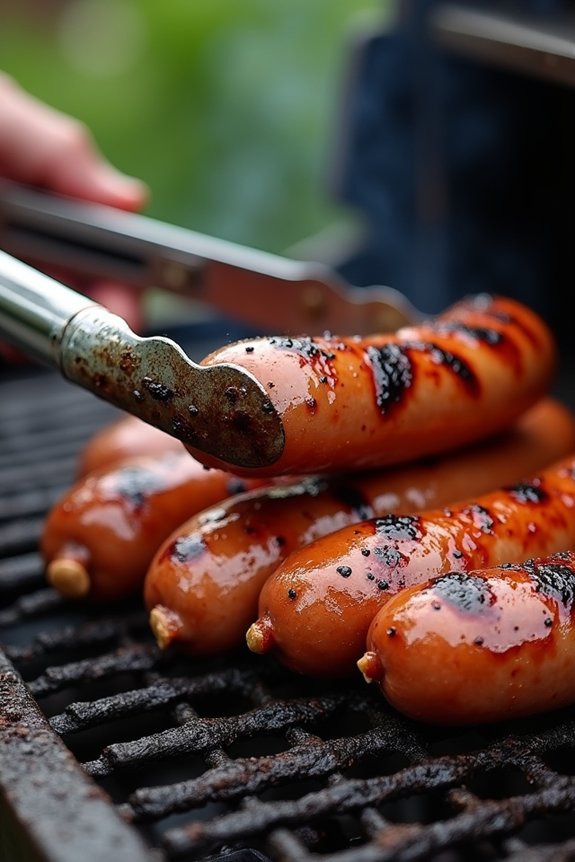
Here’s the thing: I’ll keep your sausages juicy by protecting those casings—and here’s the thing: it’s mostly about what you don’t do. First, ditch the fork; grab your tongs instead, because every puncture is basically poking holes in your moisture container. Steady direct heat at 375–400°F on gas (or 450°F for direct charcoal grilling) minimizes the time your sausage spends cooking, which means fewer chances for the casing to split from pressure buildup inside.
Puncturing Ruins Moisture Content
Why do so many grillers resist the urge to poke their sausages? Because puncturing the casing is basically asking for trouble. When I puncture sausages with a fork or knife, I’m literally letting all those delicious juices escape—and that’s where flavor lives.
Here’s what happens when you avoid puncturing:
- Juices stay trapped inside, keeping meat tender and flavorful
- The casing remains intact, preventing flare-ups from released fat
- Moisture redistributes evenly during the resting period
- Your sausages stay juicy instead of turning into disappointing, dried-out shells
Instead, I grab my tongs and flip sausages gently. This simple swap transforms my grilling game. After cooking to 160–165°F internally, I let them rest a few minutes. That’s when the magic happens—juices redistribute, and I get perfectly cooked sausages every single time.
Tongs Over Forks Always
When you’re standing at the grill with sausages sizzling away, grabbing a fork to flip them might seem like the quickest move—but it’s actually your enemy. That’s why tongs over forks always wins. Here’s the thing: forks create tiny punctures that let precious juices escape, drying out your sausage from the inside.
Instead, grasp your sausages gently with tongs and turn them once or twice. Avoid squeezing—you’re not wrestling them. Keep sausages positioned over direct heat for even browning while you monitor their internal temperature, aiming for 160–165°F.
The tongs approach protects both the casing integrity and the moisture content that makes grilled sausages truly delicious. You’re part of the grill-master crew now—and we use tongs.
Direct Heat Prevents Splitting
it’s your covert tool for keeping sausage casings intact. When you place sausages directly over flames or hot coals, something magical happens—the intense heat sears the outside quickly, forming a protective crust that locks in moisture and prevents splitting.
Here’s why this matters:
- Direct heat creates a seal on the casing surface immediately
- Quick browning reduces cooking time, minimizing juice loss
- Careful turning maintains even heat exposure without puncturing
- Interior temperature reaches 160–165°F while the casing stays whole
I’ve found that rushing to indirect heat or poking holes with forks undoes all this hard work. Stick with direct heat long enough to brown and finish cooking. That’s your winning strategy. Your sausages will thank you with juicy, intact results every single time.
Rest Your Sausages Before Serving
How many of us have cut into a grilled sausage only to watch all those delicious juices spill onto the plate?
I’ve learned that resting after cooking makes all the difference. After removing sausages from the grill, let them sit for 3–5 minutes. This short rest allows juices to redistribute throughout the meat, keeping everything moist and flavorful when you bite in.
Here’s what I do: I keep them loosely covered or on a warm surface so they don’t cool down. This resting period is especially critical after reaching that safe 165°F internal temperature—it ensures heat distributes evenly and prevents those frustrating juice escapes.
Trust me, those few minutes of patience reward you with juicier, more satisfying sausages. You’ll notice the difference immediately.
Add Peppers and Onions
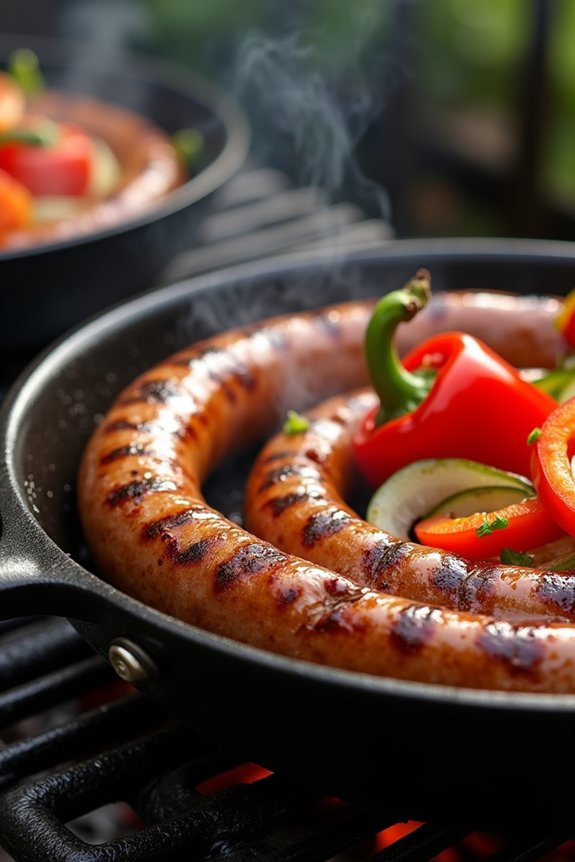
Now that your sausages are resting and staying juicy, it’s time to elevate them with grilled peppers and onions. I’ll walk you through creating this classic combination that transforms your Italian sausages into something special.
Here’s what I do:
- Slice bell peppers and onions into strips
- Toss them with a bit of oil and salt for seasoning
- Grill them in a basket or foil for 10–12 minutes, stirring occasionally
- Cook until they’re tender with slight charring—this is where the magic happens
The peppers and onions develop incredible flavor when they caramelize on the grill. I nestle these beauties right into the bun alongside my sausages. They add moisture and taste that’ll make you feel like a true grill master. Trust me, this step isn’t optional if you want restaurant-quality results at home.
Common Grilling Mistakes That Throw Off Timing
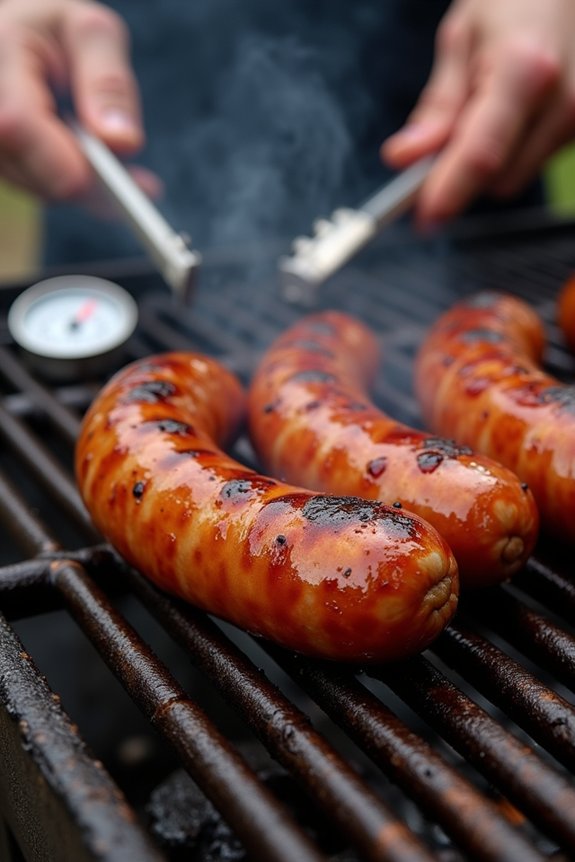
When you’re standing at the grill with sausages sizzling away, timing feels straightforward—but that’s actually where most people slip up. I’ve learned that crowding the grill is a major culprit; it causes flare-ups that cook unevenly and split casings. Your grill timing suffers when you skip preheating to high heat too.
Here’s what I do differently: I insert a meat thermometer into the sausage’s end—never piercing the casing mid-cook, which lets precious juices escape. I aim for 165°F internal temperature over 8–10 minutes. After grilling, I let sausages rest a few minutes so carryover cooking finishes the job properly.
These small adjustments transform your results. You’ll join the group of grillers who actually nail sausage doneness consistently.
How to Keep Sausage Warm Without Overcooking
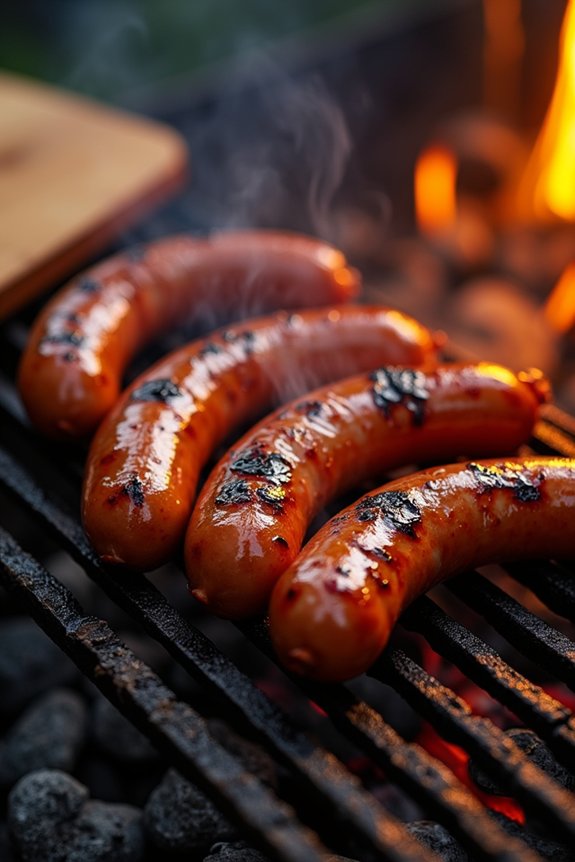
Once you’ve nailed the perfect internal temperature, the real challenge begins—keeping those sausages hot without turning them into dried-out hockey pucks. I’ve found that timing matters just as much after grilling as during it.
Once you’ve nailed the perfect internal temperature, the real challenge begins—keeping those sausages hot without drying them out.
Here’s what works best:
- Tent grilled sausages loosely with foil and place them in a warm area (140–160°F)
- Use an oven set to 170–200°F or a warming drawer for longer holds
- Remove sausages at 160–165°F and let them rest under a loose cover to finish steaming
- If serving later, slice portions, cover with a damp paper towel, and microwave on low power
The key is avoiding uncovered storage. Dryness increases rapidly once your grilled sausages cool below 165°F. Moisture retention keeps them tender and delicious.