
Most fortune cookies aren’t vegan because traditional recipes use eggs and butter for binding and texture. I’d flip the package and check the ingredient list for eggs, milk, or butter before eating. Some brands accidentally offer vegan options, while others hide dairy in unexpected places. When in doubt, contact the manufacturer directly for confirmation. Stick around to discover which brands you can actually trust and how to make your own vegan versions at home.
Why Most Fortune Cookies Aren’t Vegan

Ever wondered why that crispy fortune cookie doesn’t fit your vegan lifestyle? Here’s the thing: most traditional fortune cookies contain eggs and butter, which immediately disqualifies them from being vegan-friendly. These ingredients bind the dough together and give cookies that golden, delicate texture we love. When I first started exploring vegan options, I realized many manufacturers still rely on these animal products as their go-to binders. Even cookies labeled “vegan” can surprise you with hidden animal-derived ingredients hiding in the ingredient list. Some brands do substitute aquafaba or other plant-based alternatives, but this isn’t universal. The bottom line? You can’t assume fortune cookies are vegan just by looking at them. That’s why checking the back of the package matters so much before you indulge.
How to Check if Fortune Cookies Are Vegan: Reading Labels

I’ll help you check if those fortune cookies sitting in front of you are actually vegan, and it’s easier than you’d think—just flip that package over and scan the ingredient list for eggs, milk, or butter (those are your red flags). If you’re still unsure after reading what’s printed there, don’t hesitate to reach out directly to the manufacturer with a quick email or call, because they’ll give you the straight answer about whether that specific flavor is vegan-friendly.
Ingredient List Examination
The easiest way to solve the fortune cookie mystery is by flipping that package over and reading the ingredient list—it’s your personal detective work. I look for vegan ingredients like vanilla extract, flour, salt, and sugar, which signal a plant-based treat. However, you’ll spot eggs or butter lurking in some varieties, making them non-vegan.
Here’s what I check:
| Ingredient | Vegan? | What It Means |
|---|---|---|
| Egg | No | Animal product |
| Butter | No | Dairy ingredient |
| Vanilla extract | Yes | Plant-based flavoring |
| Sugar | Yes | Usually vegan |
Different brands vary wildly, so I never assume two cookies are identical. That’s why checking each package matters—it’s your guarantee that what you’re eating aligns with your values.
Contact Manufacturer Directly
Reading the package label gets you pretty far, but sometimes the fine print doesn’t tell you everything you need to know. That’s where reaching out directly to the manufacturer comes in handy. I’d recommend calling or emailing them with a simple question: “Are your fortune cookies vegan?” They’ll often provide a current ingredient list or vegan certification that clears things up immediately. Ask specifically about eggs, dairy, and cross-contact concerns—those sneaky culprits hide in lots of commercial cookies. Request written documentation so you’ve got proof in hand. Most manufacturers respond quickly because they appreciate customers who care about what they’re eating. This direct approach saves you guesswork and gives you genuine peace of mind before enjoying your treats.
Questions to Ask Your Server at Restaurants

When you’re at a restaurant, don’t hesitate to ask your server straight up: “Do your fortune cookies contain eggs, butter, or dairy?” It’s a simple question that’ll save you from accidentally eating animal products, and most servers can quickly check with the kitchen or grab the package for you. You’ll also want to know if they’re made in a facility that handles eggs or dairy, since even “vegan” cookies might pick up traces during production (a real concern if you’re strict about it).
Ingredient Verification At The Table
How do you really know what’s in that fortune cookie sitting on your table? I’ll tell you—ask your server directly. Don’t hesitate to inquire whether those cookies contain eggs, butter, or dairy. Specifically, ask if they’re vegan or made with plant-based ingredients like aquafaba instead of eggs.
Here’s what I do: I request they check the back-of-package label or kitchen notes for ingredient lists. If they’re unsure, I ask whether the cookies come from a facility processing eggs or dairy, which matters for cross-contamination concerns.
If the cookies aren’t vegan-friendly, I request an alternative dessert. Most restaurants appreciate the question and want to help you feel included. Being upfront takes thirty seconds and ensures you can enjoy dessert without worry.
Egg And Dairy Content Inquiry
What’s actually hiding in that fortune cookie? I’d ask your server directly: “Are your fortune cookies vegan, and do they contain eggs, dairy, or honey?” This straightforward question gets you the real answer. Many restaurants use standard recipes loaded with eggs and butter, so don’t assume anything. Some servers might not know offhand—that’s okay, just ask them to check with the kitchen. If they mention plant-based ingredients or egg replacers, dig deeper and ask about cross-contamination risks. Did they prepare the vegan cookies separately? Pre-packaged cookies? Request checking the wrapper together. You’re not being difficult; you’re being informed. Most restaurants appreciate guests who know what they want, and honest answers help you eat confidently.
Preparation Method And Cross-Contamination Concerns
I recommend asking your server about shared equipment and preparation surfaces. Find out if fortune cookie dough is made in the same mixer or on the same baking sheets as non-vegan items. This matters because cross-contamination can happen easily in busy kitchens.
Ask whether they use separate frying oil for fortune cookies or if they share it with other foods. Request details about cleaning practices too—do they wash utensils and surfaces between batches? If cookies are baked near meat or dairy products, that’s important information for your decision.
When servers can’t answer confidently, simply request an alternative vegan dessert instead. It’s your meal, and you deserve clarity.
Vegan Fortune Cookie Brands Worth Buying

Where can you actually find fortune cookies that fit your vegan lifestyle? You’ve got options, friend. Online retailers like Amazon stock several vegan fortune cookie brands that’re specifically labeled and certified free of eggs and dairy. I’d recommend checking the ingredient list first—look for plant-derived fats instead of butter, and skip anything listing egg or milk derivatives. Some brands use aquafaba as an egg substitute, which works beautifully. The fortunes inside vary by brand, so you’re not sacrificing personality for ethics. While availability differs by location, ordering online gives you access to vetted vegan options without guessing at a restaurant. Just verify ingredients before purchasing; formulations change, and that’s your best defense for keeping your choices truly vegan.
Where Eggs and Dairy Hide in Fortune Cookie Recipes

Traditional fortune cookies rely heavily on eggs as a binding agent, which is why you’ll spot them listed right in the ingredient panel—but here’s the sneaky part: dairy can hide under names like “whey,” “milk solids,” or “natural flavors” that aren’t always obvious at first glance. I’ve found that some brands use butter for that crispy texture, while others slip in milk powder to enhance flavor, so reading the full ingredient list is really your best defense. The good news is that once you know what to look for, spotting these animal products becomes way easier, and you’ll quickly identify which cookies work for your vegan lifestyle.
Traditional Egg-Based Formulations
If you’ve ever wondered why those crispy, delicate fortune cookies seem to melt in your mouth, eggs are likely the culprit—and they’re hiding right there in the batter.
| Component | Role | Vegan Status |
|---|---|---|
| Eggs | Binding agent | Not vegan |
| Butter | Richness & texture | Not vegan |
| Flour | Structure | Vegan |
| Sugar | Sweetness | Vegan |
| Vanilla | Flavoring | Vegan |
I’ve found that traditional recipes typically rely on eggs to create that signature delicate crunch and hold everything together. Most conventional fortune cookies contain one or two eggs per batch, giving them moisture and structure you can’t quite replicate otherwise. When you bite into that cookie, you’re tasting the result of eggs doing their job perfectly. But here’s the good news: knowing eggs are present means you’re already equipped to spot them on ingredient labels and make informed choices for yourself.
Hidden Dairy Ingredients Listed
Beyond eggs, dairy products sneak into fortune cookie recipes in ways you might not expect. I’ve discovered that checking ingredient lists reveals hidden culprits you’ll want to know about:
- Butter – the primary fat in traditional recipes
- Milk powder – adds richness and texture
- Whey – a sneaky dairy byproduct in some brands
- Lactose – present in sweetened condensed milk
- Ghee – clarified butter used in certain bakeries
When you’re shopping, flip that package over and scan carefully. You might find dairy listed under unfamiliar names, which is why I always recommend reading the full ingredient statement. Some companies hide dairy deeper than others, so don’t assume anything’s vegan without verification. Your diligence protects your dietary choices.
How Aquafaba and Oil Replace Eggs in Vegan Batters

Liquid gold from a chickpea can is your hidden ace for vegan fortune cookies. I’ve discovered that aquafaba—that starchy liquid you’d normally pour down the drain—works brilliantly as an egg replacement. You’ll whip it into a fluffy, meringue-like foam that traps air and creates structure, just like eggs do. I use it on a one-to-one basis by weight or volume, though sometimes I go slightly lighter to avoid over-binding.
Pairing aquafaba with neutral oil like canola creates the perfect tender crumb. The oil adds richness and moisture while keeping cookies delicate. Here’s my tip: whip your aquafaba first before mixing in other ingredients. This incorporates precious air that helps your cookies rise beautifully. Then adjust your flour-to-liquid ratio carefully—you’re protecting against soggy batters and ensuring bakery-quality results every time.
What Do Allergen Labels Actually Tell You?

When you flip over that fortune cookie package, the allergen label tells you what’s actually inside—eggs, dairy, nuts, or nothing of the sort—but here’s the thing: you’ve got to read carefully because some brands hide non-vegan ingredients under fancy names or list them in tiny print. I’ve learned the hard way that “natural flavoring” or “mono and diglycerides” can sometimes come from animal sources, so don’t just scan for the big allergen warnings and call it done. Your best move is to hunt for certified vegan labels or contact the manufacturer directly if you’re unsure, because that little label is your honest friend only if you actually take time to understand what it’s saying.
Reading Labels Carefully
Have you ever flipped a fortune cookie box over and felt confused by all that tiny text? I’ve been there, and I’m here to help you decode it like a pro.
Reading labels carefully is your best defense against hidden animal ingredients. Here’s what I look for:
- Ingredient list – scan for eggs, butter, milk, or whey
- “Contains” statements – these highlight major allergens clearly
- Cross-contact warnings – notes about shared equipment matter
- Brand variations – different manufacturers use different recipes
- Batch numbers – older cookies might have different ingredients than new ones
I always check the back-of-package information before buying. Don’t just skim it; actually read those ingredients word by word. It takes two minutes and saves you from surprises. You’ve got this!
Hidden Non-Vegan Ingredients
Reading that ingredient list is definitely step one, but here’s the thing—allergen labels don’t always show you everything that matters for vegans. You see, allergen warnings focus on major allergens like nuts and dairy, not necessarily on whether something’s vegan-friendly. Some brands sneak eggs or butter into their dough without highlighting it prominently.
| Ingredient | Vegan? | What to Watch For |
|---|---|---|
| Eggs | No | Thickening agent in dough |
| Butter | No | For flakiness and flavor |
| Vanilla extract | Maybe | Some use animal products |
| Plant-based oil | Yes | Your safest bet |
That’s why I always flip the package over and read every single word. Don’t trust marketing claims alone—they’re not always telling the complete story about what’s really inside those crispy cookies.
Golden Bowl and Other Accidentally Vegan Options

Why does finding a vegan fortune cookie feel like discovering treasure? I’ve learned that some brands offer accidentally vegan options hiding in plain sight. Golden Bowl stands out with their vanilla and citrus flavors that’re completely vegan-friendly, though their chocolate version isn’t. Here’s what I’ve discovered works:
Finding vegan fortune cookies feels like discovering treasure when you know which brands hide accidentally vegan options in plain sight.
- Check ingredient lists carefully on packaging
- Golden Bowl vanilla is reliably vegan
- Golden Bowl citrus flavors pass the vegan test
- Order online through Amazon for party stockpiling
- Verify each flavor separately since formulations vary
You’re not alone in this hunt. Many of us are navigating fortune cookie choices for events and gatherings. The key? Don’t assume all flavors from one brand are vegan—I’ve learned that lesson. Verification takes seconds but saves disappointment. When you find your vegan options, you’ll feel like you’ve cracked the code.
Buy vs. Bake: When to Make Fortune Cookies Yourself

Once you’ve verified ingredients and hunted through brands, you might find yourself wondering whether buying pre-made vegan fortune cookies is worth the effort—or if baking your own makes more sense.
Here’s the thing: baking your own vegan fortune cookies gives you total control. You’ll use aquafaba or EnerG egg replacer, vanilla, and lemon zest—ingredients you trust. Plus, you can customize those fortunes inside, making them perfect for parties or gifts. Your friends will love the personal touch.
The process is simpler than you’d think. A muffin tin helps shape and set cookies quickly, which means you’re done in minutes. Sure, buying pre-made vegan options saves time, but homemade versions let you join a community of bakers who care about what goes into their treats.
Vegan Fortune Cookie Batter: Essential Ingredients

So what’s the secret to getting vegan fortune cookie batter just right? I’ve found that nailing the ingredient ratios makes all the difference. You’ll need:
- All-purpose flour as your base
- Aquafaba (chickpea liquid) replacing eggs perfectly
- Sugar for sweetness and structure
- Vanilla extract and lemon zest for flavor
- Water to achieve that ideal consistency
The tricky part? Getting your batter’s thickness just right. I start with aquafaba, then add water teaspoon by teaspoon until it’s runny yet scoopable. You’re aiming for a thin, slightly foamy mixture that spreads into perfect 2½-inch circles. Trust me, this vegan fortune cookie batter transforms into crispy, delicate cookies worth the effort. Once you nail these basics, you’re ready to bake and fold those fortunes inside.
How to Fold a Fortune Cookie Before It Hardens
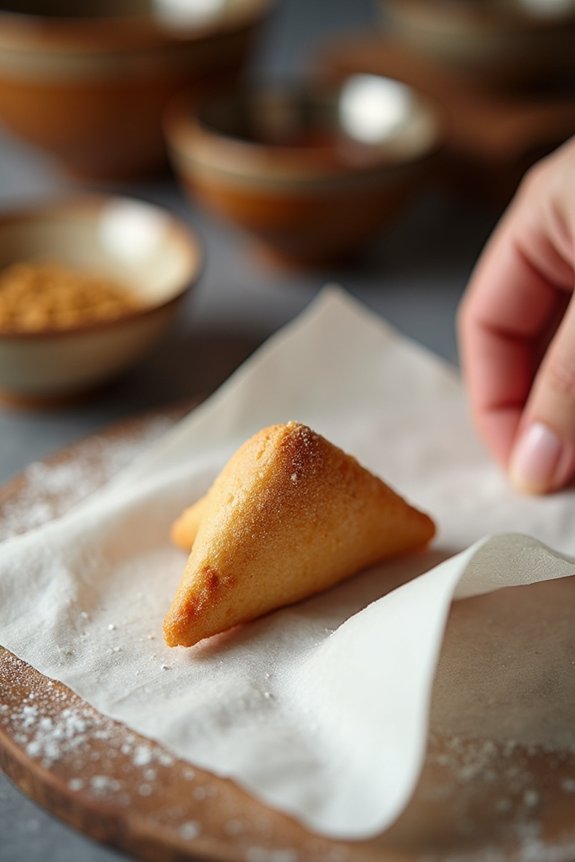
The real magic happens the moment your cookies come out of the oven—and I mean the *very* moment. You’ve got seconds, literally seconds, to transform those hot, pliable discs into iconic fortune cookie shapes. I transfer my vegan fortune cookies to my folding surface immediately, place the fortune strip in the center, then fold the cookie in half. Next, I press both ends downward over a glass rim or muffin tin edge to create that signature curved shape. Working with just two cookies at a time keeps things manageable and prevents spreading. Once shaped, I nestle them into muffin cups while they cool, which locks in that perfect form. If they’re stubborn, I chill the tray briefly. It’s all about speed and confidence here—you’ve got this!
Why Vegan Fortune Cookies Tear or Flatten (and Fixes)

Have you ever pulled a batch of vegan fortune cookies from the oven, only to watch them tear like tissue paper the moment you try to fold them? I’ve been there, and it’s frustrating! The good news? I’ve figured out what’s going wrong.
Your vegan cookies tear because:
Your vegan fortune cookies tear due to weak binding, excess moisture, thin batter, underbaked centers, and inaccurate oven temperature.
- Weak binding: Your egg replacer isn’t fully incorporated into the batter
- Too much water: Excess moisture keeps cookies soft and pliable too long
- Thin, runny batter: Using more than 2 tablespoons per cookie spreads them too thin
- Underbaked centers: Edges brown while middles stay soft, causing tears during folding
- Wrong pan temperature: Inaccurate oven heat affects firmness and cracking
I’ve found success by ensuring my egg replacer mixes thoroughly, measuring water carefully, and working quickly while cookies are warm. Your perfect batch is coming!
Customizing Fortunes and Adding Personal Touches
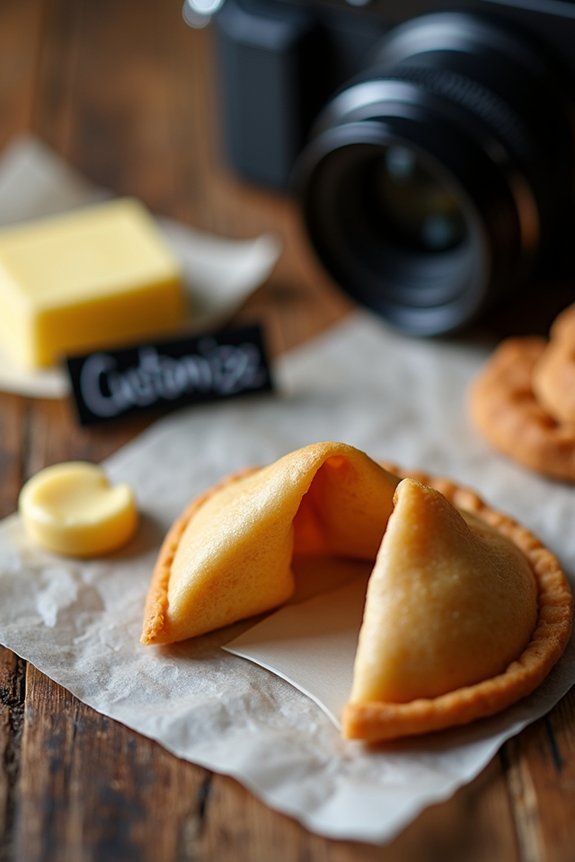
Why settle for generic fortunes when you can make your cookies truly personal?
Fortune cookie customization transforms your treats into meaningful keepsakes. I prep fortunes on 3-inch by 1/2-inch paper beforehand, inserting them into warm cookies before folding. You’ll want lucky numbers or messages reflecting your event’s theme—whether it’s a wedding, birthday, or just spreading joy among friends.
| Customization Element | Time to Prepare |
|---|---|
| Writing fortunes | 15 minutes |
| Cutting paper strips | 10 minutes |
| Coordinating with batches | Varies |
| Testing fit | 5 minutes |
| Final assembly | During baking |
I use muffin cups to hold folded shapes while cooling, ensuring consistent presentation. Preparing multiple fortunes in advance keeps you organized during the shaping step. This personal touch makes your vegan cookies memorable and absolutely worth the effort.
Where to Order Vegan Fortune Cookies Online

If making your own personalized cookies feels overwhelming, you’ve got plenty of ready-made options waiting for you online. I’ve found that ordering vegan fortune cookies is easier than you’d think, and here’s where I look:
- Amazon carries multiple vegan brands with quick shipping
- Specialty vegan retailers stock clearly labeled options
- Health food store websites offer curated selections
- Direct brand websites sometimes provide bulk discounts
- Etsy shops feature artisan vegan varieties
The tricky part? Formulations vary between flavors. That vanilla option might be vegan while chocolate isn’t, so I always check the ingredient list for eggs or dairy before ordering. Reading those back-of-package details takes just a minute, but it saves disappointment when your cookies arrive. You’re investing in treats that match your values—worth the extra verification step.
How to Spot Genuine Vegan Certification vs. Marketing Claims

Just because a package says “vegan” doesn’t mean every flavor inside actually is—and that’s where things get tricky. I’ve learned that marketing claims can be misleading, so I always flip the box over and scan the ingredient list carefully. I’m looking for sneaky culprits like whey, casein, gelatin, or egg—they hide everywhere. Here’s my trusted method: I search for recognized vegan certification seals on the packaging first. If I don’t spot one, I contact the manufacturer directly and ask for their ingredient matrix across all flavors. Different varieties often contain different fillings or flavorings, so golden vanilla might be vegan while chocolate isn’t. When you’re shopping online, compare each flavor’s disclosure. It takes a few minutes, but you’ll know exactly what you’re getting.